A truck gets released, dispatch assigns the next load, and the work order says little more than rebuilt. That single word doesn't answer what failed, what was replaced, or what was checked. For operators and fleet managers, a semi truck transmission rebuild should be verified through records, not accepted on a label or a verbal assurance.
Table of Contents
- Why Post-Rebuild Verification Matters
- What a Semi Truck Transmission Rebuild Should Document
- Prepare Evidence Before the Rebuild Decision
- Verify Inspection and Measurement Evidence
- Separate Manual and AMT Diagnostic Evidence
- Check the Completed Work Before Return to Service
- Apply the Checks to Real Operating Scenarios
- Make the Final Return-to-Service Decision
Why Post-Rebuild Verification Matters
Hypothetical scenario: A tractor returns to a yard near Tampa after transmission work. The invoice lists a rebuilt unit, labor, and fluid. It doesn't identify the original complaint, the diagnostic findings, the parts installed, or any functional check. Dispatch has a load ready, but nobody can show whether the completed work addressed gear jump out, grinding, or a control fault.
That gap creates the central problem. Work described isn't the same as work demonstrated. A driver, owner-operator, fleet manager, or dispatcher needs a traceable chain from complaint to diagnosis, authorized scope, parts, inspection findings, validation, warranty, and unresolved limitations.
Why the Paper Trail Carries Operational Weight
Transmission symptoms also become compliance records in some situations. Federal Motor Carrier Safety Administration guidance states that a driver must deliver a roadside inspection report to the carrier within 24 hours, the carrier must sign and return it within 15 days certifying corrections, retain a copy for 12 months, and a vehicle placed out of service can't resume operation until the defect is corrected, as set out in the FMCSA guidance on inspection reports and defect correction.
A clean release note without evidence isn't verification. It's a claim waiting for support.
This verification approach supports record review. It doesn't prescribe a field test sequence and it doesn't certify that a specific truck is safe to operate. SAAT operates exclusively as mobile Road Services without a customer-facing workshop, so roadside feasibility is assessed job by job based on safe access, equipment, scope, and technician availability. A complete rebuild may require a suitable external facility rather than work at the vehicle location.
What a Semi Truck Transmission Rebuild Should Document
A professional rebuild isn't a used transmission washed off and resold. A remanufactured transmission is completely disassembled, cleaned, inspected, and rebuilt with worn components replaced, then reassembled to the original equipment maker's quality tolerances, according to the 2025 Fleet Maintenance report on problem transmissions. That same report states that more than 95% of transmission replacements are not new because new transmissions are generally reserved for vehicle production.
Scale reinforces the point. The report notes one major North American remanufacturer produces more than 8,000 heavy-duty transmissions annually. Rebuilding is a mainstream lifecycle strategy, not an improvised repair. Usable housings and core components are preserved while damaged or worn internals are replaced.
The Documentation Chain That Proves Scope
Operators should expect the record to connect each stage rather than jump from complaint to invoice total.
- Original complaint: The symptom in the driver's words, including when it occurs and under what load.
- Diagnostic basis: Fault codes, fluid and debris findings, teardown observations, or measurements supporting the decision.
- Authorized scope: Whether approval covered a full rebuild, a limited repair, or a remanufactured unit swap.
- Parts record: Components removed, parts installed, and whether wear items were replaced or reused.
- Validation record: Functional checks completed after reassembly, plus any limitations still open.
History shows why those details matter. In 2014, Eaton became Navistar's supplier of heavy-duty remanufactured transmissions for approximately 350 North American dealers, with deliveries beginning July 1, 2014, and Eaton stated its Flex Reman units contained roughly 20% more new parts than most other remanufactured transmissions and carried a standard two-year, unlimited-mileage warranty, as reported in the Trucking Info article on the Eaton and Navistar remanufactured transmission agreement.
Those terms are a general industry example, not a SAAT offer. They show how quality gets defined through parts content, performance testing, dealer distribution, and warranty language. A parts box, a warranty badge, or the word rebuilt alone doesn't prove any of that. Records do.
Procedures and acceptance criteria vary by model and manufacturer guidance. Fleet teams shouldn't assume one workflow fits every transmission. The right question is whether the paperwork shows systematic disassembly, inspection, replacement of worn items, reassembly, and functional validation for the specific unit handled.
Prepare Evidence Before the Rebuild Decision
Verification starts before authorization. A fleet that records weak evidence at intake can't demand a strong comparison after the work is done. The complaint needs to be captured while the symptom, conditions, and driver observations are still fresh.
What to Record at Intake
- Transmission identity: Make, model, and whether the unit is a manual gearbox or an automated manual transmission, often called an AMT.
- Symptom wording: Grinding, gear jump out, hard shifting, failure to select a range, or inability to select neutral, stated plainly.
- Operating conditions: Cold or hot, loaded or empty, during upshifts or downshifts, at highway speed or in yard moves.
- Warnings and codes: Dash messages, warning indicators, and any fault information already captured.
- Fluid and leaks: Visible leakage location, fluid condition, and metallic debris if a drain or inspection has occurred.
- Related history: Recent clutch work, driveline repairs, transmission service, or air-system problems.
Photographs and driver statements help preserve context. They don't prove a failed component. A photo of a leak shows where fluid landed, not why it escaped. A statement about grinding under load guides inspection, but teardown evidence or testing still has to confirm the cause.
Documentation rule: Separate what was observed from what was concluded. Mixing the two weakens every later decision.
Questions That Separate Findings From Assumptions
Before approving a semi truck transmission rebuild, fleet managers should ask direct scope questions. Is diagnosis billed and documented separately from teardown? Are disassembly, parts, reassembly, testing, and programming separate line items or one bundled charge? What evidence supports internal failure rather than a clutch, linkage, actuator, or control problem?
Warranty questions belong at this stage too. Operators should ask what the warranty covers, what it excludes, what core conditions apply, and what records will be returned after completion. Those are questions for the service provider handling the job, not facts to assume in advance.
Clear intake evidence protects both sides. It gives the technician a defined complaint to investigate and gives the fleet a baseline for judging whether the finished work addressed the reported problem.
Verify Inspection and Measurement Evidence
A visual once over doesn't establish that internal parts are fit for reuse. A bearing can look acceptable and still carry excessive clearance. A gear can appear serviceable while a worn bushing or case bore sets up misalignment and a repeat failure.
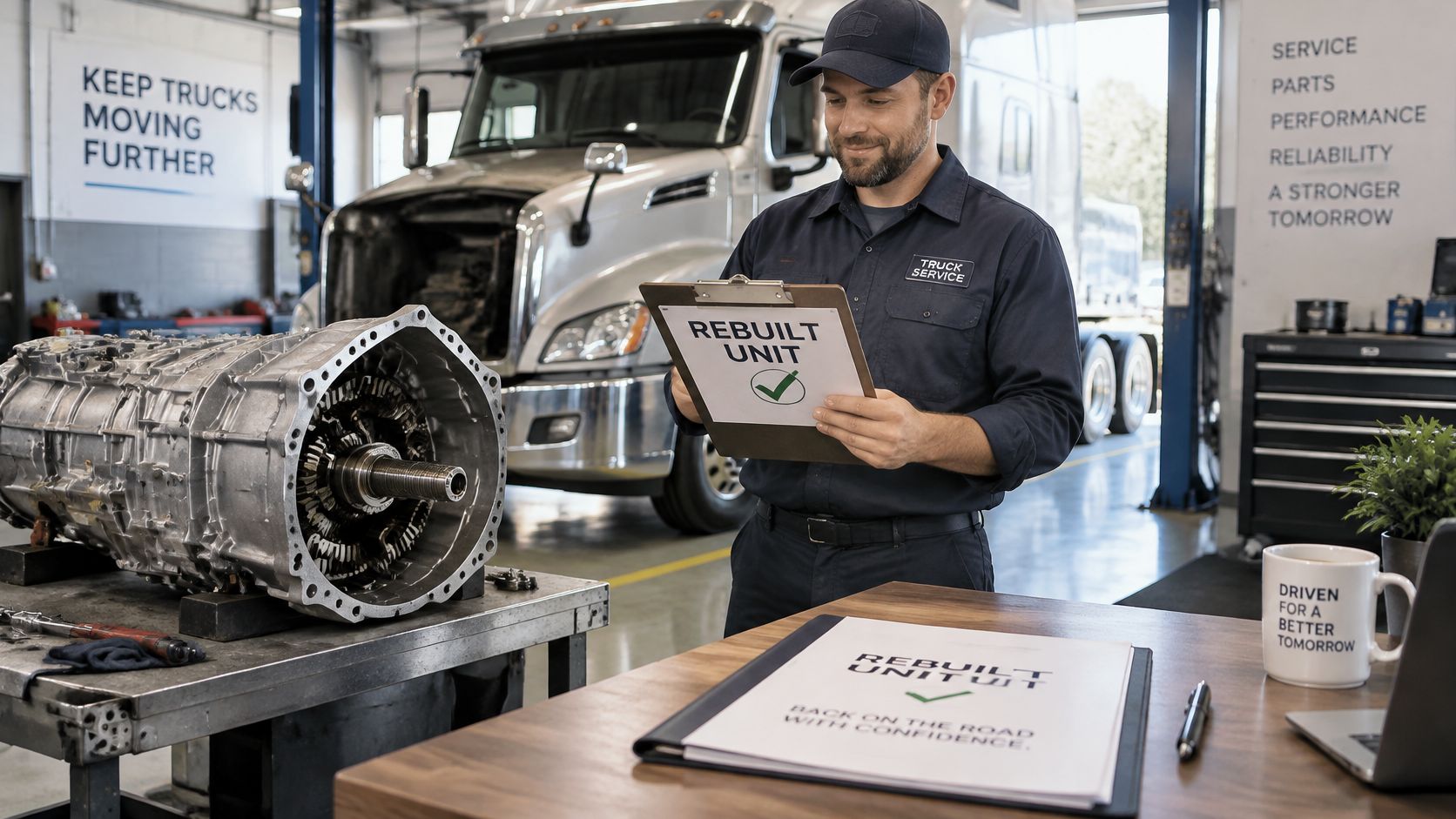
The inspection image below reflects the measurement mindset that should appear in the written record.

Eaton heavy-duty service guidance requires cleaning and inspecting bearings for pitting, spalling, discoloration, and abnormal axial or radial clearance, with replacement required when those conditions appear, as specified in the Eaton TRSM-0996 transmission service manual. The same inspection discipline applies to gear teeth, sliding clutch engagement teeth, shift yokes, shaft splines, bushings, and case bores.
Why Measurements Matter More Than General Descriptions
Eaton specifies maintaining original mainshaft gear axial clearance in the approximately 0.005 to 0.012 inch range for the referenced Fuller design in that manual. That figure is model specific. It must not be generalized to every Fuller design or every heavy-duty transmission. Its value here is simpler. It shows that rebuild quality depends on measured clearances against manufacturer information, not on a technician stating that parts looked fine.
A worn case bore can let an outer bearing race spin. Excessive gear or bushing clearance can produce shaft misalignment, abnormal tooth loading, gear clash, noise, and accelerated repeat failure. That's why the record should identify components cleaned and inspected, conditions found, wear items replaced, and where measurements were documented.
The following video provides additional visual context for transmission inspection work.
Spline condition deserves separate attention. Eaton Fuller procedures instruct technicians to check splines on all shafts for abnormal wear alongside mainshaft gear axial clearance, as documented in the Eaton Fuller TRSM-0600 service manual. Worn splines can undermine torque transfer even when gears appear serviceable, so spline wear, gear hub condition, and clearance measurements should be recorded as distinct findings.
None of this turns verification into a DIY teardown checklist. Complete disassembly, controlled parts cleaning, and precision measurement may require a suitable external facility when safe access, lifting equipment, or bench conditions aren't available at the vehicle location. Fleet teams should ask where each stage was performed rather than assume roadside conditions supported it.
Separate Manual and AMT Diagnostic Evidence
Manual gearboxes and AMTs fail differently on paper before they fail differently in metal. Treating both diagnostic paths as identical leads to unnecessary teardowns on electronically controlled trucks and vague records on manual units.
For a manual transmission, documented symptoms should connect to internal inspection findings. Grinding, clash, or jump out under load should be matched against gear teeth, sliding clutch teeth, splines, bearings, bushings, and case bores found during teardown. If the finished record lists parts but never ties them to the complaint, the evidence chain is broken.
AMTs demand a wider lens. A no shift condition or fault message can originate in the clutch actuator, shift motor, range or splitter mechanism, wiring, sensors, calibration, air supply, or software rather than the geartrain. An industry summary notes AMTs require OEM specific diagnostic procedures and insufficient diagnostic tooling can extend diagnosis before repair begins, as described in the Millennials Maintenance summary of semi truck repair costs by type.
Transmission failure on a work order doesn't always mean the transmission itself failed. On an AMT, the control system may be the root cause.
Evidence to Request for Manual and AMT Complaints
| Transmission context | Evidence to request | Question it helps answer |
|---|---|---|
| Manual, grinding or jump out | Teardown findings for gears, splines, bearings, and bushings | Does internal wear explain the symptom under load? |
| Manual, noise or vibration | Bearing condition notes and clearance measurements | Were worn bearings confirmed or only suspected? |
| AMT, no shift or fault message | Active and inactive fault codes with clutch wear data | Does the evidence point inside the geartrain or to controls? |
| AMT, range or splitter fault | Air pressure results and actuator test findings | Did air supply or actuation fail before gears were blamed? |
| AMT, post repair complaint | Calibration and parameter verification records | Was required setup completed after the repair? |
Operators reviewing a proposed semi truck transmission rebuild on an AMT should request fault codes, fluid and debris findings, and actuator or air test results before authorizing internal work. The diagnostic distinctions behind that request are covered further in the guide to semi truck transmission diagnostics and fault evidence.
Check the Completed Work Before Return to Service
Post rebuild verification is a record review with a hold point at the end. The fleet isn't reperforming the rebuild. It's checking whether the documentation proves the authorized work was completed and connected to the original complaint.
A Practical Verification Sequence
- Match the complaint: Confirm the work order restates the original symptom accurately, including operating conditions.
- Match the unit: Confirm the record identifies the exact transmission or core handled, not just the truck number.
- Review the evidence: Look for diagnostic findings, inspection notes, and measurements that justified the scope.
- Review the parts: Check which components were replaced, which were reused, and whether wear items are listed individually.
- Review validation: Look for functional checks performed after reassembly and installation.
- Review open items: Identify unresolved recommendations, limitations, or related repairs still pending.
For electronically controlled units, one more question matters. Was required calibration or programming completed, or was it assumed? A rebuilt geartrain installed without the applicable setup steps can leave shift complaints unresolved even when internal work was sound. The record should state what was done.
Fluid evidence belongs in the file as well. Operators should confirm what was found in the drained fluid, whether debris was present, and what fluid was installed. Background on fluid condition and service decisions is available in the resource on semi truck transmission fluid checks and service.
Documentation isn't a universal road test. Acceptance procedures and specifications come from applicable manufacturer information and qualified technicians, not from a generic checklist. Fleets shouldn't invent their own pass or fail criteria where manufacturer guidance exists.
Warranty review closes the sequence. Fleet managers should confirm coverage period, covered components, exclusions, core conditions, and what documentation must be retained to support a claim. Unresolved items should be written down, not carried as verbal understandings.
Hold point: If the paperwork doesn't connect the repair to the original problem, clarification comes before dispatch authorization.
That hold point doesn't declare a truck safe or unsafe by itself. It prevents a release decision based on assumption. A qualified inspection, manufacturer guidance, and company policy still govern return to service.
Apply the Checks to Real Operating Scenarios
Verification questions stay consistent, but the decisions they produce change with the operation. The labeled hypothetical scenarios below show how the same evidence chain works under different pressures. None describes actual SAAT work or a real customer outcome.
Hypothetical scenario 1, fleet manager review: A maintenance manager receives a rebuild record listing inspected components, replaced wear items, and completed checks. A separate note recommends controlled bench work at a suitable external facility for a remaining concern. The manager compares the documented findings against the original complaint before release and keeps the truck held until the open item is explained in writing.
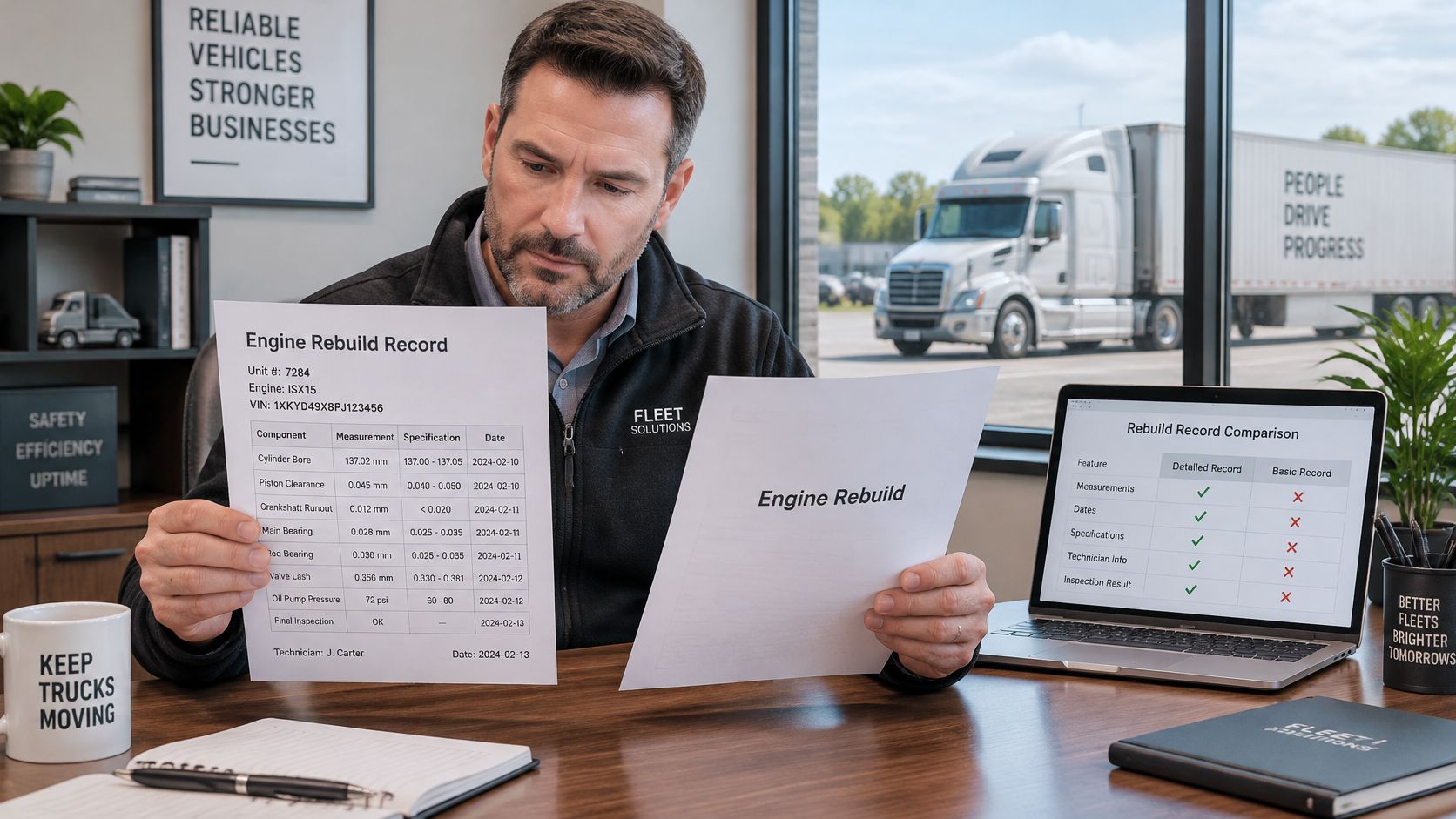
Hypothetical scenario 2, dispatcher triage in the Tampa to Lakeland corridor: A driver reports a no shift condition and a dash warning. Dispatch gathers the fault message, fluid leak observations, and air system behavior before a mobile visit. At the vehicle location, the assessment focuses on whether diagnostics can proceed safely on site or whether suspected internal damage means planning recovery to a suitable external facility.
That distinction is the honest limit of mobile work. Fault capture, leak assessment, and external checks may be feasible at the roadside. Removal, controlled disassembly, and precision measurement often aren't, depending on access, lifting needs, equipment, and job scope.
Hypothetical scenario 3, owner-operator closeout: An owner-operator reviews warranty terms, core conditions, replaced parts, and completed checks before paying the final invoice. Two recommendations remain open and unrelated to the rebuild scope. Both get documented with a planned follow up instead of being absorbed into a verbal promise.
Ongoing records make the next decision easier. Fleets that log transmission findings alongside routine service history, as outlined in the semi truck maintenance schedule guide, can spot repeat symptoms earlier and compare future teardown findings against prior evidence.
Each scenario ends the same way. The decision follows the record, the operating limits are stated plainly, and nobody treats a completed invoice as proof by itself.
Make the Final Return-to-Service Decision
Four shortcuts cause most bad release decisions after a semi truck transmission rebuild. Accepting a generic rebuilt label is the first. Assuming visible wear proves core condition is the second. Treating an AMT fault code as proof of internal damage is the third. Assuming every major transmission job can be completed roadside is the fourth.
Each shortcut skips evidence. A label doesn't show inspection findings. Visible wear doesn't replace clearance measurements, since bearings that pass visual inspection must still be checked for axial and radial clearance after washing in clean solvent, as directed in the Eaton Fuller TRSM-0880 heavy-duty transmission service manual. A fault code doesn't localize a failure inside the geartrain. A mobile visit doesn't create bench conditions where none exist.
The Minimum Useful Record
- Complaint and conditions: What the driver reported and when it happened.
- Diagnostic basis: Codes, fluid findings, test results, or teardown evidence.
- Authorized scope: What work was approved and what wasn't.
- Parts and inspection evidence: Components replaced, reused, measured, or rejected.
- Functional checks: Validation completed after reassembly, including calibration where applicable.
- Warranty and limitations: Coverage terms, core conditions, and unresolved items.
Release decisions should be boring. Complete records, no open questions, no surprises for the next driver.
That record still sits inside a larger responsibility. Operators and fleets must apply company policy, manufacturer guidance, qualified inspection, and applicable regulations before dispatch. Paperwork supports that judgment. It doesn't replace it.
For Tampa, Lakeland, and nearby Florida operators, the practical step is a case specific mobile assessment at the vehicle location. Feasibility depends on location, traffic, technician availability, safe access, and the job itself. There's no SAAT workshop to visit, no bay to book, and no drop off option. When work requires controlled disassembly, lifting, or bench measurement beyond safe on site conditions, a suitable external facility is the realistic path, stated plainly before commitments are made.
Operators and fleets in Tampa, Lakeland, and nearby areas can contact SAAT Repairs Corp for mobile Road Services at the vehicle location, including transmission related diagnostics and case specific feasibility assessment before major work is authorized. To discuss symptoms, documentation, and whether on site evaluation is appropriate for a specific truck, visit SAAT Repairs Corp and use the English contact section.