Most semi-truck maintenance schedules fail for a simple reason, they treat mileage like the whole story. In Tampa-Lakeland duty cycles, that's sloppy maintenance thinking, because heat, idle time, stop-and-go traffic, and repeated braking can wear out parts long before the odometer looks scary. A defensible semi truck maintenance schedule uses four triggers together, calendar time, mileage, engine hours, and condition findings from daily inspections and diagnostic data.
Federal compliance sets the floor, not the finish line. Under 49 CFR §396.17, every commercial motor vehicle needs a documented periodic inspection at least once every 12 months, and FMCSA's 2023 roadside inspection data recorded 3,013,478 inspections with 19.6% resulting in a vehicle being placed out of service (FMCSA Safety Research Forum motor carrier stats overview, 2023). That's the point, the annual inspection is mandatory, but it's never enough by itself.
Table of Contents
- Why a Mileage-Only Schedule Is Not Enough
- The Two Inspection Layers Every Schedule Sits On
- Inspection-Readiness Items Drivers Can Check Every Day
- Engine Fluids, Filters, and Air System Intervals
- Brakes, Wheel Ends, Suspension, and Steering Service
- DPF, EGR, and Aftertreatment Service Triggers
- Transmission, Clutch, and Driveline Schedule
- How Tampa-Lakeland Routes Modify Standard Intervals
- Documentation and the Defect-Workflow Backbone
- Quick Reference Schedule for Daily Service Items
- Grading Findings and the 72-Hour Decision Rule
- Mobile Service Boundaries and When an External Facility Is Needed
Why a Mileage-Only Schedule Is Not Enough
Mileage-only PM plans look neat on paper and fail in the yard. A truck can rack up low miles and still burn through brakes, batteries, filters, and aftertreatment because the unit is idling, crawling through traffic, or working hot regional turns all week. That's why a serious schedule blends the federal annual inspection with daily checks, recurring service by mileage and engine hours, and immediate follow-up on defect codes or driver-reported symptoms.
What a real schedule reacts to
A rigid odometer grid ignores duty cycle. A short-haul tractor in the Tampa-Lakeland corridor may hit fewer miles but spend more time loading heat into the cooling system, cycling the transmission, and regenerating the aftertreatment system than a highway tractor with steadier speed. A condition-based model fixes that blind spot.
Practical rule: if the truck's use changed, the schedule should change with it. A route switch, a brake complaint, a derate, or a recurring fault code is a reason to pull service forward.
That is the model that holds up in the world, daily driver inspections, documented corrections, and recurring preventive service tied to how the truck operates. Mileage still matters, but it sits beside engine hours, calendar age, and inspection findings, not above them.
The Two Inspection Layers Every Schedule Sits On
Every defensible schedule starts with two inspection layers. The first is the driver's pre-trip and end-of-workday inspection report, which confirms the truck was checked before operation and again at the close of the workday when required under 49 CFR 396.11. The second is the periodic inspection required at least once every 12 months for every commercial motor vehicle and each segment of a combination vehicle.
What the driver report needs to capture
The driver's report is about dispatch readiness and visible defects. It should capture the vehicle identification, the defect or deficiency, and the fact that the driver inspected the unit before operation and at day's end when required. If a defect could affect safe operation or cause a mechanical breakdown, it has to be repaired before the truck goes back out unless the carrier certifies repair is unnecessary (FMCSA Safety Planner, DVIR rules).
What the annual inspection covers
The annual inspection is the compliance milestone. It covers the items in Appendix A to Part 396, and the carrier must keep the periodic-inspection report for 14 months while documentation of the most recent inspection stays on the vehicle (FMCSA Safety Planner, annual inspection and retention rules). That record burden matters because the inspection date, the vehicle ID, the inspector, and the components examined all become part of the audit trail.
A truck can be current on its annual inspection and still need weekly or monthly work on brakes, tires, lighting, steering, suspension, fluids, belts, batteries, air systems, and emissions equipment. That's not a contradiction. It's the whole point of maintenance discipline.
Inspection-Readiness Items Drivers Can Check Every Day
A truck fails roadside long before it fails mechanically. The driver sees the warning signs first, and the shop usually gets involved only after the damage is already visible. In FMCSA roadside data, vehicle inspections in the 2025 summary carried a 23.51% out-of-service rate, which is why daily attention to tires, brakes, lamps, and coupling gear pays off (roadside inspection statistics summary).
A five-minute pre-trip that actually matters
Drivers do not need a tablet or a formal inspection form to catch the big defects. They need a disciplined walk-around and the patience to stop on the first bad sign.
- Tires and wheels: check for low pressure, cuts, sidewall damage, exposed cords, abnormal wear, and loose lug conditions.
- Brakes and air loss: listen for leaks, watch for warning lights, and note slack or pull during brake feel.
- Lighting and reflectors: confirm every lamp, marker, and trailer connection works before the truck leaves.
- Coupling and emergency gear: confirm the fifth wheel is locked, air lines are seated, and required emergency equipment is present.
- Visible leaks: note fluid spots, wet hose ends, and anything that grows from a seep into a drip.
Tires deserve hard scrutiny because roadside inspectors catch them fast. The same roadside summary shows tire citations were especially ugly, with 102,825 of 104,089 tire citations leading to out-of-service orders (roadside inspection statistics summary). That is not a paperwork problem. That is a truck sitting on the shoulder.
Brakes deserve the same treatment. In the same inspection data, 62,105 citations for 20% or more defective brakes produced 61,873 associated out-of-service violations. A brake defect is a stop-now item once it is visible in the yard, not a note for later.
The cheapest repair is the one that prevents a tow, a missed delivery, or secondary damage. Parts cost comes after keeping the unit on schedule and out of a roadside citation.
A driver who writes down the defect early gives dispatch and service a real chance to control the outcome. A driver who ignores it turns a small defect into a road failure.
Engine Fluids, Filters, and Air System Intervals
Engine-side service should follow usage, not superstition. Oil, filters, coolant, DEF, and air-system service all wear on different clocks, and high-idle tractors punish those clocks faster than the odometer suggests. Low mileage doesn't protect a truck that spends hours idling in heat or creeping through city work.
What should be mileage-driven and what should not
Oil and filter changes belong on a mileage plus engine-hour basis, because both contamination and thermal stress matter. Fuel filters follow contamination and service history, not just distance. Coolant deserves calendar attention because fluid age matters even when miles are light.
A high-idle unit needs the engine-hour counter watched as closely as the odometer. That is where a lot of “low-mileage” maintenance mistakes happen, the truck looks young on paper and old in the bay.
Where mobile service fits, and where it doesn't
A roadside or yard visit can handle many fluid and filter tasks when the job is straightforward, the truck is safely accessible, and waste handling is controlled. That said, a technician shouldn't be forced into a bad setup just because the truck is parked. Pressure tests, leak isolation, and jobs involving contaminated coolant or complicated filtration often belong in a controlled setting where cleanup, test equipment, and parts replacement can be done without shortcuts.
The practical takeaway is simple. Use mileage for driveline wear items, use engine hours for idle-heavy units, and let calendar time override both when fluids age out before the truck does.
Brakes, Wheel Ends, Suspension, and Steering Service
Maintenance becomes safety, not just uptime. Brake adjustment, wheel-end condition, suspension wear, and steering play all show up in roadside inspections and all can turn into ugly out-of-service decisions when they're ignored. FMCSA's rules require carriers to keep these parts in safe and proper operating condition, including frames, suspension systems, axles and attaching parts, wheels and rims, and steering systems (FMCSA Safety Planner, systematic inspection and maintenance).
What to check on every service cycle
A smart PM routine tracks the hard-to-fake items:
- Brake adjustment and slack: verify travel, chamber condition, and air-loss signs.
- Wheel ends: inspect seals, hubs, bearings, and heat evidence.
- Suspension: look at bushings, air bags, U-bolts, alignment clues, and cracked or shifted parts.
- Steering: check free play, tie-rod condition, and any looseness that grows under load.
What a mobile technician can handle, and what should go elsewhere
Mobile work makes sense for inspection, adjustment, lubrication, and diagnosis when the vehicle location is safe and the access is reasonable. That includes brake-adjustment verification, visible-leak inspection, and many wheel-end or suspension observations. It does not mean every brake or structural job belongs at the roadside.
Commercial trailer brake, air, electrical, suspension, and structural work remains case-specific. If the job needs lifting, disassembly, or controlled equipment, an external facility is the responsible answer.
That boundary matters because some jobs are not just hard, they're unsafe to perform under field conditions. A broken structural component, a hub issue that needs controlled teardown, or a suspension repair that needs proper support shouldn't be treated like a quick callout.
DPF, EGR, and Aftertreatment Service Triggers
Aftertreatment care should be condition-driven, not mileage-driven. Stop-and-go regional duty, repeated idling, and heat cycles change soot loading and regeneration behavior, which means the truck can demand service long before a neat mileage target arrives. Tampa-Lakeland work often produces exactly that pattern, short hops, frequent stops, and more regeneration stress than a pure highway tractor.
What triggers action on aftertreatment
A technician should respond to fault codes, forced-regeneration history, differential pressure readings, and poor regeneration behavior. DPF cleaning belongs on soot loading and diagnostic findings, not on a calendar alone. EGR and related sensors should be inspected when the truck shows performance loss, warning lamps, or repeat faults tied to emissions control.
What mobile diagnostics can realistically do
A mobile visit can handle scan-tool checks, parameter review, aftertreatment resets, and many cleaning services when the equipment and access are appropriate. That keeps a truck from being sent away just because the problem started with a light on the dash. It also lets the service team document whether the fault was a sensor issue, a loading issue, or a deeper hardware concern.
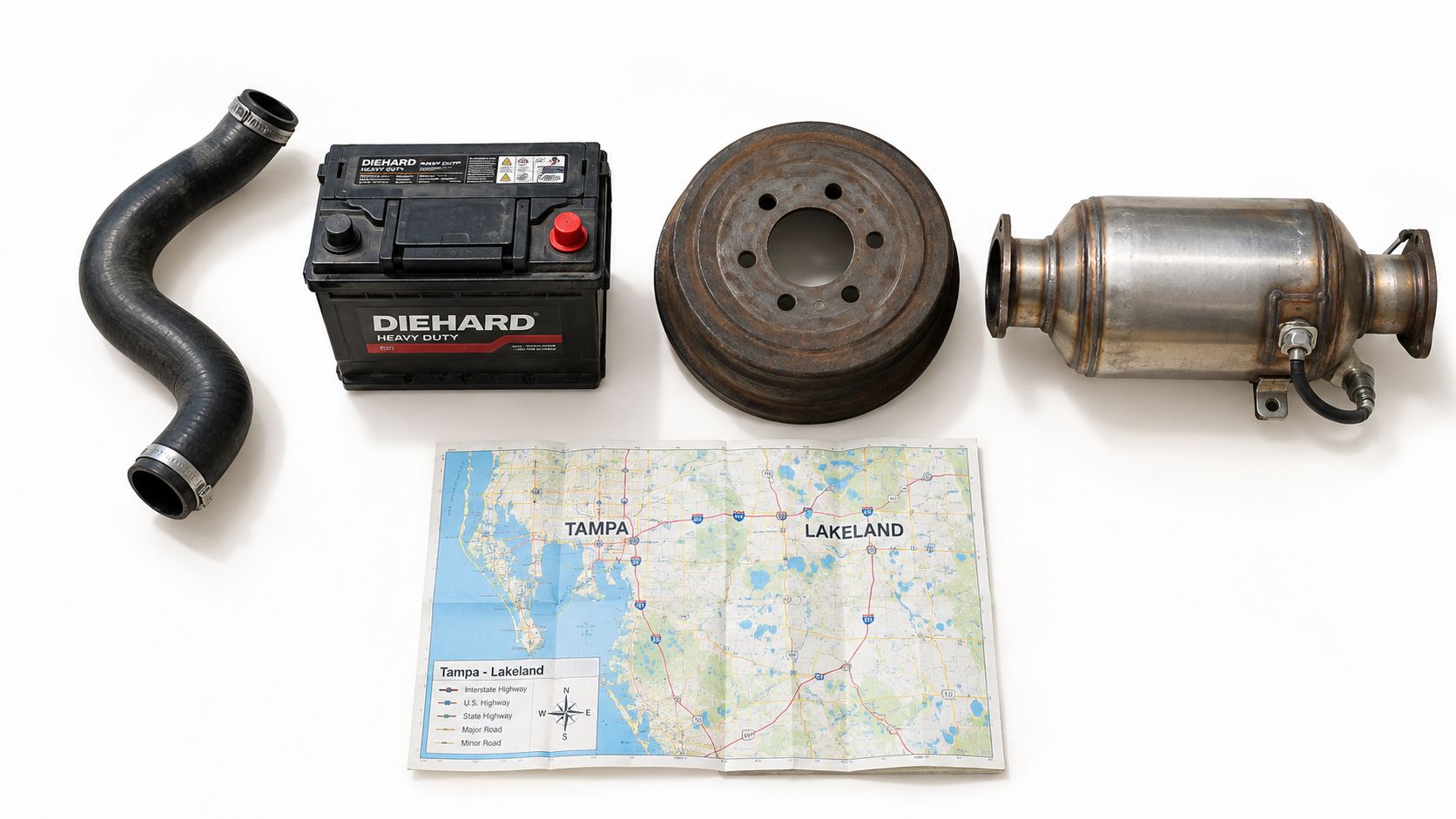
A truck with severe soot loading, internal substrate damage, or melt risk needs a different answer. That's not a roadside cleanup job. It's a controlled repair decision, and pretending otherwise wastes time and creates more damage.
For operators dealing with recurring aftertreatment faults, the useful rule is boring but reliable, document the code, document the regen outcome, and document whether the truck returned to service cleanly. If the fault comes back, the schedule needs to change.
Transmission, Clutch, and Driveline Schedule
Driveline service should track both wear and feel. Fluid interval work belongs on a mileage or service-cycle basis, while clutch condition shows up in engagement quality, slip, chatter, and the driver's report. A truck can pass a quick walk-around and still be one bad shift away from a roadside complaint.
For a deeper look at fluid service on the transmission side, a separate technical reference is available in the semi-truck transmission fluid guide.
What to watch between PM visits
U-joints, wheel seals, fifth-wheel lubrication, and clutch linkage are all practical PM items because they affect both drivability and wear. Grease points don't need drama, they need consistency. Missed lubrication creates vibration, heat, and sloppy operation that gets expensive later.
A mobile technician can inspect, adjust, lubricate, and top off many driveline items at the vehicle location when access is safe. If the truck needs lifting, serious disassembly, or controlled internal transmission work, the right answer is a shop-style environment or another external facility that can support the job safely.
How Tampa-Lakeland Routes Modify Standard Intervals
Regional Florida duty changes maintenance math. Heat, humidity, congestion, and frequent braking shorten some service windows and make engine hours matter more than miles on selected units. A lightly loaded tractor still ages fast if it spends the day in traffic, idling at docks, and working air systems hard.
The opposite mistake is just as common. Replacing parts strictly by mileage can waste money when the truck hasn't earned the repair yet, while stretching intervals only because the odometer looks friendly can push a unit into failure. The better answer is to use condition-based exceptions after severe duty, extended idling, repeated fault codes, or a derate.
Why the local profile changes the maintenance conversation
Regional work around Tampa, Lakeland, and the surrounding corridors often means more stop-and-go motion, more heat soak, and more brake application than linehaul work. That pushes coolant checks, battery attention, brake adjustment, and aftertreatment service closer together. It also means a truck with low mileage may still need service on schedule because the wear has already happened in hours, not miles.
What to adjust first
Use the local route profile to decide which interval moves:
- Calendar-based items: batteries, coolant, and other age-sensitive fluids deserve earlier review when the unit sits or idles more.
- Hour-based items: idle-heavy tractors should be judged by engine hours, not by the odometer alone.
- Condition-based items: repeated regen events, brake pull, weak cranking, or cooling complaints should pull service forward immediately.
A truck that lives on local freight doesn't get to skip maintenance just because the route is short. It just wears differently, and the schedule should reflect that.
Documentation and the Defect-Workflow Backbone
A maintenance schedule without records is a guess. The paper trail has to be clean because roadside defects, shop findings, and release decisions all live or die on what gets written down.
What every work order should record
A solid defect workflow includes:
- Vehicle identity and mileage: tie the repair to one specific unit.
- Defect description: write the symptom clearly, not vaguely.
- Corrective action and parts installed: show what was done, not just that something was “checked.”
- Technician name and release authorization: show who finished the job and who cleared it for dispatch.
Keep the DVIR package, the repair certification, and the driver-review certification together for the required retention period. The periodic inspection report stays in the unit's compliance file longer, and that file should stay with the current proof of inspection. At audit, those two folders get pulled first, so store them with the work orders instead of scattering them across dispatch, maintenance, and filing cabinets.
A note that says only “inspected” is useless. The record has to explain why the truck was released, what defect was found, what action fixed it, and who signed off. That is what keeps repeat failures visible and keeps dispatch from sending out a unit that was grounded for a real problem.
If the repair note can't explain why the truck was released, the note wasn't good enough.
For retention details, see FMCSA Safety Planner, DVIR retention rules and FMCSA Safety Planner, annual inspection retention rules.
Quick Reference Schedule for Daily Service Items
The table below is a fast look-up, not a substitute for the detailed sections above. It uses the layered trigger model, because that's how trucks age.
| Service item | Mileage | Engine hours | Calendar |
|---|---|---|---|
| Engine oil | Service per OEM interval | Use hours on idle-heavy units | Age-sensitive override |
| Fuel filter | Service per contamination risk and interval | Use hours when idle time is high | Replace on age and service history |
| Coolant | Service per condition and system checks | Review on high-heat use | Calendar override applies |
| DEF | Monitor consumption and quality | Watch for regen-related usage | Review when storage age is a concern |
| Air dryer | Service by condition and moisture findings | Check with air-system use | Annual-style timing fits most fleets |
| Brake adjustment | Check at each inspection layer | Use frequent service checks | No calendar substitute for inspection |
| Tire check | Every daily walk-around | Frequent yard checks | Age and condition both matter |
| Lighting | Every daily walk-around | Verify at fuel-stop checks | No calendar substitute |
| Coupling | Every daily walk-around | Recheck after trailer changes | Review after route or trailer changes |
| Fifth-wheel grease | Mileage plus environment | Recheck on severe duty | Calendar can govern in harsh use |
| U-joints | Lubricate on service cycle | Watch vibration with hours | Review on service interval |
| Batteries | Condition based | Idle-heavy units need closer watch | Calendar matters in heat |
The separate technical reference on preventive maintenance is available in the truck PM service guide. That kind of reference only works when the truck's route, load, and idle profile are part of the decision.
Grading Findings and the 72-Hour Decision Rule
Dispatch needs a rule, not a debate. Every finding should land in one of three buckets, immediate grounding, repair within 72 hours, or schedule with the next PM. That keeps the daily inspection honest without turning every small defect into a full shutdown.
How to grade the finding
Immediate grounding covers safety-critical defects the driver finds before dispatch, especially anything that threatens stopping, steering, tire integrity, lighting visibility, or coupling security. Repair within 72 hours fits defects that are real but not yet at the point where the truck should be parked for an indefinite wait. Next-PM items are trend notes, loose hardware, aging components, or low-level symptoms that need watching before they become dispatch problems.
The value of the rule is clarity. Drivers know what stops the truck, dispatchers know what can be scheduled, and maintenance knows what needs evidence in the file. That makes the DVIR useful instead of theatrical.
How to write the decision down
The note should identify the defect, the grade, the action taken, and the person authorizing release. If a truck was grounded, the record should say why. If it stayed in service, the file should show why that was safe and who made the call.
Roadside exposure meets schedule discipline. A truck that gets graded correctly is easier to defend, easier to schedule, and less likely to surprise anybody on the shoulder.
Mobile Service Boundaries and When an External Facility Is Needed
Mobile service covers a lot of ground, but roadside work has clear limits. The decision should come down to safe access, proper equipment, job scope, and technician availability. If any of those pieces are missing, the responsible call is an external facility that can complete the repair without cutting corners.
What mobile work fits well
Mobile service fits DVIR follow-up, brake adjustment, fluid and filter service, DPF cleaning, electrical diagnosis, sensor and harness repair, and scan-tool programming when the truck is stable and the work area is safe. Those are the jobs that can be completed without a bay, provided the truck is not already in a condition that demands heavier teardown. It also fits diagnostic triage that catches a small fault before it turns into a tow.
Fleets that want a standing on-site program can read the mobile fleet repair guide for how scheduled mobile visits are scoped. For operators who need that kind of field support, SAAT Repairs Corp provides mobile Road Services for heavy-duty trucks in the Tampa and Lakeland area.
What should be routed elsewhere
Some repairs belong in a shop, plain and simple. In-drum brake work, hub machining, frame or structural repair, severe soot loading with melt risk, and internal substrate replacement need the right space, the right equipment, and tighter control than a roadside visit can provide. Commercial trailer brake, air, electrical, suspension, and structural work stays case-specific for the same reason.
A mobile technician can inspect, test, and often correct the problem, but a shop handles the jobs that require disassembly, heavy lifting, or precision machining. That line matters. It keeps the truck from being half-fixed in a parking lot and then towed anyway.
Arrival timing is always tied to location, traffic, technician availability, and the size of the job. That is the honest way to set expectations for roadside support, and it is the only standard that holds up once the truck is already down.