A driver calls from I-4 near Lakeland. The truck still moves, but the dash is complaining, the shifts feel wrong, and the load is late. At that point, the right question isn't “Which transmission part failed?” It's “What can be confirmed at the truck right now, and what has to wait for a controlled facility?”
For Tampa dispatchers, that distinction matters more than the symptom itself. A modern semi truck transmission repair call can mean wiring, clutch actuation, calibration, lubricant problems, or internal gearbox damage, and those are not the same job. Mobile work can solve some of them safely at the vehicle location, while others need a suitable external facility and careful teardown.
Table of Contents
- A Tampa Breakdown Call and the First Decisions
- What Kind of Transmission Is in the Truck
- Reading the Symptoms Before the Technician Arrives
- What to Capture Before the Mobile Technician Is Called
- What Mobile Service Can Realistically Handle in Tampa
- How SAAT Repairs Fits the Tampa Transmission Triage
- Where Mobile Triage Should Not Be Forced
- Operator Checklist and How to Reach SAAT
A Tampa Breakdown Call and the First Decisions
A dispatcher gets the call while the truck is still rolling across the corridor. The driver says it “won't shift right,” the warning lamp is on, and the unit may be stuck in a gear or slipping into neutral. At that moment, the immediate decision is not whether the gearbox is bad, it's whether the truck can be triaged where it sits without making the damage worse.
The first pass should be calm and practical. If the truck can still select neutral, if there's no heavy fluid loss, and if the warning is consistent with an electrical or calibration issue, a mobile technician may be able to start with diagnostics at the vehicle location. If the truck is grinding, leaking badly, or making load-related noise, the decision may move toward towing or an external option instead of forcing the issue roadside.
Tampa and Lakeland fleets deal with mixed duty cycles, from highway freight to stop-and-go yards, so the same complaint can point in different directions. A transmission warning on a late-model truck can be a control fault, not a broken gearset, and treating it like a full teardown wastes time. Good dispatch work starts with narrowing the problem before anyone commits to the wrong type of service.
Practical rule: if the driver can describe the symptom clearly, the dispatcher can usually decide faster whether the next move is roadside diagnosis, limited on-site correction, or controlled removal.
For mobile operators, that mindset is the difference between a useful call and a needless one. SAAT's mobile Road Services model fits that reality because the technician goes to the truck, not the other way around. For the kind of pre-arrival details that help speed triage, see the company's guidance on what to send when requesting mobile truck repair near Tampa or Lakeland.
What Kind of Transmission Is in the Truck
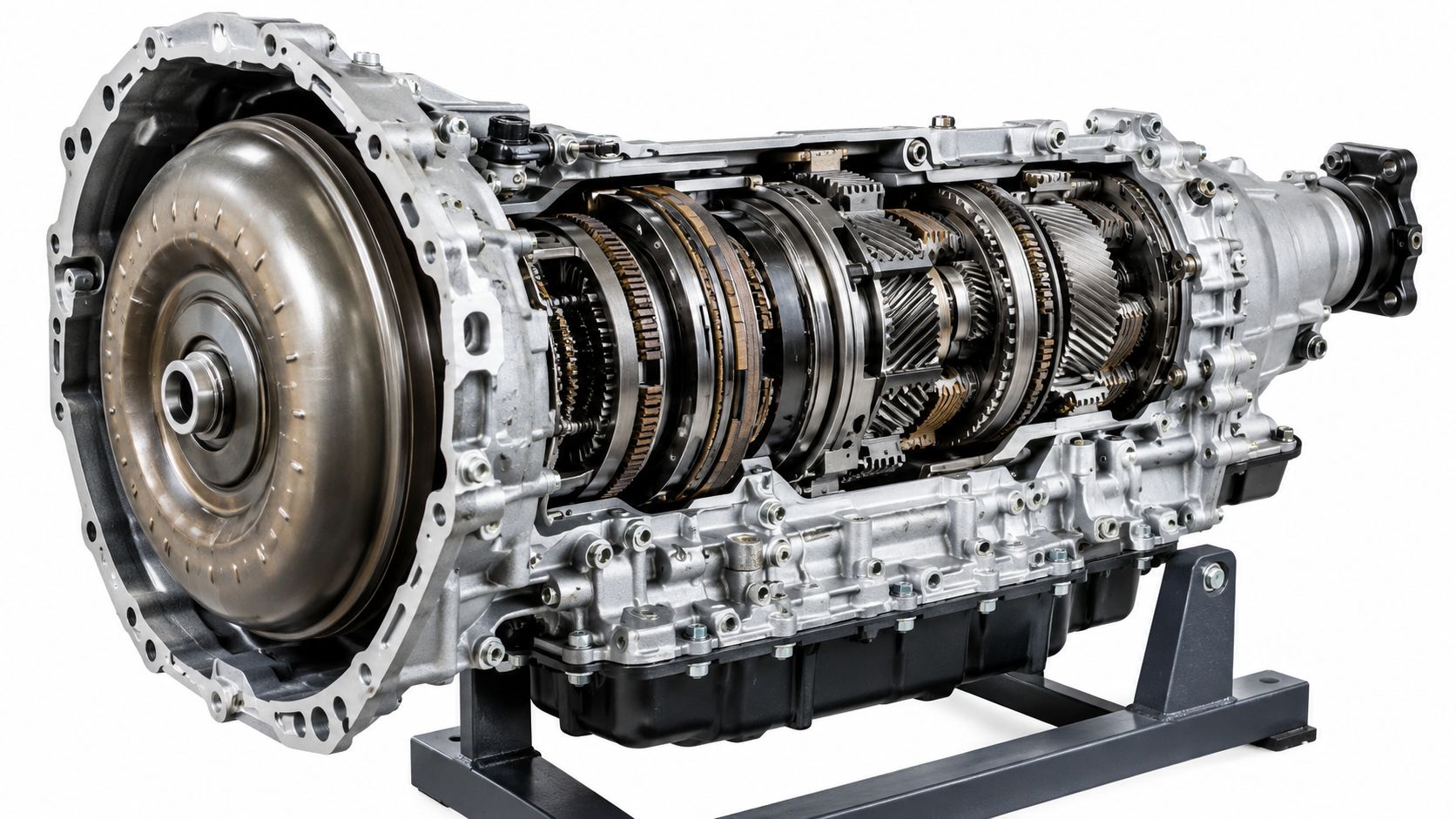
A transmission complaint sounds simple until the unit type is identified. A manual gearbox depends on the driver for clutch work and gear selection. An automated manual transmission, or AMT, still uses a manual-style gearbox, but shifting, clutch actuation, sensors, and software control the process. A fully automatic unit uses a different internal design and a different service path.
That distinction changes the repair order. In an AMT, a “won't shift” complaint may come from clutch wear, an actuator fault, a wiring issue, a sensor problem, or a calibration error before anyone suspects internal gear damage. Industry reporting noted that self-shifting gearboxes represented about 30% of heavy-truck transmissions sold in North America in 2013, and AMT controls saw 110% sales growth in North America during 2014 (TruckingInfo, The Automated Revolution Is Real).
Why the family matters before the wrench comes out
On a manual truck, roadside diagnosis usually starts with the clutch and external linkage. On an AMT, the technician also has to check fault codes, power supply, communication, sensors, and software parameters. A scan result alone does not prove the gearbox is damaged, and that is where many unnecessary towing decisions begin.
A fleet manager reading a work order should look for the transmission family, the symptom language, and whether the complaint includes warning lamps or a derate. Those details help separate a control issue from a true mechanical failure. They also tell the dispatcher whether the next step is electrical testing, clutch assessment, or controlled removal.
For a driver who sees a fault message and wants a visual guide to semi truck transmission problems and their likely causes before service arrives, a visual guide to semi truck transmission problems and their likely causes is a useful companion to the dispatch call.
Later-model heavy trucks are also changing the repair mix. In Europe, more than 80% of Class 8 trucks were reported to be sold with self-shifting transmissions around 2013, compared with roughly 30% in the United States in the same period (TruckingInfo, Transmission Trends). That gap shows why transmission repair now starts with identifying the system, not just the symptom.
Reading the Symptoms Before the Technician Arrives
A transmission symptom is useful only if it gets translated into the right bucket. “Won't shift” could mean an electrical fault, a clutch problem, a bad actuator, a low-fluid issue, or internal damage. A roadside technician can only work efficiently if the dispatch note separates those possibilities instead of flattening them into one vague complaint.
The most useful categories are mechanical, electrical or communication, lubrication-related, and external linkage or clutch control. Eaton's service guidance ties lubrication problems to low level, leaks, wrong lubricant, incorrect fill, and operating angle, while AMT guidance points to faults in sensing, actuation, calibration, or control logic. A truck that is hard to shift under load may have a clutch or calibration issue, while a truck that slips, grinds, or jumps out of gear may be pointing toward internal wear or geometry problems.

| Reported symptom | Likely cause bucket | Mobile-feasible next step |
|---|---|---|
| Won't shift, warning lamp, or fault text | Electrical or communication | Retrieve codes, verify power and wiring, inspect sensors and connectors |
| Stuck in gear or neutral selection problem | Actuator, calibration, or control | Check gear-position data, actuator response, and software parameters |
| Fluid on the ground or oily bellhousing | Lubrication or seal issue | Inspect level, leaks, plug tightness, and fluid condition |
| Noise under load, jumping out of gear, or recurring seal leak | Internal mechanical | Check visible play and mounting, then decide on tow or external facility |
A scan tool helps, but it doesn't prove the transmission itself is broken.
Mobile work earns its keep here. A technician can often test the vehicle, narrow the fault bucket, and tell the dispatcher whether the problem is roadside-correctable or whether the truck needs more than a field repair. If the complaint turns out to be fluid-related, the next reference point is the company's guide on semi truck transmission fluid.
What to Capture Before the Mobile Technician Is Called
The fastest transmission calls start with a tight checklist. A driver or dispatcher can usually gather the key facts in under ten minutes, and that information often decides whether the truck stays in place, gets moved carefully, or needs a different plan.
The details that matter most
- Warning text and fault codes: Record the dash message exactly, because “transmission fault” is less useful than the actual wording or code.
- Current gear behavior: Note whether the truck can shift, whether it's stuck in one gear, and whether it can select neutral.
- Fluid condition: Look for fluid on the ground, burnt odor, discoloration, or visible contamination if the unit can be checked safely.
- Recent work: Write down clutch service, transmission work, wiring repairs, or any software update already performed.
- Road and load context: Include load weight, whether the truck is on a grade, and what happened just before the fault appeared.
- Parking safety: Confirm whether the truck is on level ground and whether access is safe for a mobile technician.
Those notes shorten the call and reduce repeat questions. They also help the technician decide whether the complaint fits a roadside diagnosis or whether continued movement risks more damage. If a unit won't select neutral, or if the truck is leaking heavily, the next move often changes fast.
The right pre-arrival information also matters for recordkeeping. Fleets that keep a clean trail of symptoms, codes, service history, and repair decisions are easier to support when the roadside event has compliance implications. For a driver-facing symptom overview that pairs well with dispatch notes, the article on semi truck transmission problems is the right place to cross-check the complaint language.
What Mobile Service Can Realistically Handle in Tampa
Mobile transmission work has a practical boundary. At the truck, a technician can usually retrieve fault codes, inspect wiring and sensors, check clutch and actuator behavior, verify software parameters, confirm fluid level, and inspect accessible leaks or external linkages. That is the kind of work that matches a roadside call in Tampa, Lakeland, or along the nearby corridors.
The boundary shows up when the job turns internal. Eaton's service guidance says bearings need dimensional evaluation for pitting, discoloration, spalling, and clearance problems, and a bearing that spins in the case bore calls for case replacement rather than a simple part swap (Eaton heavy-duty service manual). That kind of inspection needs controlled lifting, teardown, measurement, and proper tools.
What belongs at the vehicle, and what doesn't
| Mobile-appropriate work | Better suited to an external facility |
|---|---|
| Fault-code retrieval and electrical checks | Internal geartrain rebuild |
| Sensor, connector, and wiring inspection | Case machining or bore repair |
| Clutch and actuator assessment | Shaft, bearing, or gear replacement inside the box |
| Fluid level and leak correction at accessible points | Full transmission replacement |
| Software or parameter verification | Dimensional inspection after teardown |
A mobile truck can also confirm whether a problem is really transmission-related or whether it's coming from the surrounding systems. That matters because a roadside diagnosis can save a needless tow when the issue is external, but it can also prevent a risky field teardown when the unit needs a controlled environment instead.
Eaton Fuller's lubrication guidance reinforces that point. The manuals stress correct lubricant type, leak correction, and proper level checks, and they note that an operating angle above 12 degrees can make splash lubrication unreliable (Eaton Fuller heavy-duty manual). If the geometry is wrong, the fix is not just “add oil.”
SAAT Repairs Corp fits that roadside boundary because the company works as mobile Road Services only. It can handle diagnosis, electrical and sensor repair, clutch-related inspection, software checks, and post-repair verification at the vehicle location, while any job that needs controlled disassembly is handled through an external option rather than a customer-facing workshop.
How SAAT Repairs Fits the Tampa Transmission Triage
A good roadside response starts with the phone call, not the wrench. For Tampa and Lakeland fleets, SAAT's model is built around dispatching a technician to the vehicle location, then sorting the complaint with scan-tool diagnostics, electrical testing, and targeted repair where safe access allows it. That approach fits the reality of modern transmission faults, where a warning lamp or shift complaint may come from software, sensors, or a clutch control issue rather than the gearbox itself.
The scope extends beyond a simple code read. SAAT's confirmed service set includes 24/7 mobile roadside assistance, diagnostics, electrical and sensor repair, brake and clutch-related inspection, DPF and EGR support, software parameter checks, and post-repair verification. Because the company has no customer-facing workshop, the technician's job is to decide what can be resolved on site and what needs an external facility.
What the dispatcher should expect
- Arrival is conditional: Timing depends on location, traffic, technician availability, and the job itself.
- Diagnosis comes first: The technician needs the symptom, the codes, and the truck's current behavior before choosing a repair path.
- On-site repair has limits: External disassembly, internal rebuilds, and major mechanical work don't belong in a roadside shoulder job.
- Verification still matters: Once the fault is addressed, the truck should be tested again so the repair doesn't stop at the first symptom.
That workflow matters because a transmission complaint can overlap with other systems. A clutch issue, an emissions derate, or a wiring fault can all change how the truck behaves under load, and the wrong assumption costs time. In a mobile setting, the right move is to confirm the fault bucket first, then authorize the smallest safe repair that fits the truck.
Where Mobile Triage Should Not Be Forced
A truck rolls in with a transmission complaint, and two assumptions cause the most trouble. One is treating a code-free unit as a failed gearbox. The other is treating a shoulder stop like a teardown bay. Both lead to the wrong call.
AMTs can act like they have internal damage when the problem sits in sensors, actuators, wiring, or calibration. That is why roadside triage has to separate electronic control faults from mechanical failure before anyone starts authorizing parts or labor. More fleets are running electronically managed shift systems now, so the symptom alone is not enough to send the truck straight to major disassembly.
Field rule: if the diagnosis requires dimensional inspection, controlled torque, or teardown measurements, the job has already left the roadside category.
Eaton's service guidance backs that up. Bearings still have to be checked for pitting, discoloration, spalling, and proper clearances. Torque values still matter, because under-torquing and over-torquing both create failures. The manuals also call for lubricant checks, leak inspection, and model matching, so a transmission cannot be judged by noise alone or by one symptom at the curb.
The preventive schedule shows the same discipline. For highway use, the mid-range service manual calls for an initial oil drain after the first 3,000 to 5,000 miles, then fluid-level and leak checks every 10,000 miles, along with clutch-housing fasteners, release-bearing clearance, clutch-pedal shaft wear, and splines (Eaton Fuller mid-range service manual). If that level of detail is required in maintenance, it matters even more after a breakdown.
Use mobile service for diagnosis, electrical checks, sensor work, clutch-related inspection, and repairs that can be completed safely at the truck. Move the unit to an external facility when the job calls for teardown, bearing or gear replacement, machining, or any repair that cannot be done safely on the roadside. That is the line SAAT mobile service should respect in Tampa, and it is the line that keeps a small fault from becoming a larger one.
Operator Checklist and How to Reach SAAT
Before the next transmission call, the operator should know three things, the transmission family, the exact symptom, and whether the truck can safely sit where it is. After that, document the codes or dash text, the fluid condition, the recent service history, and whether the unit can select neutral. Those details make the difference between a quick roadside decision and a long, expensive guess.
Keep this record with the truck file
- Transmission family and model: Manual, AMT, or automatic, plus the exact unit if it's known.
- Fault text and codes: Capture the dash message and any scan information without paraphrasing it away.
- Fluid and leak notes: Record whether the unit is low, contaminated, leaking, or showing metallic debris.
- Operational behavior: Note whether it shifts, stays in gear, falls into neutral, or changes under load.
- Service and repair history: Include clutch work, wiring repair, lubrication service, and recent software work.
- Disposition: Write down whether the truck was repaired roadside, moved to an external facility, or held for follow-up.
That record does more than support uptime. Under FMCSA handling rules, a driver who receives a roadside inspection report must deliver it to the motor carrier within 24 hours, listed violations must be corrected before the vehicle operates again, and the completed report must be signed and returned within 15 days (FMCSA Safety Planner). Transmission triage belongs in that paper trail when the breakdown intersects inspection or out-of-service issues.
For Tampa, Lakeland, and nearby routes, SAAT Repairs Corp is set up for mobile diagnosis and roadside repair at the vehicle location, not for customer drop-off. If the truck needs a transmission decision, the English contact section at SAAT Repairs Corp is the right place to start the dispatch conversation.
If a transmission complaint is slowing a truck in Tampa, Lakeland, or on the corridor between them, SAAT Repairs Corp can help sort the fault at the vehicle location with mobile diagnostics, electrical repair, clutch-related inspection, and other roadside services. When the problem stays within mobile scope, the technician can work there. When it doesn't, the next step is to document the issue clearly and move the truck to a suitable external option through the English contact section at SAAT Repairs Corp.