Most fleets talk about predictive dashboards as if they can replace hands-on maintenance. They can't. A clean screen doesn't prove a truck is safe, and it doesn't prove a marginal brake, air leak, wiring fault, or aftertreatment problem won't turn into a roadside failure two exits later.
Truck fleet maintenance works best when dispatch, drivers, and mobile technicians treat data as a trigger, not a verdict. For regional operators in Tampa, Lakeland, and nearby Florida corridors, the hard part is knowing where software helps and where a physical inspection still matters. That boundary is where uptime is protected and avoidable tow events get cut out.
Table of Contents
- The Real Cost of Truck Fleet Maintenance
- Building a Defensible Preventive Maintenance Program
- Managing Brake and Air-System Safety Thresholds
- Navigating Emissions and DPF Service Triggers
- Evaluating Aging Trucks and Repair Economics
- Coordinating Safe Mobile Roadside Interventions
- Tracking Maintenance KPIs and Documentation
The Real Cost of Truck Fleet Maintenance
Telematics is useful, but it doesn't replace a wrench on a brake chamber, a scan tool on an intermittent fault, or a close look at a hose that's starting to chafe. The financial reason is simple, truck fleet maintenance is not a side expense that only shows up during emergencies. It's a core operating cost, and the industry data has been climbing in a way that makes delay expensive. ATRI reported $2.251 per mile in 2022, with repair and maintenance at $0.196 per mile, then total marginal operating cost rose again to $2.270 per mile in 2023, with repair and maintenance at $0.202 per mile.
That means maintenance planning needs to be treated as asset utilization work, not just repair scheduling. At the 2023 average, a truck running 100,000 miles a year would generate about $20,200 in repair-and-maintenance cost before any unusually severe failures, towing, cargo disruption, or downtime are counted. The math gets ugly fast when a fleet keeps waiting for a dashboard alert that never comes, or worse, treats no alert as proof that the unit is healthy.
Practical rule: if a truck's condition affects stopping distance, derate risk, or route reliability, a physical inspection beats a passive screen every time.
Regional fleets feel this most when a truck is almost available but not quite ready. A delayed repair can snowball into secondary damage, missed delivery windows, and lost utilization. A clean telematics feed is helpful, but it's only one input. The central question is whether the truck can keep producing revenue tomorrow, not whether its dashboard looks quiet today.
Building a Defensible Preventive Maintenance Program
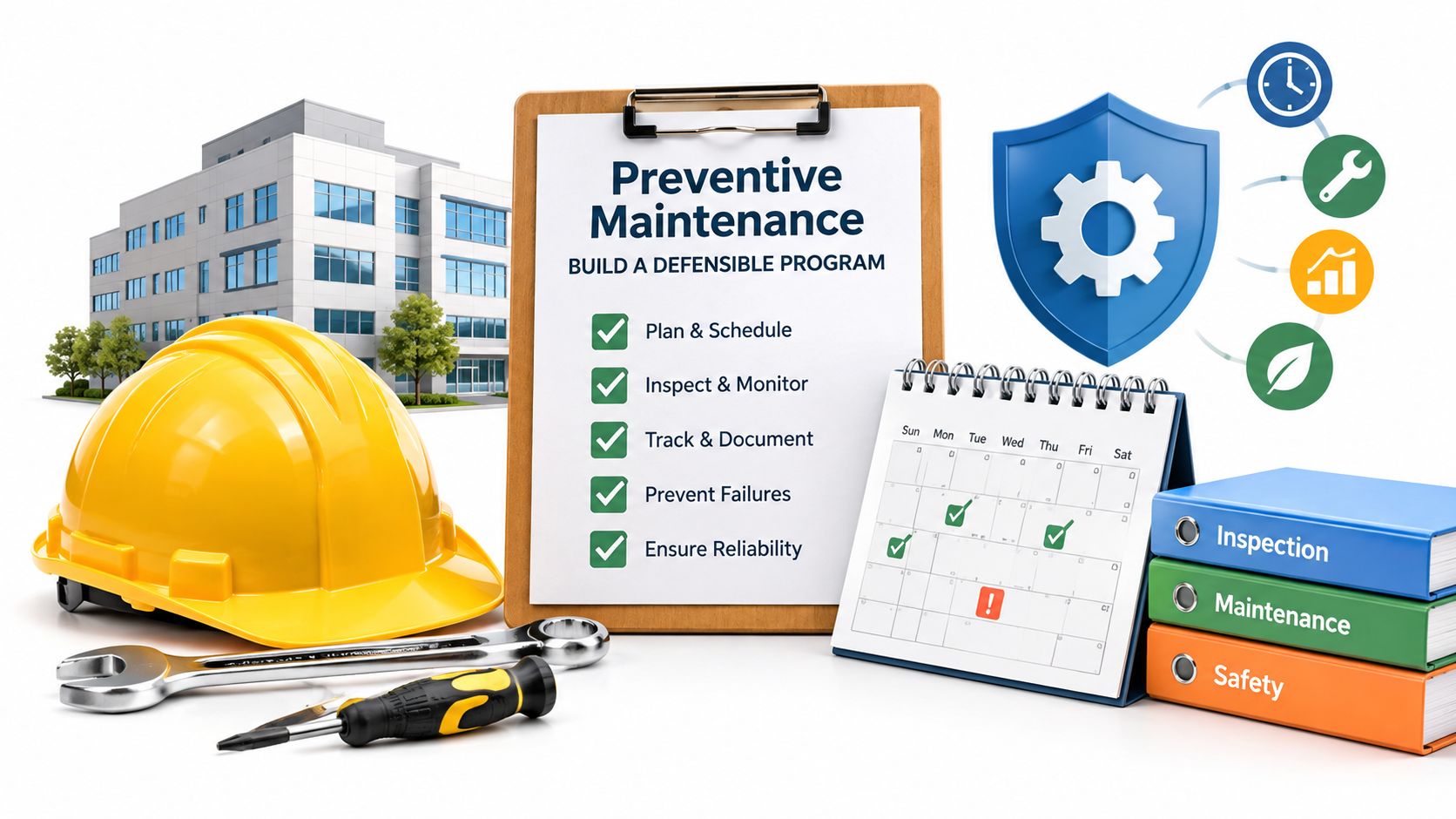
A defensible program starts with fixed intervals, then adds condition-based triggers that reflect how the truck runs. Mileage alone doesn't catch everything, and telematics alone doesn't either. A dispatcher needs a simple rule set that combines scheduled service with driver findings, scan data, and visible fluid or wear evidence.
What belongs in the schedule and what doesn't
The fixed side of the program covers the work that should happen whether or not a sensor complains. That includes service intervals, inspection timing, and documented follow-up on known wear points. The condition-based side catches changes in electrical load, fault-code patterns, fluid evidence, brake feel, and driver-reported symptoms.
The useful boundary is straightforward. Remote data can flag a problem, but someone still has to verify whether it's a true failure, a wiring issue, a sensor drift problem, or just a reading that needs context. That's where a mobile technician earns value, because the first goal is not to swap parts. The first goal is to decide whether the unit can stay in service safely or needs a more controlled repair setting.
How to triage alerts without overbuying parts
Use three buckets.
- Safety-critical: anything tied to braking, steering, air loss, active derate, or a defect that could worsen quickly.
- Derate-risk: issues that may not stop the truck immediately but can leave it stranded or power-limited on route.
- Monitor: conditions that need follow-up testing, but not immediate part replacement.
That kind of triage matters because intermittent faults are easy to overreact to and just as easy to miss. A truck can look fine in a dashboard while still carrying an electrical, air, or aftertreatment issue that hasn't crossed the software threshold yet. For Tampa and Lakeland operators, the goal is not more alerts. It's better decisions on the next stop.
A simple workflow helps. Confirm the complaint, inspect the truck, validate scan data with a physical test, and document the result before any repair is authorized. SAAT Repairs Corp's preventive maintenance guidance for truck PM service fits that same logic, mobile work only makes sense when the truck can be safely assessed where it sits.
Managing Brake and Air-System Safety Thresholds
Brake maintenance can't be handled like a routine mileage item. It's safety-critical, inspection-ready work, and the threshold for pulling a truck matters. FMCSA guidance treats a commercial vehicle as having an out-of-service brake condition when defective brakes equal or exceed 20% of the service brakes on the vehicle or combination, and inspection records also flag brake tubing and hose adequacy, brake adjustment, automatic slack-adjuster operation, defective brakes, and brake-system leaks as recurring problem areas FMCSA safety planner.
What a proper mobile brake inspection checks
A roadside or yard inspection needs to cover the whole system, not just the most obvious wear item. That includes air pressure behavior, leakage, hose routing and chafing, brake adjustment, lining or pad condition, drums or rotors, chamber operation, warning devices, and ABS fault indicators. A single weak chamber or leaking hose may not stop the truck by itself, but combined defects chip away at braking reserve.
A warning light is not the finish line. It's the point where the truck needs a real inspection.
The practical escalation rule is simple. If the defect pattern is close to the 20% threshold, if air pressure can't be maintained, or if an ABS or brake warning stays active, the truck should be removed from service until the defect is corrected and verified. That judgment matters more in wet weather, on heavy loads, and in hilly terrain, where the margin for error disappears quickly.
What to document before release
A defensible maintenance trail should record the defect, the affected axle or wheel end, the corrective action, the parts installed, the technician, and the release inspection. That gives dispatch a clear paper trail and keeps the same truck from being sent out again with the same unresolved condition.
For mobile work, one more detail matters. If a repair needs extensive disassembly, specialized lifting, or controlled shop conditions, the repair should be routed to an external facility instead of being forced at the roadside. SAAT Repairs Corp does mobile brake, air, electrical, suspension, and structural work case by case, but not every brake-related failure belongs on the shoulder.
Navigating Emissions and DPF Service Triggers
DPF work goes wrong when teams clean on habit instead of evidence. EPA guidance says regeneration burns accumulated particulate matter when the filter reaches the needed temperature, passive regeneration happens when normal exhaust heat is enough, and active regeneration adds heat when the duty cycle runs too cool. EPA also says regeneration frequency depends on duty cycle, particulate-emission rate, filter technology, and related factors, and that retrofit DPF ash cleaning is typically needed every 6 to 12 months EPA DPF guidance.
Diagnosing the cause before touching the filter
The first question is whether the fault is in the filter, the sensors, or the engine conditions feeding the filter. That means checking backpressure data, differential-pressure readings if available, fault codes, temperature data, and repair history. If the truck is showing recurring cleaning needs, the issue may be excessive particulate production, incomplete regeneration, a sensor problem, or another underlying engine issue.
Mobile diagnostics help when the truck is still accessible and the system can be read without dismantling half the exhaust. A technician can often determine whether an on-site reset is feasible, whether a sensor or wiring fault is the actual problem, or whether the unit needs a controlled removal and specialized cleaning. The useful part of mobile service is not pretending every DPF issue is roadside-fixable. It's identifying the right next move quickly.
What operators should hand over at the first call
The truck should be described with the exact symptom, any derate message, the last regeneration behavior, the recent route pattern, and any emissions work already done. Those details help separate a temporary fault from a restricted filter. They also keep dispatch from guessing.
A practical checklist for DPF calls looks like this.
- Fault codes: provide the active and stored codes exactly as displayed.
- Regeneration history: note whether the truck has been completing regenerations or repeatedly failing them.
- Operating pattern: include short-trip duty, extended idle, or stop-and-go use.
- Recent repairs: list any work done on sensors, exhaust, or engine components.
When the diagnosis points to a filter removal, that's usually an external-facility job. When it points to a sensor, wiring, or reset issue, mobile work may be enough. SAAT Repairs Corp's DPF warning-light guidance follows that same line, prepare the truck with the right information, then decide whether the fix is on-site or off-site.
Evaluating Aging Trucks and Repair Economics
Older trucks are often blamed for cost overruns, but age alone doesn't tell the full story. The economics change when technician capacity is tight and repair queues are long. In that environment, a truck with a known history can be more useful than a newer unit that keeps waiting on diagnostics, parts, or software support.
What the data says about aging assets
ATRI's latest operating-cost analysis reported that average truck operating cost increased to $2.336 per mile in the 2025 report, the highest level in that report's history, while repair and maintenance rose 8.6% and reached 40.4 cents per mile ATRI 2025 operating-cost analysis. At the same time, average truck counts declined 2.4% and fleets left roughly 10% of equipment idle as carriers responded to higher costs ATRI 2025 operating-cost analysis.
That points to a tough reality. A truck doesn't just cost what the invoice says. It costs what the unit earns while it's available, and what it loses while it waits. An older truck with predictable maintenance may still outperform a newer one that keeps going down for hard-to-pinpoint faults, emissions issues, or delayed parts.
A usable decision model for regional fleets
A good decision starts with five questions. How much did the last repair solve? How much service life is still realistic? What's the safety risk if the problem repeats? How long will parts or labor delay the next repair? Is a substitute truck available if this one goes down again?
That model works better than age alone because it forces the manager to weigh downtime and risk, not just repair spend. It also keeps the truck in the conversation as a revenue asset, not just a mechanical object. A cheap fix that creates repeated roadside calls is still expensive.
Decision point: when failure evidence keeps repeating, the next repair decision should be based on root cause, not the last part that got replaced.
Mobile triage matters here because it can capture that evidence at the vehicle location. Photos, fault codes, test readings, and technician notes create a better record for the next decision. That's especially useful in regional routes where a truck can be repaired, returned, and then fail in the same pattern a week later.
Coordinating Safe Mobile Roadside Interventions
Roadside work starts with traffic control, not tools. FMCSA guidance says a commercial vehicle stopped on a highway or shoulder for a reason other than a necessary traffic stop must use hazard warning systems until external warning devices are placed, and the devices must be deployed within 10 minutes. One device goes on the traffic side about 10 feet from the truck in the direction of approaching traffic, one about 100 feet ahead, and one about 100 feet behind. The hazard system must be used again while the devices are retrieved FMCSA roadside warning guidance.
What dispatch needs before sending a technician
Dispatchers should document the exact location, traffic exposure, shoulder width, visibility, and whether the warning equipment is available. That information tells the technician whether the scene is safe enough for mobile work or whether the truck needs to be moved to an external location first. It also keeps a fast response from becoming a bad scene.
SAAT Repairs Corp's commercial roadside service guidance aligns with that standard, the truck has to be assessed where it sits, and the repair plan has to match the access, lighting, and traffic conditions.
What can be handled on the shoulder
Mobile diagnostics can often handle electrical faults, some software-related issues, sensor problems, basic leak checks, and other work that doesn't require heavy disassembly. But once the job needs specialized lifting, major teardown, or a controlled work bay, the right move is an external facility. Forcing a complex repair at the roadside usually adds risk instead of removing it.
A dispatcher's job is to separate urgent from unsafe. If the truck can be made compliant and stable on-site, mobile intervention makes sense. If the scene is exposed, the defect is severe, or the repair needs more equipment than the road provides, the external option is the safer call.
Tracking Maintenance KPIs and Documentation
A maintenance program only performs as well as its records. If the complaint changes from driver to dispatcher to technician and the final note never gets captured, the fleet loses the pattern that explains repeat failures. Good records turn one breakdown into useful history.
What should be recorded every time
Each mobile visit should capture the initial symptom, the diagnostic test, the measured value, the repair, the software level where applicable, and the post-repair verification. That makes it possible to separate a true mechanical failure from a sensor issue, a recurring route problem, or a technician process gap. It also gives the dispatcher a clean story when the truck comes back with the same warning later.
A simple fault-severity matrix helps keep that history usable.
| Severity band | What it means | Next action |
|---|---|---|
| Safety-critical | Braking, air loss, active derate, or a condition that can worsen quickly | Remove from service and document immediately |
| Derate-risk | Likely to strand the truck or reduce output soon | Schedule mobile diagnosis or controlled repair |
| Monitor | Needs follow-up but not immediate teardown | Recheck at the next planned stop |
The point of the matrix isn't bureaucracy. It's consistency. If different dispatchers make different calls on the same symptom, the fleet ends up with uneven repairs and noisy records.
Why repeat-failure tracking matters
Once the truck, component, route, and technician are all visible in the log, repeat issues become obvious. A pattern can show up on one axle, one sensor family, one route, or after one kind of service. That is where maintenance becomes management instead of reaction.
Good records also protect the operational schedule. When the next call comes in, dispatch isn't starting from zero. It already knows what failed, what was tested, what was replaced, and what still needs attention.
SAAT Repairs Corp provides mobile Road Services for heavy-duty trucks in Tampa, Lakeland, and nearby Florida corridors, with diagnostics, brake, electrical, emissions, transmission, and preventive maintenance support at the vehicle location. If a truck needs a safe on-site assessment, a practical repair plan, or a decision on whether the work belongs at the roadside or at a suitable external facility, visit SAAT Repairs Corp and use the English contact section to start the dispatch conversation.