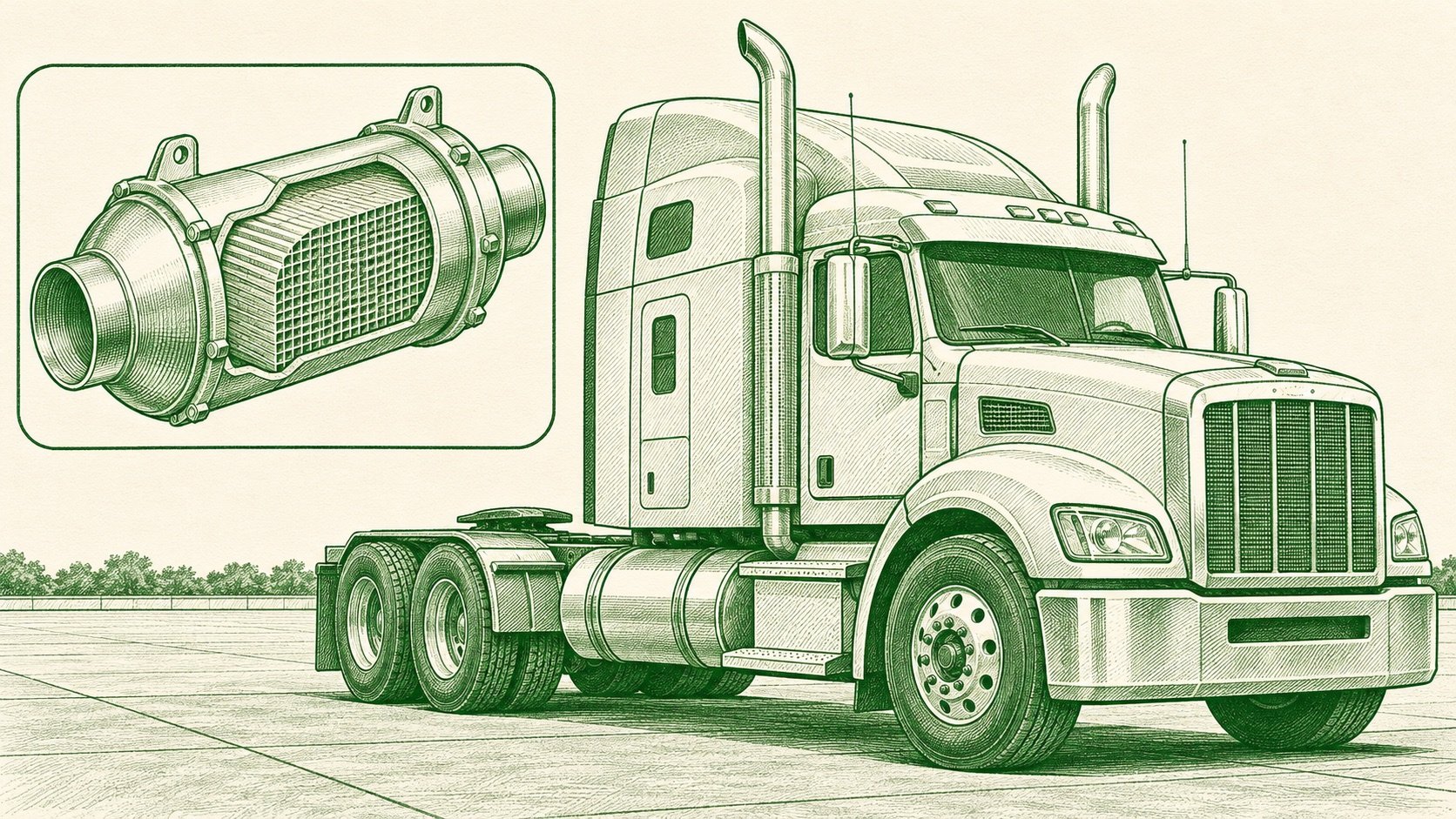
Example: The DPF lamp comes on while a truck waits near a Lakeland loading dock, and dispatch still has another delivery scheduled toward Tampa. The dashboard offers a regeneration, but the exhaust points toward a trailer, the yard is crowded, and nobody can stay with the truck. A regeneration request does not make the site safe for a cycle.
For an owner-operator or fleet dispatcher, the first decision is regen or dispatch for assessment, not which button to hold. A controlled cycle may clear accumulated soot when the truck meets its operating requirements. It won't correct a faulty sensor, repair an engine that's producing excessive soot, or make an unsafe roadside location suitable.
Table of Contents
- Which DPF Regeneration Method Your Truck Needs
- Safety Checks to Complete Before Regeneration Starts
- How to Run a Parked Regeneration Step by Step
- How to Support Automatic Regeneration on the Road
- What to Monitor and Record During Regeneration
- Troubleshooting a Regeneration That Fails or Keeps Stopping
- Deciding Between Roadside Work and an External Shop
Which DPF Regeneration Method Your Truck Needs
Passive regeneration uses heat from normal operation. Active regeneration adds heat under control of the aftertreatment system and can occur while driving or while parked, depending on the truck. Check the exact warning and the vehicle manual before choosing a response.
DPF regeneration methods compared
| Method | How it starts | Conditions needed | What the driver sees | Where it runs |
|---|---|---|---|---|
| Passive | Normal duty-cycle exhaust heat burns trapped soot | Exhaust temperature held in the range the engine manufacturer specifies for that system, under sustained load | Usually no intervention request; soot burns during suitable operation | On the road during normal operation |
| Active while driving | The engine control system raises exhaust temperature using the method designed for that engine. | Valid sensors, no blocking fault, and operating conditions that permit temperature control | Indications vary by manufacturer. Follow the instructions for the exact lamp or message. | On the road when traffic and route allow |
| Driver-requested parked regeneration | The driver uses the approved control when the vehicle and warning allow it. | Follow the truck’s prerequisites, including parking brake, transmission, and any PTO or fast-idle requirements. | A manufacturer-specific request for a parked cycle. | Controlled outdoor location clear of combustible material |
Passive and active describe how the system gets heat. Parked describes where a cycle happens. The EPA’s retrofit DPF guidance explains the passive and active distinction for retrofit filters. Use the installed system’s manual for the operating decision.
A driver-requested parked cycle follows the vehicle’s operating instructions. A technician-commanded service regeneration follows the applicable diagnostic procedure and its own eligibility checks. An inhibited request calls for diagnosis of the reason for the lockout.
When method selection must stop
Warning symbols and messages differ across engines. Follow the vehicle manufacturer’s instructions for the exact lamp or combination. If the display orders STOP ENGINE, pull over and shut down as soon as it is safe, then arrange service. The Cummins Engine Lamp Identification Guide illustrates this distinction on the Cummins applications it covers.
Stop choosing a regeneration method and assess the situation when any of these conditions appears:
Escalating warning: The lamp changes state or a more severe message appears.
Torque derate: Reduced power changes whether the truck can safely move or maintain traffic speed.
Blocking fault: The control system reports a condition that prevents an approved cycle.
Unsuitable site: The truck cannot be positioned on safe ground, cleared of combustibles, and attended for the full cycle where it sits.
A dashboard that allows regeneration says nothing about where the truck is parked. When the cycle gets declined, record the lamp state and message wording, the stored and active fault codes, and the reason the truck stayed parked. That record gives a dispatcher or technician what they need to decide between finishing the route and an assessment.
Support a driving cycle only when the manufacturer’s instructions for the displayed warning permit continued operation, no fault blocks the cycle, and the route is safe. A parked request needs a safe, monitored site that meets the vehicle’s requirements.
Safety Checks to Complete Before Regeneration Starts
A parked regeneration turns the aftertreatment system into a sustained heat source, and the truck only controls the heat. The ground under the tailpipe, the direction of discharge, and whatever can drift into the exhaust area during the cycle all belong to the operator, checked before the switch is pressed.
USDA Forest Service guidance on regeneration safety warns that exhaust during regeneration runs hot enough to ignite combustible material nearby. Measure clearance against the manufacturer's requirement, not the open space you can see. A gap that looks generous during the walkaround has to hold for the full cycle and the cooldown that follows it.
The pre-start checklist
Check the regeneration-inhibit setting and why it was selected. Resolve the reason for an intentional inhibit and consult the vehicle manual before changing the setting.
Read active and inactive faults before clearing anything. A blocking code can prevent the cycle, while stored faults may reveal an intermittent problem that disappears during the initial check.
Check for engine-side causes of excessive soot. Oil or coolant concerns and injector, turbocharger, EGR, or intake faults require assessment before adding heat to the aftertreatment system. Regenerating on top of an unresolved engine fault just loads the filter again.
Choose a hard, level outdoor surface. Dry grass, fuel areas, loading docks, trailers, warehouse equipment, and loose packaging can make an otherwise convenient stopping place unsuitable.
Inspect the exhaust path. Keep people and materials clear, and don't direct discharge toward cargo, structures, vegetation, or neighboring vehicles.
Secure the truck's operating state. Apply the parking brake, select the manufacturer-approved transmission position, and switch off PTO and fast-idle functions.
Assign continuous monitoring. Someone must remain able to observe the truck, recognize a developing hazard, and use the approved cancellation procedure.
A clear patch beside a dock may still be unsuitable if forklifts, pedestrians, or another trailer can enter the exhaust area during the cycle. Site control has to last through the procedure and cooldown, not just the initial walkaround. Check the zone when the cycle begins and again before the truck leaves, because the space that was empty at start-up needs to stay empty while the exhaust is still hot.
Go/no-go rule: If the exhaust area can't remain controlled, the stationary regeneration shouldn't start.
When no controlled site is reachable, the job becomes documentation. Record the truck's exact location, direction of travel, warning state, surrounding hazards, and whether it can move safely. That record is what dispatch and the shop need to decide the next step. Don't force a regeneration on the shoulder just because the dashboard allows it.
How to Run a Parked Regeneration Step by Step
A parked regeneration starts only after the location and vehicle checks pass. The operator should have the truck's operating instructions available because switch sequences, prerequisites, and cancellation controls differ.
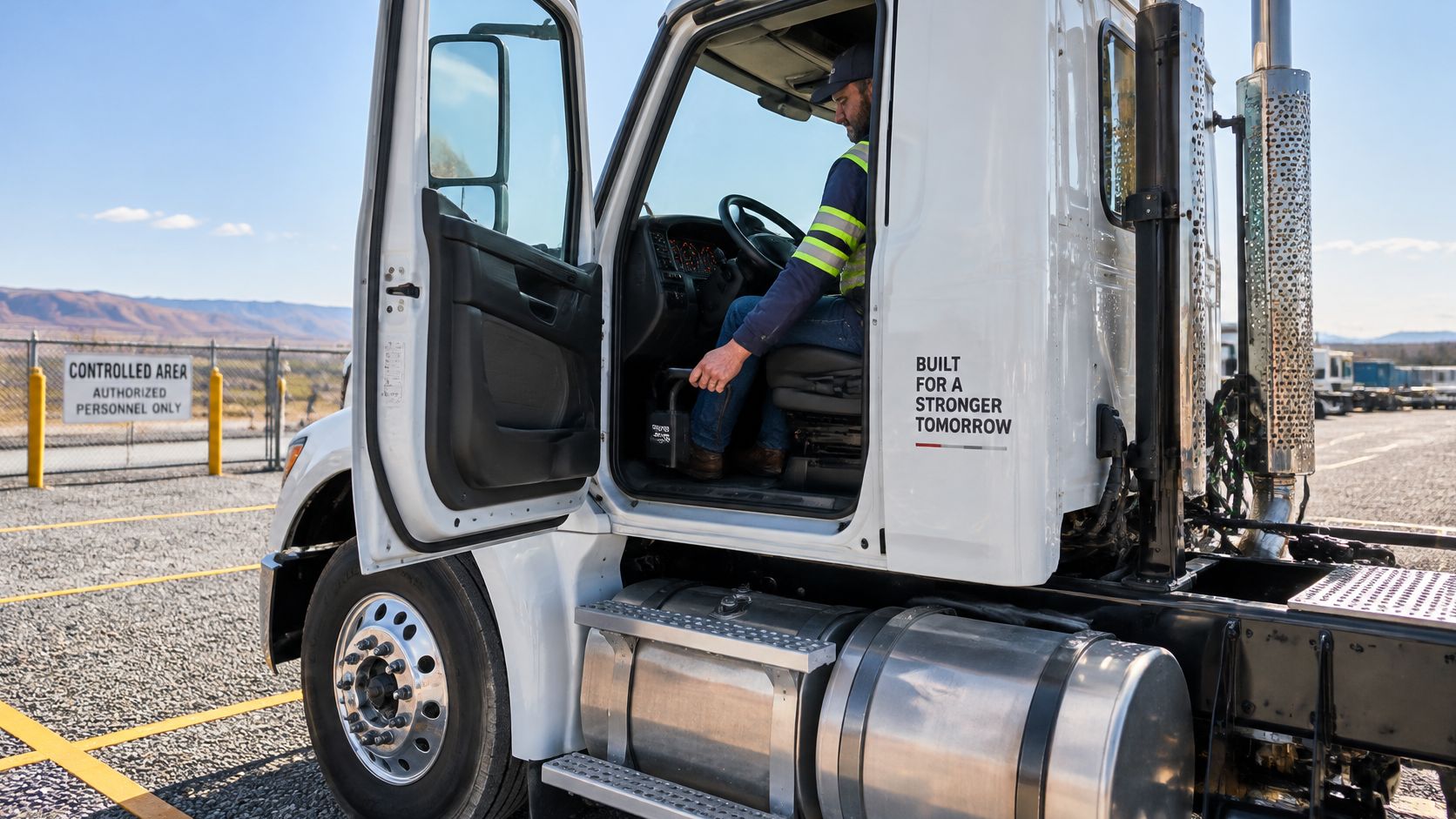
The driver must remain positioned to observe dashboard status without entering the hot exhaust area.
Starting and supervising the cycle
Position the truck outdoors in the controlled area. Check exhaust clearance after parking, including the discharge direction and anything beneath the aftertreatment assembly. The final parking position matters more than how clear the site looked on approach.
Apply the parking brake and select Park or Neutral as specified. The vehicle must remain stationary throughout the procedure. A transmission or parking-brake status that the controller doesn't recognize can prevent initiation.
Switch PTO and fast-idle off. These controls can conflict with the required operating state. Don't attempt to compensate for a rejected request by manually increasing engine speed.
Follow the truck’s approved driver procedure if the warning and vehicle conditions allow it. Check that the cycle actually starts. Leave a technician-commanded regeneration to a qualified technician using the applicable service procedure.
Monitor the truck and the exhaust area continuously. Keep bystanders and equipment clear. If a hazard develops or the truck displays a stop instruction, cancel the cycle using the manufacturer’s procedure and follow its shutdown guidance.
When conditions remain safe, watch the completion indication the manufacturer specifies. Cycle length varies with the truck and its conditions. Use the vehicle’s guidance for hot exhaust and cooldown before moving or releasing the area.
Maintain clearance during cooldown. Completion doesn't make exhaust surfaces immediately safe to touch or allow combustible material back into the area. Inspect the surroundings before releasing control of the site.
Confirming completion before release
Verify completion using the indicators or status specified in the truck’s operating instructions. Record whether the regeneration request cleared and whether any warning or restriction remains. A change in sound or idle speed alone does not confirm completion.
Record the start time, end time, completion status, and any codes that remained or appeared. If the warning persists, the cycle aborts, or warning severity increases, stop treating the procedure as routine and arrange diagnostic assessment.
A completed regeneration clears a soot-management task, not necessarily the original fault. Returning the truck to duty should depend on its warning state, operating condition, and diagnostic findings, not just the fact that the engine returned to normal idle.
How to Support Automatic Regeneration on the Road
Passive regeneration can occur when the filter stays hot enough during normal operation. Some systems, including the example in Cummins’ aftertreatment training, can add heat by dosing fuel into the exhaust. The activation conditions and heating method depend on the engine and aftertreatment design.
Suitable load and operating time can help the installed system complete a driving cycle. A road speed alone does not set filter temperature or establish that the cycle completed.
The road environment must allow sustained operation without compromising safety.
Choosing a useful driving cycle
Check eligibility first. Confirm the warning permits continued operation and no blocking fault is present. If the dashboard allows a request but the duty cycle ahead cannot support one, record the warning state and route type and plan a stationary cycle or diagnostic visit instead of chasing the request on the road.
Choose sustained load over repeated stops. A highway freight leg builds and holds heat. Congested yards and urban delivery loops cover the same miles at far lower load, and congestion also removes the option to keep running safely.
Drive normally and consistently. Maintain a safe, legal speed and avoid unnecessary idle periods. Steady load keeps the dosing strategy working; hard acceleration mostly burns fuel.
Review the result after the run. Note whether the request cleared, persisted, or escalated, and whether power changed.
Stop the attempt when conditions deteriorate. An increasing derate, a worsening warning, or an unsafe traffic situation ends the attempt.
The Cummins Engine Lamp Identification Guide includes a highway-driving example for the warning combinations it covers. Check the instructions for the truck and its exact warning before following a driving procedure. Use the truck’s specified status or indications to verify completion.
Short trips, extended idling, low-load routes, and cold weather can prevent sufficient heat from developing or remaining available. A truck may manage soot successfully on a sustained freight run but request stationary regeneration during local delivery work.
Hypothetical scenario: A regional truck completes its loaded highway leg without a warning, then develops a regeneration request after repeated short deliveries and dock waits. The useful record is the route change and idle pattern, not an assumption that the filter suddenly failed.
When the route cannot supply the duty cycle, the attempt already has its answer. What matters then is a record of the warning state, the route and idle pattern, and the plan for a stationary cycle or a diagnostic assessment.
What to Monitor and Record During Regeneration
Log the start time, end time, and completion status before clearing codes. A 2018 study of heavy-duty diesel vehicle regeneration found active regeneration intervals ranging from 3 to 100 operating hours and 23 to 4,078 miles across the vehicles it observed. Record the truck’s duty cycle alongside its regeneration history.
Regeneration parameters to monitor and record
| Parameter | Where to read it | What it tells the technician |
|---|---|---|
| Differential pressure | Scan-tool live data | Restriction trend before and after the cycle, compared at equivalent operating conditions |
| Exhaust gas temperature | Scan-tool live data | Whether the commanded temperature was reached and maintained |
| Regeneration status and elapsed time | Scan tool or dashboard | Whether the cycle completed, stopped, or remained pending |
| Active and inactive fault codes | Scan tool | Blocking faults and clues to an intermittent or upstream problem |
| Regeneration history | Service log with truck hours and miles | Frequency relative to actual duty cycle |
| Ambient temperature and route type | Driver log | Context for expected heat availability and stationary-cycle results |
Make the record useful for diagnosis
Record start and end times, ambient conditions, route type, truck hours, mileage, and recent regeneration history. Preserve fault descriptions and original codes before any clearing or reset.
Pressure readings need operating context. A reading taken at normal idle doesn't compare directly with one captured during high-speed regeneration, and treating the pair as proof of improvement or failure sends diagnosis in the wrong direction.
The EPA’s DPF retrofit operation and maintenance bulletin ties regeneration frequency to particulate buildup. For a truck with factory aftertreatment, use the manufacturer’s criteria and compare with that truck’s service history and operating conditions.
Frequent regeneration warrants checking for excessive soot from injector, turbocharger, EGR, combustion, or oil-consumption problems. Unusually infrequent regeneration can also warrant investigation if sensor readings or the controller's soot estimate don't match the truck's condition.
Sometimes the right call is to decline a cycle the dashboard would permit, because the parking location is unsafe, the schedule leaves no room for a stationary burn, or conditions keep forcing the cycle to abort. Record that deferral the same way as a completed run: what the dashboard allowed, why the cycle didn't run, and the pressure reading at that moment. A documented deferral gives the next technician a timeline. An unrecorded one looks like a truck that never asked.
A useful handoff preserves what happened before the warning cleared, along with the conditions that triggered it.
Send the original complaint, codes, pressure readings with operating conditions, regeneration history, and whether the truck is still running. The checklist for documenting a DPF warning that returns after regeneration helps keep that handoff consistent.
Troubleshooting a Regeneration That Fails or Keeps Stopping
A rejected request and a cycle that starts and then aborts are different events. Record which occurred, along with the warnings, fault codes and operating conditions. Several causes can produce either outcome. The manufacturer’s procedure determines the next check.
The dashboard sometimes allows a regeneration the truck shouldn't run. If warning severity is climbing, a blocking fault is active, or the parking site can't hold clearances for sustained exhaust heat, an available request is still the wrong call. Record the codes, differential pressure, temperatures and inhibit state at that moment. That record is the finding.
Regeneration symptoms, likely causes and next steps
| Symptom | Likely cause | Next step |
|---|---|---|
| Cycle aborts quickly | Regeneration-inhibit switch on, unmet prerequisite, or blocking fault | Verify the inhibit setting, read active faults, and recheck operating conditions |
| Cycle never reaches target temperature | Unsuitable operating conditions, fueling problem, or exhaust-temperature sensor fault | Verify temperature readings and fueling operation before any retry |
| Warning returns within a few operating cycles | Excess soot production from injector, turbocharger, EGR, or oil-consumption problems | Run root-cause tests before further regeneration |
| Differential pressure stays high after a completed cycle | Restricted or damaged filter, or inaccurate pressure measurement | Verify the sensor and pressure lines, then assess filter condition and cleaning or replacement needs |
| Warning severity rises or cycle won't complete | Unresolved fault or unsafe operating condition | Stop through the approved procedure and escalate to diagnostic assessment |
Separate a reading problem from a filter problem
A high pressure value can come from the filter, the sensor, or the lines between them. Inspect pressure lines for damage or restriction, check connectors and wiring, and compare sensor behavior against the manufacturer's test procedure.
The same logic applies to temperature. An implausible reading can prevent the controller from managing regeneration correctly, so verify sensor validity before treating a displayed low temperature as proof the exhaust never heated.
An engine-side fault can also make a retry pointless. Oil or coolant intrusion, injector and turbocharger faults, EGR problems and intake restrictions all feed soot back into the filter, and clearing the warning while one of them is active sends the truck out to fail again.
No manufacturer publishes a universal success rate for regeneration. A completed status confirms the controller finished its procedure. Whether the filter itself is healthy still depends on the pressure readings and a physical assessment.
After the first rejection or abort: Pause and identify the cause before requesting another cycle.
A qualified technician should confirm that the cause has been addressed and that the manufacturer permits another attempt. A blocking fault, stop warning or unsafe location rules out another attempt while that condition remains.
Keep the diagnostic record intact and organize the complaint with the broader emissions-system troubleshooting guidance. Clearing codes without correcting the underlying problem erases the evidence the next diagnosis needs.
Deciding Between Roadside Work and an External Shop
The right service location follows the work required. A safe parking area may support assessment or an approved regeneration, but it doesn't automatically support filter removal, specialized cleaning, or major component work.
The Volvo Trucks’ VN(4) engine guide (November 2025) distinguishes passive soot regeneration on the systems it describes from the physical removal of accumulated ash. The installed filter and the manufacturer’s procedure determine when specialized cleaning or removal is needed.
That distinction sets a practical limit. Repeating a heat-based procedure can't replace the physical service required for accumulated ash.
Questions that determine the next move
Can the truck reach a safe site? Consider warning severity, available power, traffic exposure, and whether movement itself creates a hazard.
Can the fault be assessed at the vehicle location? Access, operating conditions, the available record, and job requirements determine what can reasonably proceed.
Does the required work exceed mobile feasibility? Specialized ash cleaning, filter removal, or other major work may require a suitable external facility.
SAAT Repairs Corp operates as a mobile Road Services team attending the vehicle's location. It has no customer-facing workshop, so an external facility is an external option, not a SAAT drop-off location.
For a truck near Tampa, Lakeland, or nearby Florida corridors, send the complaint, fault codes, available readings, regeneration history, precise location, and site hazards before work is planned. Include whether the engine is running, whether the truck can move, and whether a controlled exhaust area is available.
The distinction between regeneration and physical cleaning also matters when reviewing DPF cleaning cost considerations. The service decision should follow the diagnosed condition rather than a request for another forced cycle.
On-site feasibility is case-specific. Safe access, the required work, equipment, and technician availability determine whether mobile service is appropriate or an external option is necessary.
SAAT Repairs Corp offers DPF and EGR system service through mobile Road Services at the vehicle location. Visit SAAT Repairs Corp and use the English contact section to send the warning state, codes, regeneration history, and location conditions for assessment. Feasibility and timing are case-specific, and no arrival time is promised.