DPF warning returns after regeneration: what to document before the next diagnostic visit
Specialized Truck Services
DPF warning returns after regeneration: what to document before the next diagnostic visit
A regeneration may finish and the truck may initially feel better, yet the DPF warning, check-engine message, or derate can return later. That recurrence is useful diagnostic information. It does not automatically prove that the filter failed, that the regeneration was performed incorrectly, or that the same condition returned for the same reason.
The best next step is to preserve the evidence and build a short timeline. A technician can work more efficiently when the handoff explains what happened before, during, and after the regeneration instead of simply stating that “the DPF light came back.”
SAAT Repairs Corp provides mobile truck repair, advanced diagnostics, and DPF/EGR support in Tampa, Lakeland, and nearby Florida areas. Service goes to the truck's location when access and conditions are safe.
A completed regeneration and a resolved complaint are not the same thing
A DPF collects particulate matter from diesel exhaust. Regeneration raises exhaust-system temperature so accumulated soot can be burned under controlled conditions. The exact strategy and operator requirements depend on the engine, vehicle, software, duty cycle, and manufacturer instructions.
Completion of a regeneration confirms that a regeneration event occurred according to the system's reported state. It does not, by itself, confirm that every condition contributing to soot loading, warning messages, or derate has been corrected.
A warning may return because the original condition remains, because regeneration conditions were not sustained as expected, because another monitored condition is present, or because a separate fault appeared. The complete code set and operating pattern are more useful than guessing from the warning lamp alone.
Record exactly what happened during the regeneration
Start with the event itself. If a shop, fleet technician, or mobile technician performed the work, use the repair order or service notes rather than memory whenever possible.
How the regeneration was initiated
Record whether the event occurred automatically during operation, was requested through the truck's approved controls, or was performed as part of a professional service procedure. Do not assume that all regeneration types have the same conditions or meaning.
Also note:
Date, approximate time, odometer, and engine hours.
Truck, engine, and unit identifiers.
Warning lights or messages present before the event.
Whether the truck was already in derate.
Who performed or authorized the procedure.
Whether the cycle completed or stopped
Do not reduce the result to “regen done” unless completion was actually confirmed. Record whether the cycle completed normally, was interrupted, was refused by the system, or ended with another warning.
If available, preserve the service report, diagnostic screenshot, or work-order note showing the result. Avoid copying numbers without their labels, units, or source.
What changed immediately afterward
Document the truck's condition as soon as the event ended:
Which warning lights went out, remained on, or changed.
Whether the derate changed.
Whether idle, throttle response, smoke, odor, or engine sound changed.
Whether any new message appeared.
Whether the truck returned to operation and under what load.
This creates a baseline for comparison if the warning returns.
Build a timeline for the returning warning
The interval between the completed event and the returning warning can help distinguish a rapid recurrence from a condition that appeared after a different operating cycle.
Time, miles, or engine hours before it returned
Record the most reliable measure available. A warning that returns before the truck leaves the service location is a different pattern from one that appears after several routes, extended idling, or a change in load.
Useful details include:
Approximate miles, hours, or trips since regeneration.
Idle time and stop-and-go operation.
Highway operation, load, and grade.
Fueling or maintenance performed in between.
Whether the truck had been shut down and restarted.
Operating conditions when it returned
Describe what the truck was doing at the moment the warning returned. Note whether it was at idle, accelerating, climbing, cruising, operating under load, or restarting after a stop. Include weather or traffic only when it clearly affected the operating pattern.
Avoid diagnosing the cause from the operating condition. The purpose is to preserve context.
Messages, codes, and derate behavior
Photograph or transcribe the complete dashboard message. Preserve diagnostic trouble codes before they are cleared, including status information when available. Record whether a code is active, inactive, or recurring only when the diagnostic tool reports that state.
Also describe whether the derate is stable, increasing, intermittent, or absent. If the truck's condition changes, update the service provider rather than relying on the original description.
Information that helps separate a recurring condition from a new one
A returning warning should be compared with the earlier complaint, not automatically labeled as the same failure.
Previous DPF and aftertreatment work
List recent cleaning, replacement, sensor, wiring, exhaust, software, DEF/SCR, DOC, or DPF work. Include dates, parts, procedures, and test results only when documented. A vague note such as “emissions system repaired” leaves too much uncertainty.
Engine, airflow, fuel, and EGR symptoms
Aftertreatment performance is connected with engine operation. Record related symptoms such as unusual smoke, fuel-consumption changes, boost complaints, rough operation, coolant or oil concerns, or EGR-related messages. These observations do not identify the failed component, but they can help define the diagnostic scope.
Electrical and sensor history
Intermittent wiring, connector, voltage, communication, pressure-sensor, or temperature-sensor conditions may produce changing evidence. Note whether the warning appeared after rain, vibration, battery service, recent harness work, or another electrical event, but do not treat timing alone as proof.
What not to do before follow-up diagnostics
Do not repeatedly force regeneration without following the manufacturer-specific procedure and understanding why the warning returned.
Do not clear codes or disconnect batteries only to remove the warning.
Do not replace the DPF, EGR valve, or a named sensor from a short code description alone.
Do not disconnect, delete, bypass, or alter emissions hardware or software.
Do not continue operating a truck that has a critical warning or feels unsafe.
EPA guidance emphasizes following manufacturer instructions for regeneration and maintaining emissions equipment in its certified configuration. The next diagnostic step should preserve that requirement.
When the truck should remain stopped
Move to a safe location and request qualified assistance when there is a critical warning, severe or increasing derate, heavy smoke, abnormal exhaust heat, burning odor, overheating, low oil pressure, an active fluid leak, abnormal mechanical noise, repeated shutdown, or any condition that makes operation unsafe.
The dashboard message, manufacturer guidance, road conditions, and actual truck behavior should inform the operating decision. A blog article cannot determine whether a specific truck is safe to move.
What to send when requesting mobile diagnostics
Prepare a concise handoff:
Exact location and safe access instructions.
Truck, engine, unit, odometer, and engine-hour details.
Complete warning messages and saved codes.
Regeneration date, type, result, and who performed it.
Time, miles, or hours before the warning returned.
Current derate and operating condition.
Recent DPF, EGR, sensor, wiring, exhaust, fuel, or engine work.
Available work orders, screenshots, and prior test results.
This record helps the service provider arrive with a clearer understanding of the complaint. It does not guarantee that every repair can be completed at the roadside.
Contact SAAT Repairs Corp
If a DPF warning or derate returned after regeneration, SAAT Repairs Corp can provide mobile diagnostics and commercial truck repair in Tampa, Lakeland, and nearby areas. Share the complete timeline, current truck condition, location, codes, and previous service information when you call.
SAAT provides 24/7 mobile service. Access, safety, required equipment, diagnosis, and the repair scope determine what can be completed at the truck's location.
Did the DPF warning return after regeneration? Contact SAAT Repairs Corp with the truck's location, complete messages, regeneration result, time before recurrence, current derate, and recent service history so the next diagnostic step can begin with better evidence.
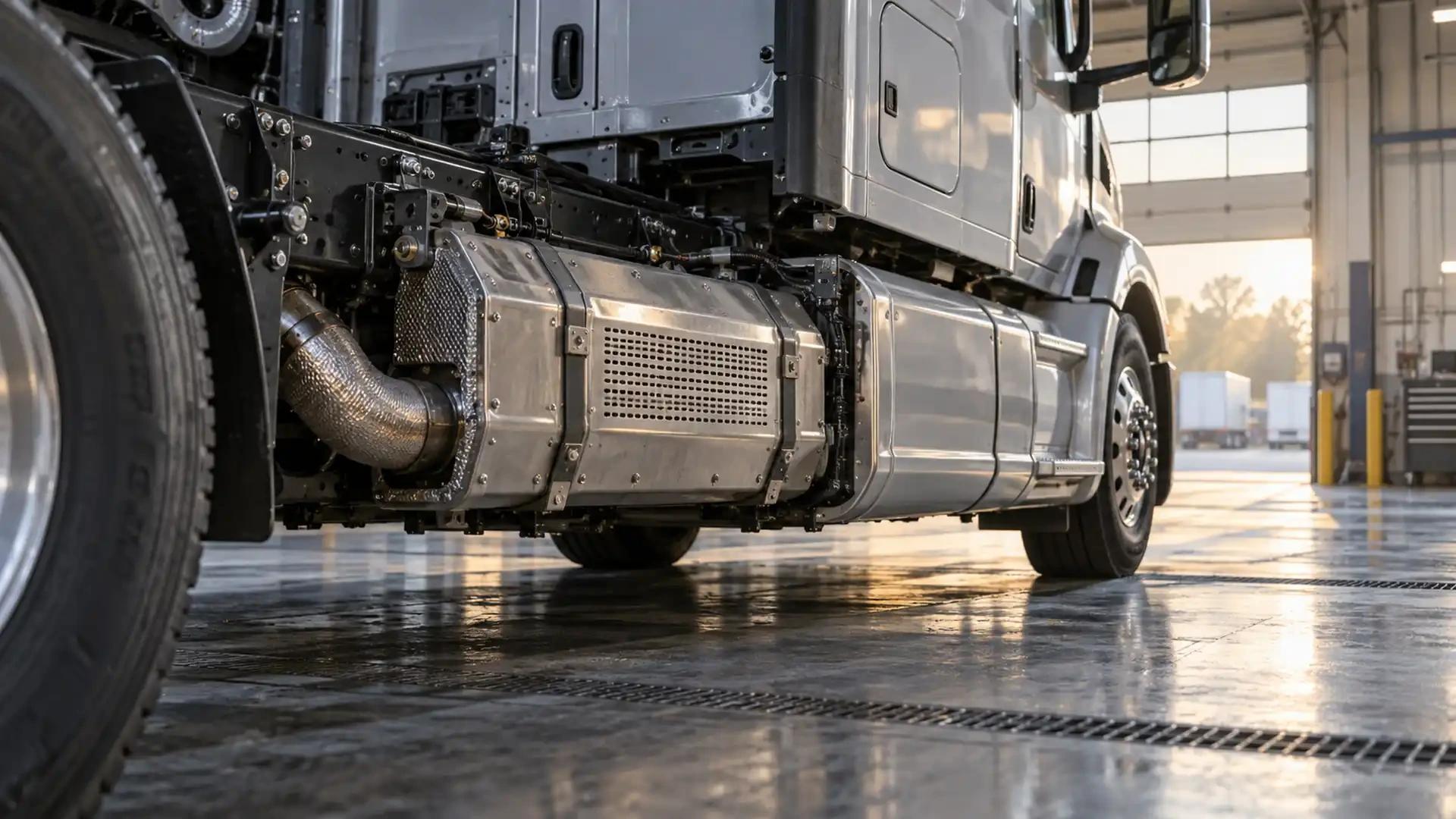
Specialized Truck Services
DPF warning returns after regeneration: what to document before the next diagnostic visit
Did the DPF warning return after regeneration? Learn what drivers and fleets should document before follow-up mobile diagnostics in Tampa or Lakeland.
Sep 14, 2026

Roadside Assistance
Tractor or trailer air-system problem: what to document before mobile diagnostics
Learn what to document when a truck air-system symptom may involve the tractor, trailer, connection, or operating configuration before mobile diagnostics.
Sep 11, 2026
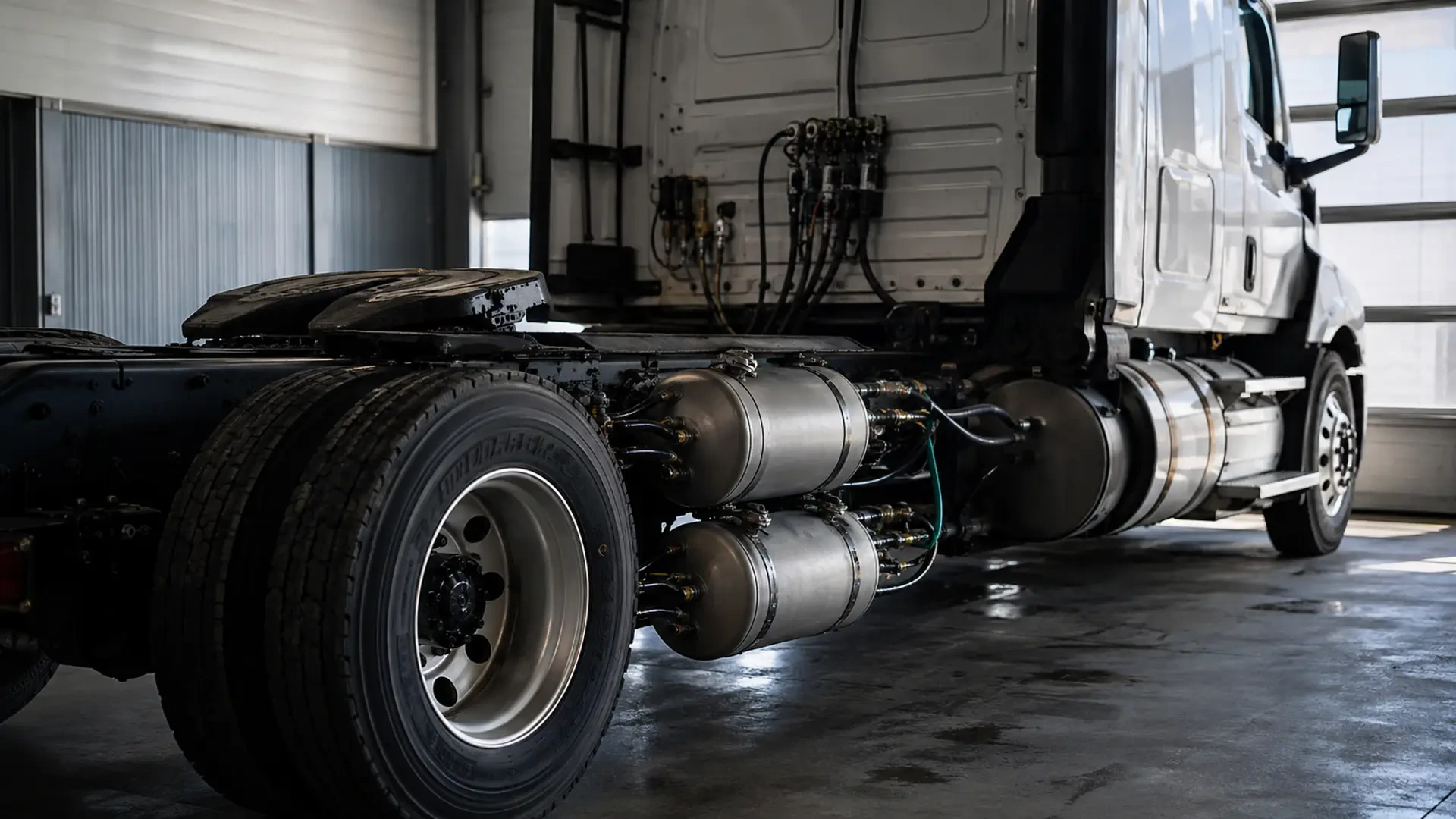
Specialized Truck Services
Commercial truck air-system repair verification: what to document before returning to service
Learn what fleets should document after commercial truck air-system repair, including warnings, operating conditions, handoff notes, and follow-up.
Sep 7, 2026
