A truck is due out in two days, and its last service record says only that everything passed. Then the dispatcher gets a no-start call from the yard. There's no battery voltage, no note on the ground strap, and no record of the driver's earlier complaint about slow cranking. That gap is where a heavy duty truck preventive maintenance checklist either earns its keep or fails.
Hypothetical scenario: a Tampa dispatcher faces that exact call on a regional tractor. The checklist can't answer what changed since the last visit because nobody wrote down a measurement. The fix isn't a longer form. It's a form that pairs every check with a number, a finding, and a clear decision.
Under 49 CFR Part 396, every carrier must systematically inspect, repair, and maintain each vehicle under its control, and for vehicles controlled for at least 30 consecutive days, records must identify the vehicle and document the type and due date of each inspection or maintenance operation. Those records stay for one year where the vehicle is housed or maintained and for six months after it leaves control. Seven checkpoints below show what to inspect, what to write down, and what shouldn't be attempted at the roadside.
Table of Contents
- 1. How Can Fleet Teams Check Air Brake Systems Before a Roadside Breakdown?
- 2. What Should You Inspect on Tires, Wheels, and Hubs to Prevent Roadside Failures?
- 3. How Do You Keep Truck Electrical Systems From Causing Repeat Service Calls?
- 4. Which Engine Fluids, Filters, and Cooling Checks Matter Most Between Intervals?
- 5. How Should You Check Diesel Aftertreatment (DPF, EGR, and DEF) to Avoid Derates?
- 6. What Transmission and Driveline Checks Protect Schedules and Safety?
- 7. How Can Suspension, Steering, and Fault-Code Reviews Catch Problems Early?
- Which Checkpoints Are Roadside Tasks and Which Need an External Facility
- Turning the Checklist Into a Schedule Your Fleet Will Keep
1. How Can Fleet Teams Check Air Brake Systems Before a Roadside Breakdown?
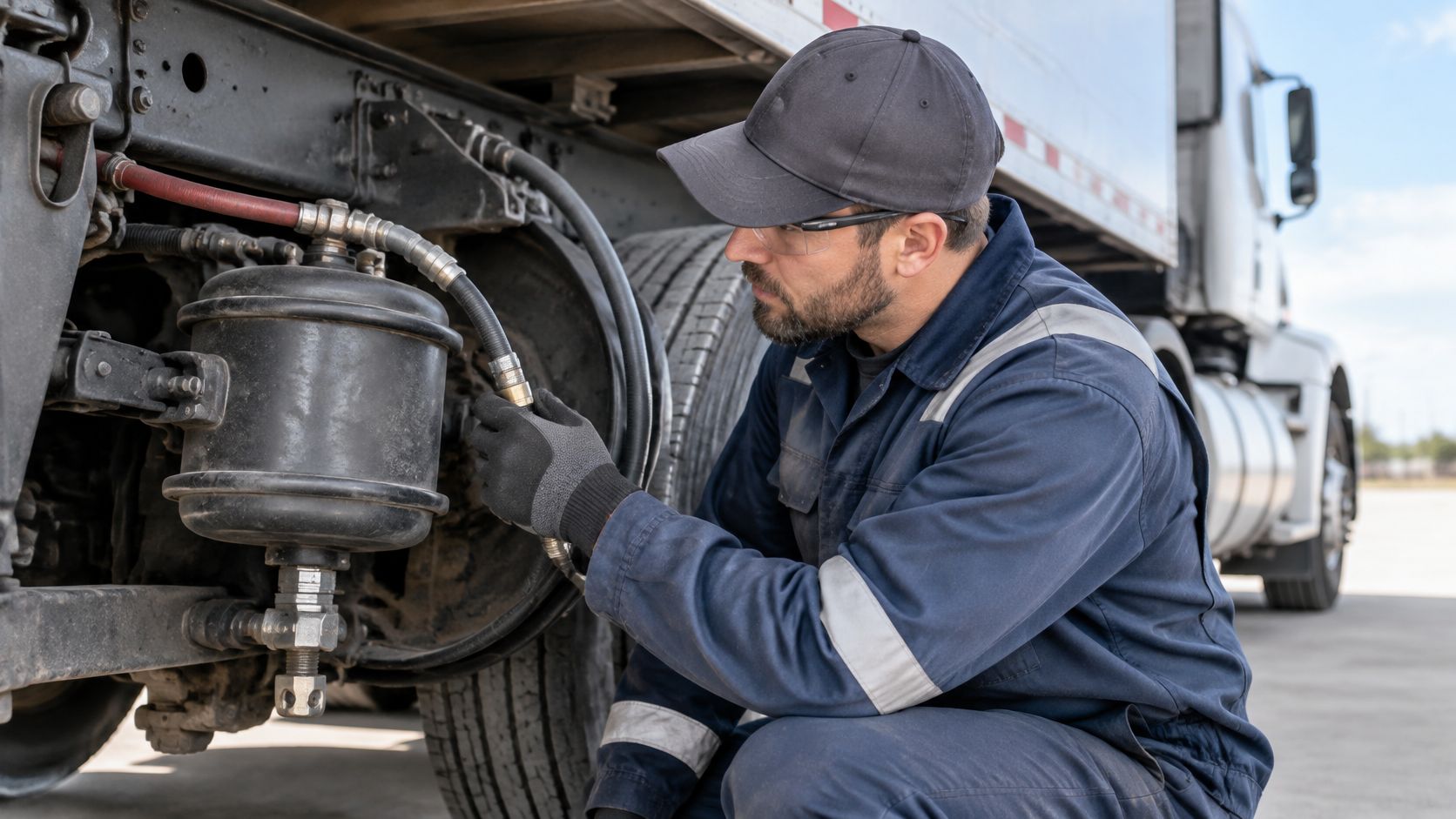
A pre-trip check finds that air pressure is building slowly, but the last inspection record gives no baseline. Record the pressure build and governor cut-in and cut-out behavior at each check. That gives the next technician a useful comparison and helps identify a developing air-system problem before dispatch.
What to measure and record
- Compressor build and governor behavior: Record how quickly pressure rises and whether cut-in and cut-out operate cleanly.
- Leaks: Check reservoirs, lines, hoses, chambers, and fittings. Write down the precise location of each leak.
- Pushrod stroke: Measure and record it by wheel position, rather than marking the whole axle as passed.
- Friction material: Document lining or pad condition, along with drum or rotor condition, at each axle.
- Slack adjusters and warning lamps: Check operation and note damaged chambers or hoses.
The FMCSA Pocket Guide 2023 reports 2,016,103 vehicle inspections in 2022. Of those, 455,079 involved at least one vehicle out-of-service violation, approximately 22.6%. The guide states that brakes are out of service when defective brakes equal or exceed 20% of the service brakes. Treat a finding near that threshold as a reason to escalate, not schedule routine work. Record who inspected the truck, each defect found, the repair performed, or the formal decision that no repair is required before the truck returns to service. Brake inspections require a properly qualified inspector.
Use the walkthrough below to see how a structured brake check is performed.
A regional fleet finds slow air build during a pre-trip. A mobile leak test in the yard identifies a cracked fitting, and the repair can be made where the truck is parked if access is safe and parts are available. A chamber that cannot be serviced safely on a narrow shoulder needs a suitable external facility after an on-site assessment. Many leak checks and some pad or drum jobs can be handled at the vehicle's location, but drum machining and major air-system component work generally need a facility. For the test procedure, see this guide to performing an air brake leakage test.
2. What Should You Inspect on Tires, Wheels, and Hubs to Prevent Roadside Failures?
A tire rarely fails without warning. The warning is usually written in wear pattern, pressure loss, or a wet wheel end that somebody walked past.
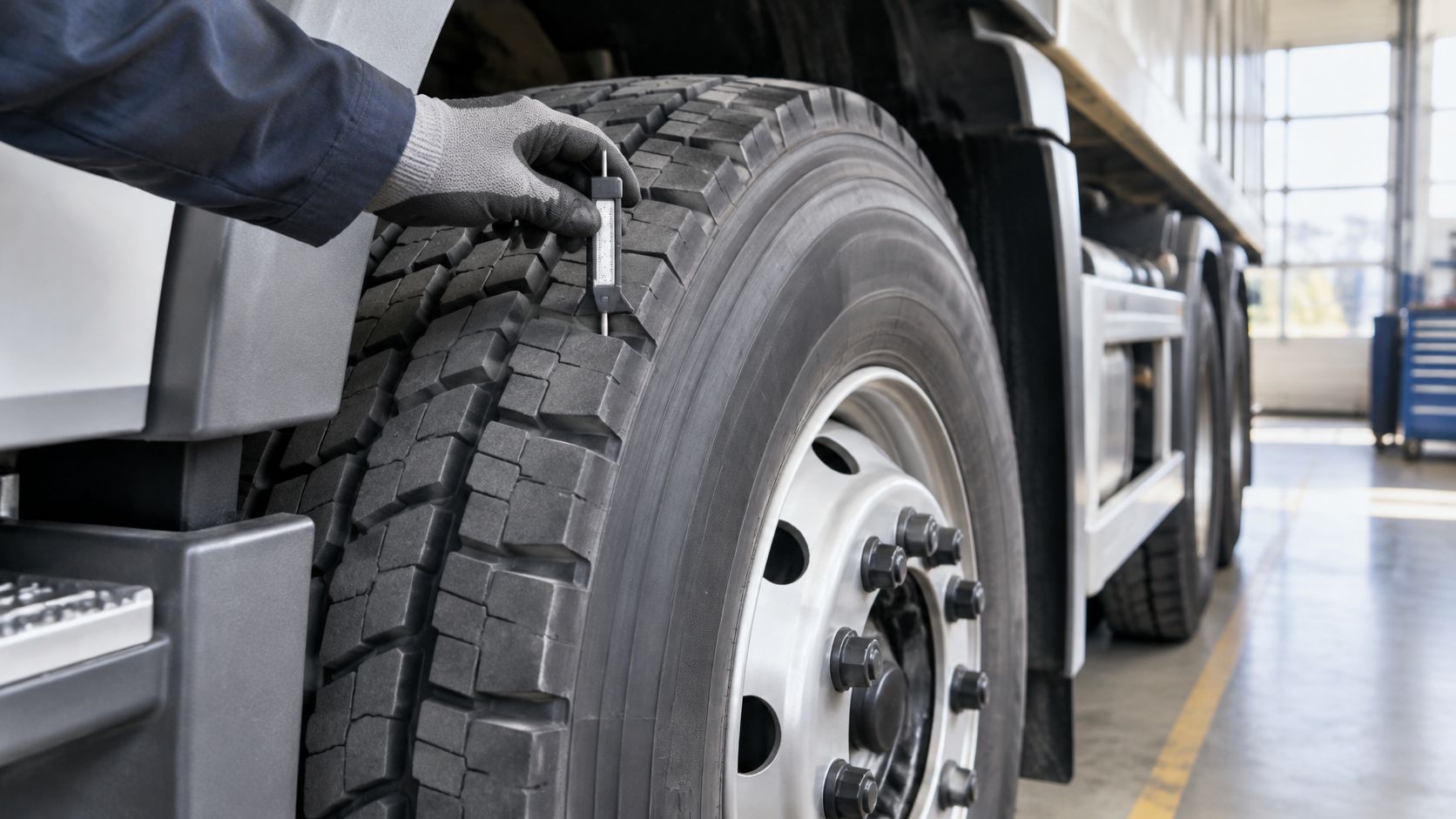
Measure tread depth at several points across the face, not only in the center groove. Shoulder wear, cupping, and feathering indicate pressure, alignment, or suspension issues that a center reading conceals. Record the result by unit number and wheel position, so the same position doesn't cause damage to three tires in a row.
Wheel-end checks that matter
Inspect sidewalls for cuts, bulges, and exposed cord, and check inflation pressure cold against the fleet spec for the load. Then move inward. Look for wheel seal leaks, low or contaminated hub oil, loose or missing lug hardware, and heat discoloration that suggests a bearing running hot. After a wheel is installed, recheck torque following the manufacturer's procedure and log the values instead of relying on memory.
Hypothetical scenario: a dispatcher reports uneven shoulder wear on a steer tire before a long run. A yard check confirms a pressure problem and early alignment wear, and the truck gets corrected before dispatch rather than after a blowout. Contrast that with a hub leak found at the roadside. A technician can document it with photos, check for play or overheating, and make a safe-to-move call, but a bearing replacement belongs at an external facility with proper support equipment.
Practical rule: A tire log by position turns one flat into data. Without positions, every failure looks random.
Trailer tires deserve the same discipline, since they sit longer and get inspected less often. This overview of truck and trailer maintenance covers how tractor and trailer checks fit into one routine. Mobile service handles measurement, documentation, and many tire-related jobs where equipment and location allow. It doesn't turn a damaged wheel end into a parking-lot rebuild.
3. How Do You Keep Truck Electrical Systems From Causing Repeat Service Calls?
Repeat electrical calls usually aren't bad luck. They're the same corroded ground, chafed harness, or weak charging system showing up under different symptoms.
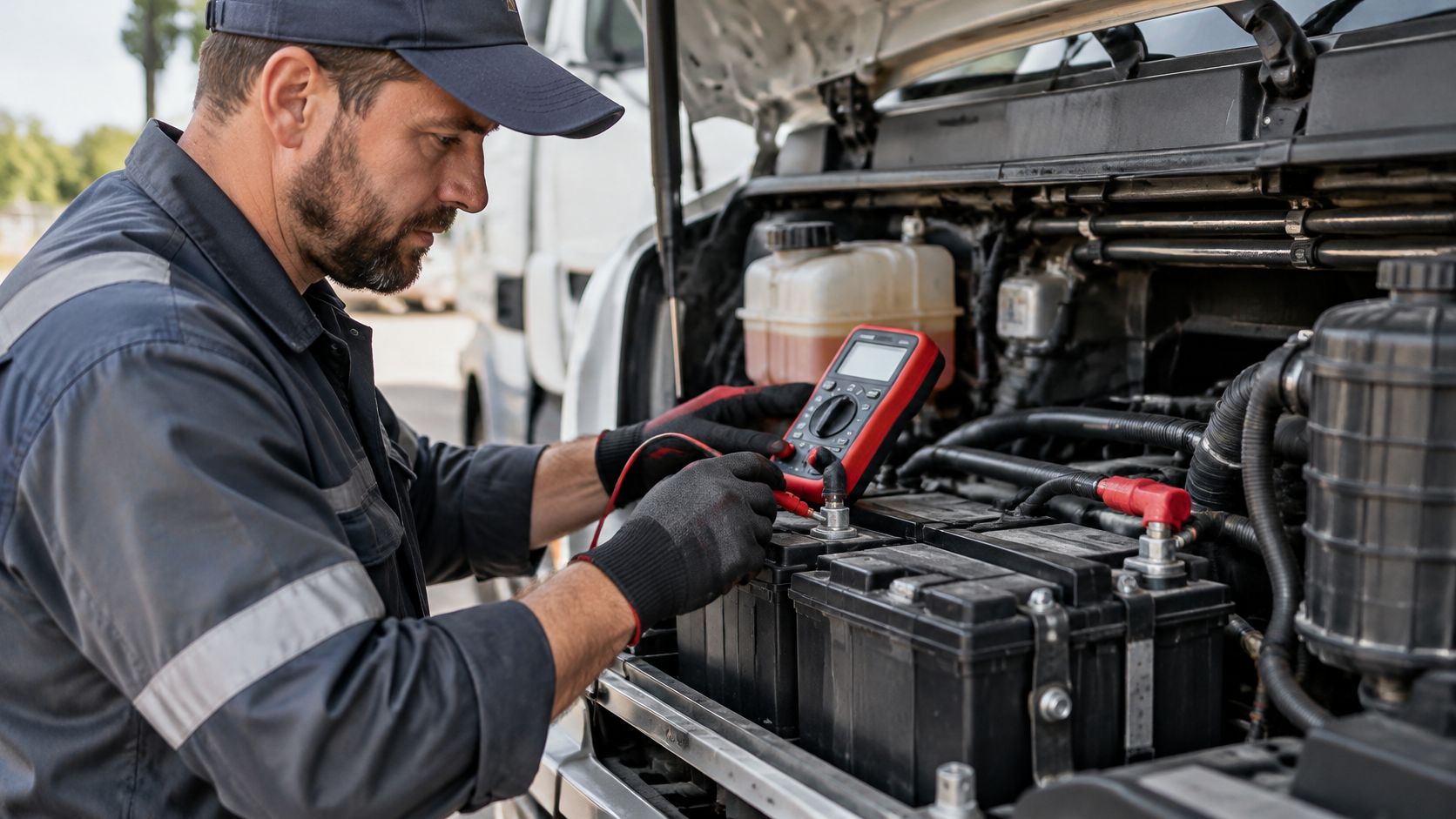
Test under load, not at rest only
A battery can show acceptable resting voltage and still collapse while cranking. Log voltage at rest and voltage during cranking at every visit, then test alternator output with lights, blower, and other loads switched on. Check starter draw, terminal tightness, cable corrosion, and the condition of ground straps at the frame and engine. Inspect harness runs where they pass brackets, clamps, and heat sources, because that's where insulation wears through first.
- Batteries: Load test and record state of health, not just a pass mark.
- Grounds: Clean, tighten, and verify voltage drop instead of guessing.
- Connectors and sensors: Look for green corrosion, backed-out pins, and water entry.
- Lighting circuits: Confirm operation and trace intermittent faults to the connector, not the bulb alone.
Hypothetical scenario: a truck shuts down repeatedly overnight. On-site testing traces the fault to a corroded ground strap, and cleaning and securing it ends the cycle. In another hypothetical case, a load test confirms low alternator output under demand, and the unit is replaced in the yard the same visit.
Intermittent faults need context. Drivers should note time, electrical load, and weather when a symptom appears, since rain-related shorts and heat-related failures behave differently. Scan tools, smoke testing, and step-by-step test plans work well at the vehicle location. Complex harness rework, or a component buried behind parts that need major disassembly, may need an external facility. The deciding factor is access and safety, and a good record states which one drove the call.
4. Which Engine Fluids, Filters, and Cooling Checks Matter Most Between Intervals?
Mileage alone is a weak service trigger for regional trucks. A Lakeland tractor can rack up modest miles while idling through heat, short stops, and loaded yard moves.

Use three triggers, not one
This preventive maintenance guide notes that generic guidance commonly lists oil and filter work at 10,000 to 15,000 miles and deeper inspections at 25,000 to 30,000 miles, yet that can misclassify trucks with heavy idle time. A stronger checklist tracks odometer miles, engine hours, and calendar time together, then pulls service forward after overheating, repeated regens, water intrusion, or an emergency repair. The engine manufacturer's published schedule still sets the baseline for oil grade, filter spec, and interval.
Check oil level and condition for fuel smell, coolant contamination, or metal sheen. Drain the fuel water separator and note what comes out, because clean diesel and a cup of water lead to very different next steps. Test coolant level and concentration, squeeze hoses for soft spots, inspect belts for glazing and cracks, and clear debris from radiator fins. Confirm fan operation instead of assuming the clutch engages.
Hypothetical scenario: a mobile visit drains a separator and finds water contamination before dispatch, so the fuel system gets inspected rather than blamed later. In a second hypothetical case, a coolant test prompts service before a route change exposes weak protection.
Record oil pressure trends, coolant loss, and recurring fault codes at each visit. A single reading describes a day. A trend predicts a failure.
Florida humidity makes separator drainage a habit, not an annual event. Many fluid and filter jobs work at the vehicle location when there's space, safe drainage, and correct parts. Work that needs large-volume fluid handling or internal engine access belongs at an external facility.
5. How Should You Check Diesel Aftertreatment (DPF, EGR, and DEF) to Avoid Derates?
A derate is rarely sudden. Soot load, regeneration frequency, and small sensor faults build first, and the truck warns the fleet before it limits power.
The diesel particulate filter traps soot and burns it off during regeneration, while ash stays behind and only comes out with cleaning. The EPA guidance on diesel retrofit DPF care states that minimum regeneration frequency depends on particulate buildup and is generally once per day or shift for the referenced retrofit applications, and that cleaning commonly ranges from twice yearly to annually or longer. Ash cleaning generally involves heating the filter and using compressed air with a vacuum system to capture ash in a sealed container. That distinction matters, because forcing another regen on an ash-loaded filter doesn't restore flow.
What belongs on the record
- Differential pressure: Log the reading at each preventive visit to trend restriction.
- Regeneration history: Note completed, interrupted, and driver-reported regens.
- Fault and derate codes: Capture active and inactive codes with the derate level.
- EGR operation: Check valve movement, leaks, and related codes.
- DEF level and quality: Confirm the fluid meets its specification before refilling, and inspect the cap and tank for contamination.
Hypothetical scenario: a truck derates after repeated short routes. A mobile pressure check shows high DPF restriction, and the unit is scheduled for cleaning at an external facility instead of receiving repeated forced regens. In a second hypothetical case, a DEF quality fault traces to contaminated fluid, and the system is drained and refilled correctly during an on-site visit.
Mobile work suits diagnostics, pressure checks, sensor testing, and resets after the root cause is verified. Filter removal and equipment-intensive cleaning generally need a suitable external facility. Clearing codes without rechecking them after the repair leaves the next dispatcher guessing, so post-repair verification belongs on the same record.
6. What Transmission and Driveline Checks Protect Schedules and Safety?
Driveline trouble announces itself early through shift quality, vibration, and small leaks. Fleets lose schedules when those signs get written off as driver preference.
Check transmission fluid level and condition using the manufacturer's specification and procedure, including operating temperature when the procedure requires it. Dark, burnt-smelling fluid or debris in the pan changes the conversation from service to diagnosis. Inspect seals, pans, cooler lines, and the slip yoke for seepage. On manual trucks, measure clutch pedal travel and adjustment, and note engagement point changes. On automated and automatic units, log harsh shifts, slipping, delayed engagement, and any related fault codes with the load and road conditions.
Under the truck
Work along the driveshaft and check U-joints for play, rust dust at the caps, and missing grease. Inspect carrier bearings, differential pinion seals, and axle housings for leaks or low lubricant. A dry joint found during a chassis lube is a cheap correction. The same joint found after separation on a highway is a recovery problem.
Hypothetical scenario: a mobile fluid check finds a slip-yoke seal leak, and on-site replacement prevents a dry-running failure on the next regional run. In another hypothetical case, excessive pedal travel gets adjusted at the yard, but inspection shows a worn clutch disc that needs full replacement at an external facility.
Fluid service, leak checks, and some clutch adjustments fit mobile work when access is safe. Internal rebuilds and heavy component removal generally don't, and feasibility is settled per job before tools come out. Fleets building this checkpoint into a heavy duty truck preventive maintenance checklist can review what transmission service includes to separate routine service from repair decisions. The record should state fluid used, readings found, and whether the truck leaves fully repaired or scheduled for deeper work.
7. How Can Suspension, Steering, and Fault-Code Reviews Catch Problems Early?
When a truck starts pulling, wandering, or wearing steer tires unevenly, inspect the suspension and steering before the next dispatch. Compare what you find with the truck's stored fault codes, then record both the physical condition and the scan results so the next review has a baseline.
Check leaf springs and air springs for cracks, shifting, and leaks. Inspect U-bolts and mounting hardware for looseness or rust tracking that suggests movement. Look for oil leaks or broken mounts on shock absorbers, and check tie rods, drag links, steering gear leaks, and kingpin or bushing wear. Record cracked hangers and crossmembers separately, since structural damage affects repair urgency and whether the work can be done at the roadside.
Pair hands with scan data
A 2026 American Transportation Research Institute study of 111 fleets found 48% of fleets did not connect telematics with maintenance-management software. The same study rated preventive-maintenance scheduling 3.97 out of 5 for importance, while 77.5% tracked it. It also found that 73% tracked fault diagnostics, while downtime prediction reached only 49.5%. Stored codes help only when someone checks them against physical findings, turns relevant results into work orders, and records whether the work was completed.
A loose U-bolt found during a mobile inspection calls for a documented check and retorque to specification, with the scan reviewed for related electronic faults. If inspection instead finds a cracked hanger bracket, photograph and measure the damage, then arrange structural repair at an external facility.
Ask drivers to report pulling, vibration, or steering play as soon as they notice it. Mobile service can handle inspection, hardware correction, and some component replacement. Welding, frame repair, and heavy spring removal often require an external facility. Record the symptom, inspection findings, fault codes, and repair disposition to make the next checkpoint useful.
Which Checkpoints Are Roadside Tasks and Which Need an External Facility
A useful roadside check leaves the next technician with more than a pass-or-fail result. Record the unit, location, reading or symptom, and any follow-up needed. Use this table to route work and make inspection records useful at the next stop, rather than repeating the detailed checks covered above.
| Checkpoint | Record at the stop | Routing decision |
|---|---|---|
| Air brake systems | Pressure readings, leak locations, and observed warning signs | Record findings and arrange roadside help or facility service according to the defect and repair required. |
| Tires, wheels, and hubs | Tread and inflation readings, visible damage, and any heat or leak concern | Note whether the truck can remain in service or needs roadside support or facility attention. |
| Electrical systems | Test results, symptoms, and diagnostic findings | Record the affected circuit or component and whether the issue can be addressed at the vehicle's location. |
| Engine fluids, filters, and cooling | Fluid condition, visible leaks, and cooling-system concerns | Document routine service needs separately from work requiring facility access. |
| Diesel aftertreatment | Warning lights, fault codes, and regeneration or derate symptoms | Record diagnostic findings and identify whether follow-up requires specialized facility work. |
| Transmission and driveline | Symptoms, visible leaks, and inspection findings | Log the concern and route adjustments or service according to the work required. |
| Suspension, steering, and fault codes | Driver-reported symptoms, scan findings, and visible concerns | Record the evidence and arrange roadside inspection or facility repair as appropriate. |
A roadside visit can identify issues and address work suited to service at the truck's location. It cannot replace facility equipment or make every repair safe to complete on the shoulder. If the required repair involves work that cannot be performed safely roadside, secure the vehicle and arrange facility service.
For fleets, make the handoff specific: include the truck identifier, current location, driver's description, readings, diagnostic findings, and the action already taken. A short record tied to the checkpoint helps the next inspection distinguish a new defect from an unresolved one. Keep the decision clear: monitor, request roadside service, or route the truck to an external facility.
Turning the Checklist Into a Schedule Your Fleet Will Keep
Build service intervals from the manufacturer's schedule and the truck's duty cycle. Set each checkpoint by miles, engine hours, and calendar time, then adjust for heat, idle time, dust, and recurring fault codes. At each stop, record the readings that will help the next inspector compare the truck's condition, along with the finding and any action due.
Use the service form to assign each finding to one of three outcomes: monitor and schedule, stop and request roadside service, or secure the vehicle and arrange recovery to an external facility. Before dispatching a mobile technician, provide the truck's location and access conditions, trailer status, warning lights, derate level, air pressure, reported tire or brake symptoms, recent repairs, and available fault-code screenshots. These details help determine what equipment and parts to bring. They also help identify work that cannot safely or practically be completed at the roadside.
After repairs, verify the relevant system and record whether the repair is temporary or definitive. A road test may not be possible at the truck's location, and major repairs may require an external facility. For a defect noted on a driver vehicle inspection report, repair it or document the determination before the truck returns to operation, and identify who made the release decision.
SAAT Repairs Corp provides 24/7 emergency road service and mobile preventive maintenance at the vehicle's location, with a focus on heavy-duty diesel trucks and fleets in Tampa, Lakeland, and nearby areas. It does not have a customer-facing workshop, so trucks cannot be dropped off at a SAAT facility. Response timing depends on location and traffic, and arrival within Tampa and Lakeland is targeted within 45–60 minutes, depending on conditions. For locations outside those areas, contact SAAT to confirm coverage. Fleets ready to put a documented checklist into practice can reach SAAT Repairs Corp to confirm coverage and discuss service needs.