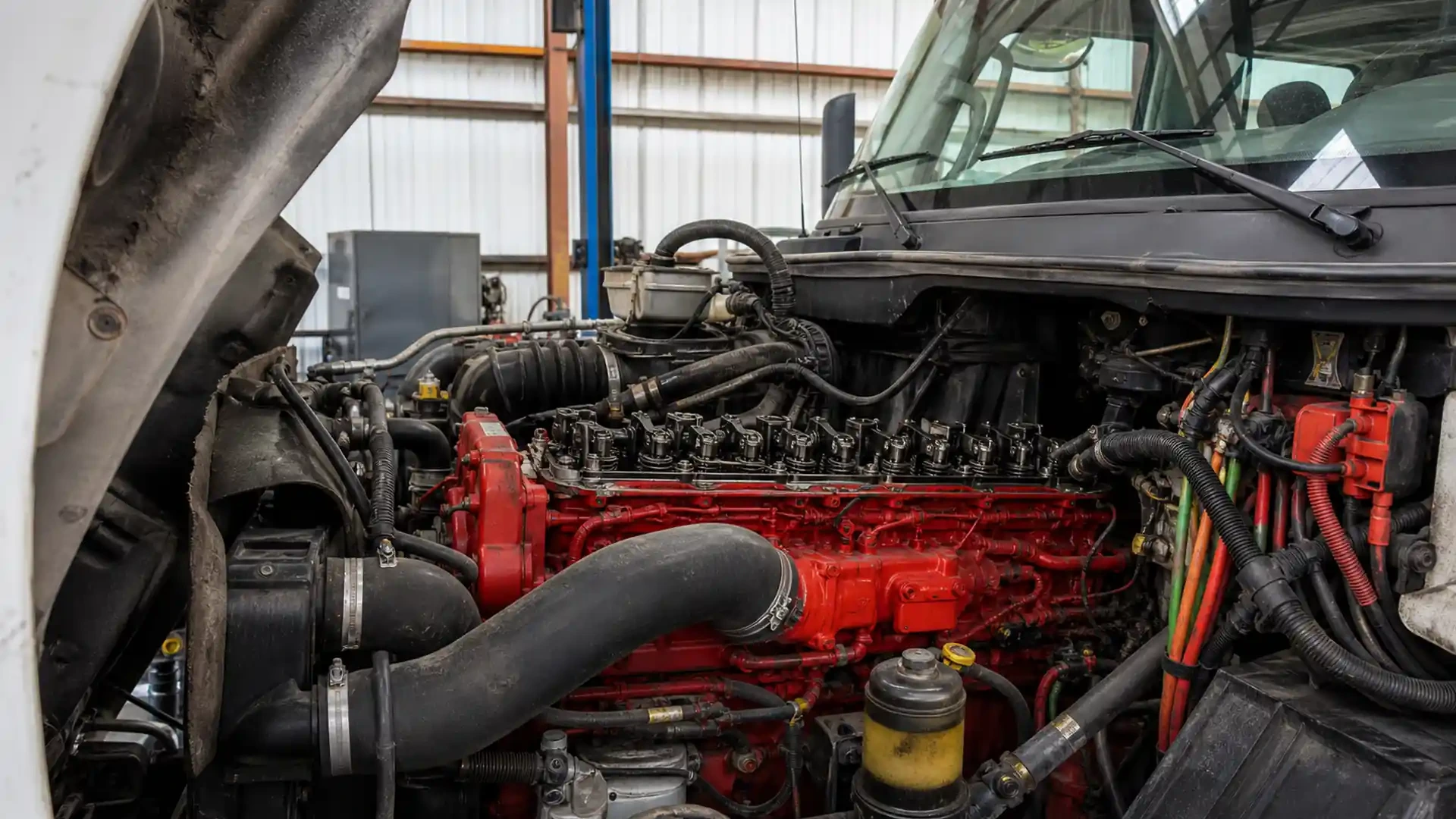
Valve adjustment is one of those maintenance items that can be easy to ignore until the truck starts showing symptoms. On a commercial diesel engine, valve lash that is out of specification can affect how the engine breathes, starts, idles, pulls under load, and performs over time.
Not every engine complaint means the valves need adjustment. Rough idle, hard starts, ticking noise, power loss, fuel economy changes, or recurring performance issues can also come from injectors, air restriction, fuel supply, sensors, exhaust restriction, or electrical faults. That is why the right approach is to document symptoms and inspect the engine before assuming one repair will solve the problem.
SAAT Repairs Corp provides mobile truck repair, preventive maintenance, and diagnostic support for commercial trucks in Tampa, Lakeland, and nearby areas. This guide explains when valve adjustment may be part of the maintenance conversation and what should be checked before downtime grows.
Why valve adjustment matters on diesel trucks
Diesel engines operate under heavy load, heat, vibration, and long operating hours. Over time, valve lash can move outside the intended range. When that happens, the engine may not open and close valves at the most effective timing and clearance.
That can contribute to:
Hard starting.
Rough idle.
Ticking or tapping noise.
Reduced pulling power.
Poor throttle response.
Fuel economy changes.
Increased engine stress.
Performance complaints that are hard to isolate.
Valve adjustment is part of engine maintenance, but it should be handled with the correct procedure for the engine model and service information. It is not a guesswork repair.
Symptoms that may point to valve lash or related engine issues
A truck may need valve-related inspection if the driver or fleet notices:
A ticking sound from the engine area.
Idle that feels rougher than normal.
Hard starts, especially after sitting.
Loss of power under load.
Engine braking changes.
Increased fuel consumption.
Recurring performance complaints without a clear cause.
Maintenance history showing the service interval may be due.
These symptoms can overlap with other problems. A ticking sound may come from valve train condition, but it may also need inspection of related mechanical components. Power loss can be related to air, fuel, turbo, injectors, exhaust, or electronic control. The symptom is the starting point, not the final answer.
What should be checked before assuming the valves need adjustment
Before a fleet authorizes valve adjustment or any related engine work, a few checks can make the service more accurate and useful.
Engine history and maintenance interval
The first question is simple: when was the last valve adjustment performed, and what does the maintenance history show?
If the service is overdue, valve adjustment may be a reasonable preventive step. If the service was recently performed and symptoms returned, the technician should look deeper before repeating the same work.
Maintenance records help separate scheduled service from problem diagnosis.
Noise, idle quality, and power complaints
The driver should describe the complaint as clearly as possible:
Does the noise happen cold, hot, or all the time?
Does the truck lose power only under load?
Did the idle change suddenly or gradually?
Does the complaint happen after a repair?
Are there warning lights or dashboard messages?
These details help the technician decide whether valve adjustment is likely, whether another system should be checked first, or whether both maintenance and diagnostics are needed.
Fault codes and related systems
Fault codes do not measure valve lash directly in the same way a physical inspection does, but they can reveal related conditions. Codes connected to fuel, air, exhaust, sensors, or engine performance can help explain why the truck is running poorly.
If codes are present, they should be reviewed alongside symptoms and maintenance history.
Fuel, air, and injector-related symptoms
Valve adjustment should not be used to cover up unrelated engine problems. Symptoms such as power loss, rough running, smoke, or fuel economy changes may require inspection of:
Fuel filters and fuel supply.
Air intake restriction.
Turbo and charge air system.
Injector performance.
Exhaust restriction.
Sensor readings.
DPF or EGR-related conditions.
The goal is not to replace one guess with another. The goal is to narrow the cause.
Recent repairs or engine work
If symptoms began after service, that history matters. Recent injector work, harness movement, sensor replacement, valve cover removal, turbo work, or other engine-area repairs can point the technician toward the right inspection area.
Drivers and fleets should always share what changed before the complaint appeared.
Why preventive maintenance should be documented
Valve adjustment is easier to manage when maintenance records are clear. Fleets should track:
Unit number.
Engine model.
Mileage or operating hours.
Date of last valve adjustment.
Related engine repairs.
Recurring complaints.
Driver notes.
Good documentation helps avoid missed intervals and repeat troubleshooting. It also helps mobile service start with useful context instead of rebuilding the service history from scratch.
When mobile support can help
Mobile support can be useful when the truck needs diagnostic review, preventive maintenance planning, or engine-related service at the truck's location. Depending on the truck condition, location, and required procedure, a mobile technician can help identify whether the next step is inspection, maintenance, deeper diagnostics, or another service direction.
If the truck is unsafe to operate, losing power, showing critical warnings, or behaving differently than normal, stop in a safe location and request professional guidance.
What to prepare before requesting service
Before calling for mobile truck repair or maintenance support, prepare:
Exact truck location.
Year, make, model, and engine.
Unit number.
Mileage or operating hours.
Main symptom.
When the symptom started.
Whether the truck starts and runs.
Warning lights or fault codes.
Recent repairs.
Last known valve adjustment or maintenance interval.
Photos or videos of visible conditions if safe.
The more specific the information, the easier it is to define the right next step.
Contact SAAT Repairs Corp
If your commercial diesel truck has engine noise, rough idle, hard starts, power loss, or overdue preventive maintenance, contact SAAT Repairs Corp for mobile truck repair and diagnostic support in Tampa, Lakeland, and nearby areas.
Have the truck location, symptoms, engine information, codes, and maintenance history ready before calling.
Need help checking whether your truck needs valve adjustment or deeper engine diagnostics? Contact SAAT Repairs Corp for mobile truck repair support in Tampa, Lakeland, and nearby areas.