An injector-related fault on a Paccar MX-13 does not always begin inside the injector. The electrical path that controls the system also matters.
A loose terminal, damaged connector, worn harness, unstable voltage, poor ground, or intermittent connection can change how the engine runs and how the control system reports the problem. The truck may show rough operation, power loss, a warning light, or a fault description that seems to point directly at an injector.
Instead of assuming that every electrical-looking problem has the same cause, preserve the fault information, document when the condition occurs, and evaluate the circuit and related systems before replacing parts.
SAAT Repairs Corp provides mobile electrical diagnostics and truck repair for commercial vehicles in Tampa, Lakeland, and nearby Florida areas. Service goes to the truck's location when the area is safe and accessible.
Why an electrical fault can look like injector failure
An electronically controlled injector depends on more than the injector body. It relies on connectors, terminals, wiring, electrical supply, grounds, control commands, and accurate information from the engine system.
If part of that path is interrupted, the system may not operate consistently. A fault can be constant or appear only under heat, vibration, moisture, load, or a particular engine condition.
That overlap is why fault descriptions must be confirmed. Replacing an injector without checking the circuit can leave the original problem in place. Replacing a control component before checking basic voltage and grounds can create the same risk.
Signs that make an electrical check important
These patterns do not prove an electrical fault, but they make electrical history and circuit condition especially relevant.
An intermittent fault
The truck may run normally for a period, then show rough operation, a warning, or reduced power before returning to normal.
Intermittent conditions are easier to investigate when the driver records the time, temperature, road condition, load, and engine state. “It comes and goes” is a useful starting point, but a more specific pattern is better.
A problem that changes with heat or vibration
Heat can change an already weak connection. Vibration can affect a loose terminal, rubbed harness, or damaged connector. A problem may appear after several hours of operation, on rough roads, during acceleration, or when the engine compartment reaches a certain temperature.
Record whether the fault appears cold, hot, at idle, or under load.
A fault that began after recent work
Recent repairs may provide an important timeline. A connector may have been disconnected, a harness moved, batteries replaced, a sensor changed, or work completed near the affected area.
This does not mean the previous repair caused the new fault. It means the sequence should be documented and reviewed instead of ignored.
Multiple electrical or communication messages
Several codes appearing together can provide context. Voltage, ground, connector, or communication conditions may influence more than one system.
Do not assume that multiple codes mean multiple failed parts. Record all messages before they are cleared and let the diagnostic process determine whether they share a cause.
What drivers and fleets should document
Before requesting service, prepare:
The complete code and dashboard message.
Whether the fault is active, intermittent, or no longer visible.
The time and operating condition when it appeared.
Engine temperature and whether the truck was under load.
Whether rain, washing, recent moisture, rough roads, or vibration preceded the fault.
Recent battery, charging, wiring, sensor, injector, module, or engine work.
Whether the truck starts, idles, and responds normally.
Photos of the dashboard or visible external condition when they can be taken safely.
Fleet teams should also preserve the unit number, repair orders, prior fault history, and any repeated complaint from the same driver or route.
What a diagnostic review may consider
The correct procedure depends on the fault, engine information, and approved service process. A review may include several areas.
Connector and terminal condition
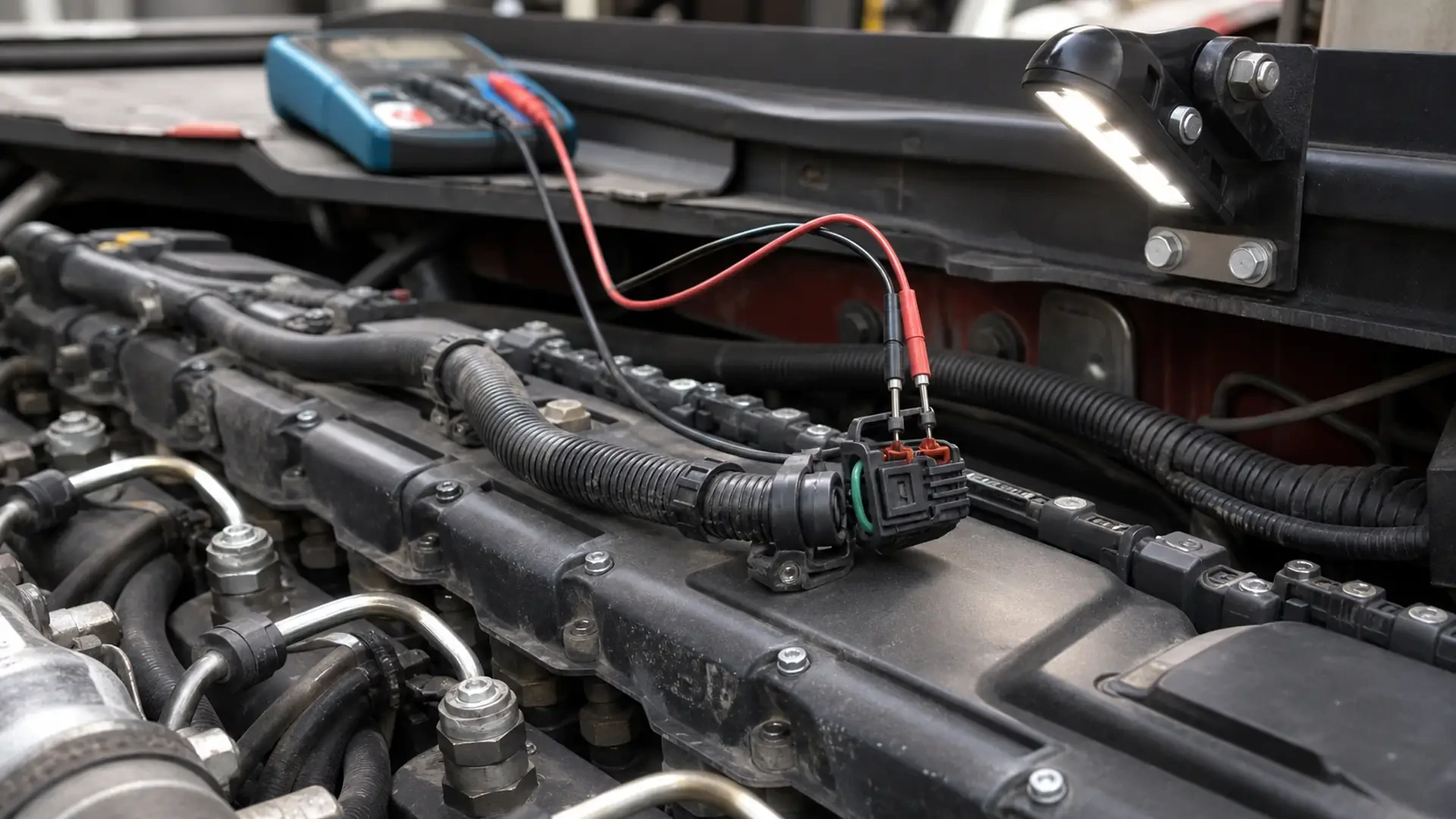
Connectors can be affected by loose fit, damaged locking features, contamination, corrosion, heat, or terminal condition. A connector that appears attached may still require appropriate testing.
Do not push improvised objects into terminals or force a connection. That can damage the contact and make the original fault harder to identify.
Harness routing and visible damage
A harness may be exposed to heat, vibration, rubbing, sharp edges, tension, or previous repair. The location of visible damage can provide a clue, but an external inspection does not reveal every internal or intermittent condition.
Any repair must use the correct procedure and materials for the circuit and environment.
Voltage and grounds
Stable electrical supply and reliable grounds are basic conditions for control systems. Battery, charging, connection, or ground problems can create misleading symptoms and multiple faults.
Testing should evaluate the circuit under the conditions required by the diagnostic information. A voltage reading without load or context may not explain an intermittent complaint.
Fault information and operating data
Codes, status information, freeze-frame or operating data when available, and the order in which faults appeared can help separate a primary condition from secondary effects.
The goal is to connect the reported symptom with evidence from the circuit and engine operation.
Why visual inspection alone may not be enough
Some electrical problems are obvious: a disconnected plug, damaged loom, loose ground, or visible heat damage. Others appear only during vibration, temperature change, movement, or electrical load.
A connector can look clean and still have a poor terminal fit. A wire can appear intact outside while the conductor is affected internally. A ground can look secure but behave differently under load.
Visual inspection is useful, but it should not be used to declare the entire circuit good without the appropriate checks.
What not to do on the roadside
Avoid actions that may create risk or erase evidence:
Do not disconnect batteries only to turn off the warning before recording codes.
Do not pierce wiring or insert unapproved objects into connectors.
Do not apply power or ground to a circuit without the correct information.
Do not replace an injector or module only from a short code description.
Do not work near hot, moving, pressurized, or energized components without proper training and equipment.
Do not continue operating an unsafe truck to make an intermittent fault return.
The driver's role is to report the condition and keep the truck secure. Circuit diagnosis should follow the appropriate technical and safety process.
How to prepare for mobile electrical diagnostics
Provide SAAT with:
Exact location and safe access information.
Truck, engine, and unit details.
Full fault codes and dashboard messages.
A description of the symptom and when it occurs.
Battery, charging, wiring, and recent repair history.
Whether the truck starts and can move safely.
Contact information for the driver, dispatcher, or maintenance manager.
Mobile diagnostics can help assess fault information, visible circuit conditions, electrical basics, and available operating data. The inspection determines whether the next step can be completed on location or requires additional repair planning.
When to stop in a safe location
Stop and request assistance if the truck has severe power loss, repeated shutdown, overheating, low oil pressure, an active fuel leak, heavy smoke, abnormal mechanical noise, electrical burning odor, visible heat damage, or a condition that makes operation unsafe.
Do not touch damaged wiring if there is heat, smoke, exposed conductors, or an immediate electrical hazard.
Contact SAAT Repairs Corp
If your Paccar MX-13 has an injector-circuit fault, intermittent power loss, rough operation, or warning messages after recent electrical or engine work, contact SAAT Repairs Corp for mobile electrical diagnostics and truck repair in Tampa, Lakeland, and nearby areas.
Prepare the location, complete fault information, operating pattern, and repair history before calling.
If an injector-related fault keeps returning on your Paccar MX-13, contact SAAT Repairs Corp. Share the complete code, when it occurs, and any recent wiring, battery, sensor, injector, or module work.