Commercial trucks rely on electronic modules, sensors, wiring, software, power, grounds, and network communication. When one part of that system stops working correctly, the truck may show warning lights, derate, no-start symptoms, communication codes, or repeated faults after parts have already been replaced.
In those situations, online diagnostics and programming may become part of the service path. But the process works best when the driver, owner-operator, or fleet team prepares the right information before the technician connects equipment.
SAAT Repairs Corp provides mobile truck repair, advanced diagnostics, electrical diagnostics, and software programming support for commercial trucks in Tampa, Lakeland, and nearby areas. This guide explains what to prepare before requesting diagnostic or programming service.
What online diagnostics and programming can help with
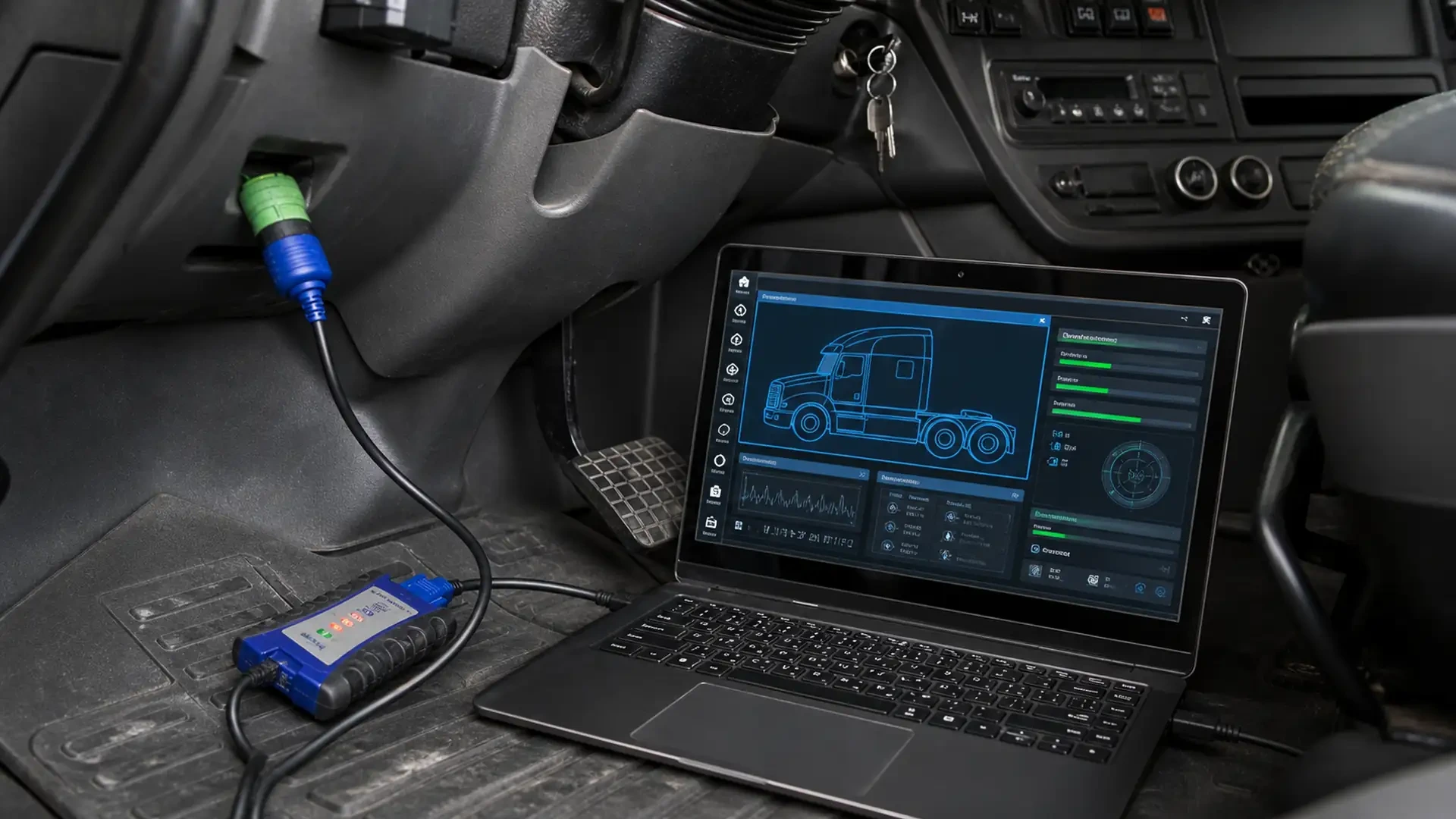
Online diagnostics and programming can support service decisions when a truck has electronic, communication, calibration, or module-related concerns. Depending on the issue, the process may help with:
Reading and reviewing fault codes.
Checking module communication.
Reviewing system data.
Supporting programming or configuration steps when required.
Confirming whether a suspected module issue needs more testing.
Helping identify whether the problem is electrical, software-related, mechanical, or connected to a recent repair.
The key is sequence. Diagnostic information should guide programming decisions. Programming should not be used as a shortcut around basic electrical checks, service history, or symptom review.
Why preparation matters before connecting diagnostic equipment
Diagnostic and programming work depends on stable information and stable conditions. If the truck has weak batteries, poor connections, incomplete service history, or unclear symptoms, the process can take longer.
Good preparation helps the technician answer important questions:
What exactly is the truck doing?
When did the complaint start?
Is the issue active or intermittent?
Did it happen after a repair?
Are modules communicating correctly?
Is voltage stable enough for testing or programming?
Is programming actually needed, or should electrical diagnostics come first?
That preparation can reduce confusion and help protect the truck from unnecessary parts replacement.
Information to collect before requesting service
Before calling for online diagnostics or programming support, collect as much of the following information as possible.
Truck identification and location
Prepare:
Exact truck location.
Year, make, and model.
Engine model.
VIN if available.
Unit number.
Driver contact.
Whether the truck is parked safely.
Whether the truck starts, runs, derates, or cannot move.
Because SAAT Repairs Corp provides mobile support, location and access details are important. The service goes to the truck's location; it is not based on a public physical shop visit.
Symptoms and dashboard messages
Describe the complaint in plain language. For example:
The truck will not start.
The truck starts but derates.
Warning lights return after clearing.
A module does not communicate.
The engine runs but lacks power.
A message appeared after battery or module work.
The issue happens only when hot, under load, or after sitting.
Photos of dashboard messages can help when it is safe to take them.
Fault codes and reports
If a fault code report is available, keep it ready. Do not rely only on a screenshot if a full report exists. Useful details include:
Active codes.
Inactive or stored codes.
Time or mileage since fault.
Module name.
Code descriptions.
Freeze-frame or operating conditions when available.
Codes are clues, not final proof. They should be reviewed with symptoms, voltage condition, and recent repair history.
Battery and voltage condition
Voltage stability matters during diagnostics and programming. Weak batteries, poor cable condition, loose connections, or charging problems can create communication faults and make programming risky.
Before programming, the technician may need to confirm that the electrical system is stable enough for the task. If voltage drops during communication, the process can be interrupted and the truck may develop additional issues.
Recent repairs or replaced parts
Recent repair history is one of the most important details. Prepare notes on:
Battery replacement.
Sensor replacement.
Module replacement.
Harness or connector repairs.
Engine work.
DPF, EGR, injector, turbo, or fuel-system work.
Prior programming attempts.
Any issue that started immediately after service.
If a problem appeared after a repair, the diagnostic path should begin with what changed.
When programming may be needed
Programming may be part of the correct service path when diagnostics confirm that a module, calibration, configuration, replacement procedure, or software-related step is required.
Programming may also be needed after certain module replacements or when service information calls for it. The technician should confirm that the correct unit is identified, communication is stable, voltage is controlled, and the service direction is clear before moving forward.
Programming is a technical process. It should be done with preparation, not pressure.
When diagnostics should come first
Diagnostics should come before programming when:
The root cause is unknown.
The truck has low-voltage symptoms.
Communication faults are intermittent.
Wiring, connectors, or grounds have not been checked.
The problem began after unrelated service.
Several parts have already been replaced.
The same codes return after clearing.
The truck has symptoms that could be mechanical, electrical, or software-related.
In these cases, programming without diagnosis can miss the real issue.
How fleets can make the process smoother
Fleet teams can reduce downtime by standardizing what they collect before requesting service:
Unit number.
Driver name and phone number.
Truck location.
Main complaint.
Whether the truck is loaded.
Safety status.
Codes or report.
Recent repair notes.
Photos of messages if safe.
Deadline or operational impact.
This helps the technician understand the situation before arriving or beginning the diagnostic process.
Contact SAAT Repairs Corp
If your commercial truck has warning lights, module communication problems, suspected programming needs, no-start symptoms, derate, or repeated electrical faults, contact SAAT Repairs Corp for mobile diagnostics and programming support in Tampa, Lakeland, and nearby areas.
Have the truck location, symptoms, codes, VIN, voltage history, and recent repair notes ready before calling.
Need mobile diagnostics or programming support for a commercial truck? Contact SAAT Repairs Corp in Tampa, Lakeland, or nearby areas and prepare the truck location, symptoms, codes, VIN, and recent repair history.