Power loss, rough idle, hard starting, unusual smoke, and changes in fuel consumption can make a driver suspect a bad injector. That suspicion may be reasonable, but a symptom is not the same as a confirmed diagnosis.
Several fuel, electrical, air, emissions, and mechanical problems can create similar behavior in a commercial truck. Replacing an injector before reviewing the full system can add cost and downtime without solving the original problem.
A better approach is to document the symptoms, inspect the related systems, and let the diagnostic evidence guide the repair.
SAAT Repairs Corp provides mobile truck repair and advanced diagnostic support for commercial trucks in Tampa, Lakeland, and nearby areas. The service goes to the truck's location.
What an injector does in a diesel engine
A diesel injector delivers fuel into the engine under controlled conditions. The engine management system depends on the correct amount of fuel reaching the cylinder at the correct time.
When injection is not working as expected, combustion can become uneven. The driver may notice a change in power, starting, smoke, sound, fuel use, or engine response.
However, the injector is only one part of the fuel and combustion process. Fuel supply, pressure, wiring, sensors, air delivery, turbo performance, emissions restrictions, and internal engine condition can all affect the result.
Symptoms that may involve an injector
The following symptoms deserve attention. None of them confirms an injector failure by itself.
Power loss under load
A truck may feel normal at idle but struggle when accelerating, climbing, or carrying a load. An injector or fuel-delivery problem may contribute to that loss of power.
Other possible causes include restricted fuel supply, low fuel pressure, turbo or boost problems, air restrictions, DPF/EGR conditions, sensor faults, or mechanical issues.
The operating conditions matter. Drivers should note whether the problem appears only under load, at a certain engine speed, after the engine warms up, or during regeneration.
Rough idle or engine vibration
Uneven combustion can make the engine idle roughly or feel different from normal. The driver may notice shaking, an inconsistent sound, or a change in cab vibration.
This may involve fuel delivery, but it can also involve wiring, connectors, cylinder condition, sensors, air delivery, or other systems. A technician needs more than the vibration alone to choose a repair.
Hard starting or extended cranking
When a diesel engine takes longer to start, fuel pressure and injection may be part of the diagnostic path. Battery condition, cranking speed, electrical supply, sensors, fuel restrictions, air in the fuel system, and other conditions can also affect starting.
If the problem is intermittent, record whether it happens cold, hot, after sitting, or after refueling. That pattern can be useful.
Unusual exhaust smoke
Smoke color, timing, and operating conditions can provide clues:
-Dark smoke may appear when combustion does not match the available air.
White or light smoke may appear when fuel is not burning as expected or during certain cold-start conditions.
Blue-toned smoke may point toward oil entering the combustion process.
Smoke should be evaluated together with codes, power changes, fuel use, temperature, and engine sound. It should not be used alone to declare that an injector has failed.
Fuel consumption changes
A sudden or repeated change in fuel consumption deserves review. The cause may involve injection, but route, load, idle time, driving conditions, tires, emissions behavior, air delivery, and maintenance condition also influence fuel use.
Fleet records are especially useful here. Comparing the same unit across similar routes is more meaningful than comparing different trucks under different workloads.
Fault codes or warning lights
Fault codes help identify the system or condition that needs attention. They do not always identify the failed part.
A code related to a cylinder, fuel pressure, injector circuit, or combustion condition should be combined with electrical tests, fuel-system checks, operating data, and repair history. Clearing a code without correcting the cause may only delay its return.
Why these symptoms do not confirm a bad injector
Commercial trucks operate as connected systems. A power complaint can begin with fuel, air, electrical supply, software inputs, emissions restrictions, or mechanical condition.
For example:
Low fuel pressure can affect more than one cylinder.
A damaged connector can create an intermittent injector-circuit problem.
A boost leak can feel like a fuel problem under load.
DPF or EGR conditions can contribute to derate or poor response.
Weak batteries or voltage problems can create confusing electronic symptoms.
Recent repair work can disturb wiring, connectors, or configuration.
This is why replacing the part named in a fault description is not always the correct first step.
What should be diagnosed before replacement
The exact process depends on the engine, symptoms, codes, and service information. A responsible diagnostic path may include the following areas.
Fuel supply and pressure
Fuel quality, restrictions, filters, air entering the system, supply condition, and pressure should be reviewed where relevant. If the injector is not receiving the correct fuel supply, replacing it may not correct the root problem.
Electrical circuits and connectors
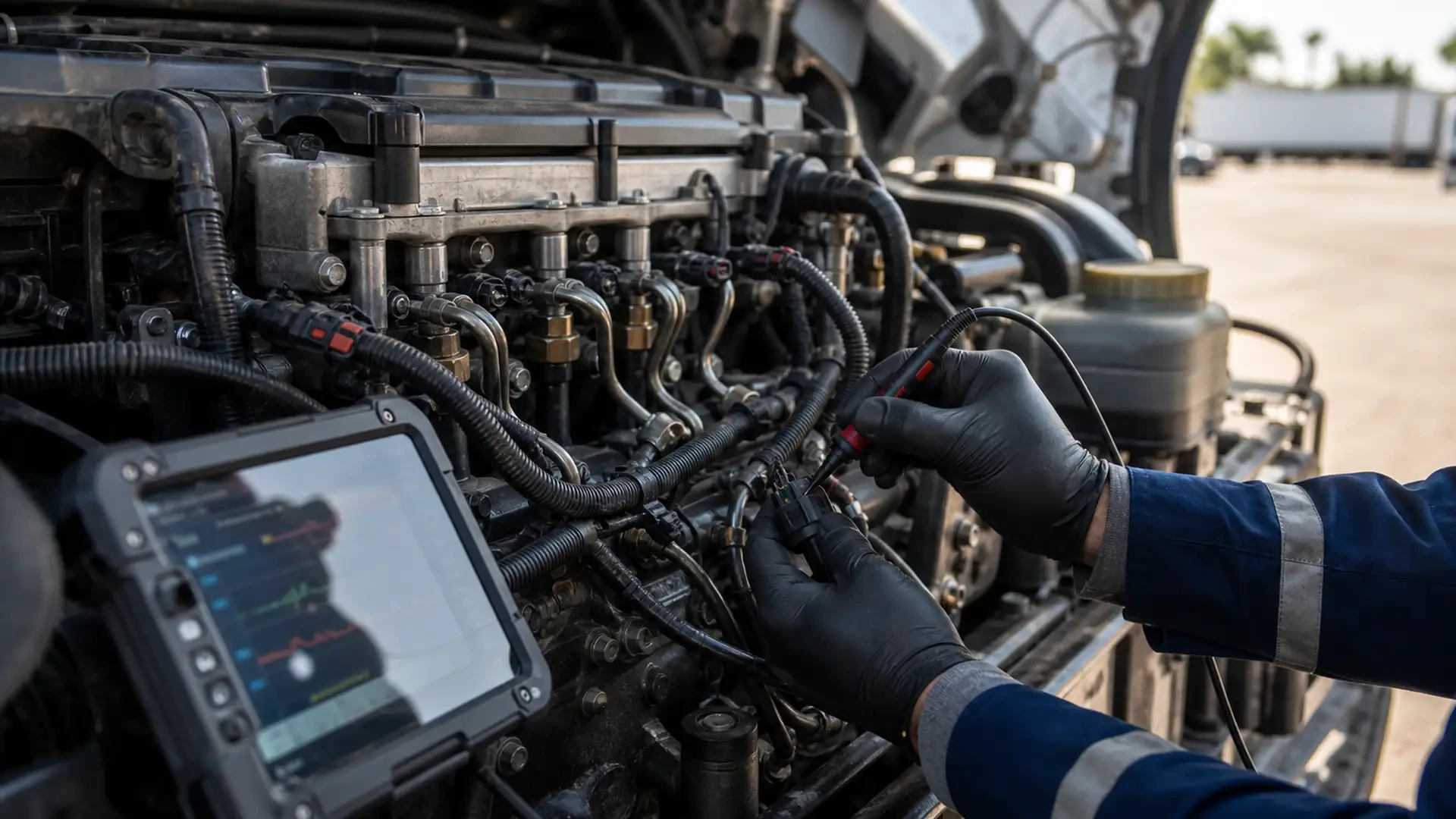
Injector operation depends on electrical control. Connectors, harness condition, grounds, power supply, and circuit integrity may need inspection.
Intermittent symptoms deserve special attention because vibration, heat, or movement can affect a damaged connection differently while the truck is operating.
Air, turbo, and emissions systems
The engine needs the correct relationship between fuel and air. Air restrictions, boost leaks, turbo conditions, sensor inputs, DPF loading, or EGR issues can create symptoms that overlap with injector complaints.
The diagnostic process should consider the full engine operating picture, not only the fuel system.
Engine condition and repair history
Recent work is valuable context. Note whether the symptoms began after:
Fuel-filter service.
Battery or charging-system work.
Wiring or connector repair.
Sensor replacement.
DPF/EGR service.
Injector or fuel-system work.
Engine disassembly.
Compression or other mechanical conditions may also need consideration when symptoms remain tied to a specific cylinder.
Information drivers and fleets should prepare
Before requesting diagnostic support, prepare:
Exact truck location.
Engine make and model, if known.
Main symptom.
When the symptom began.
Whether it is constant or intermittent.
Conditions that make it worse.
Dashboard warnings or fault codes.
Recent repairs and parts replaced.
Fuel-filter or refueling history.
Photos or videos, if they can be captured safely.
For fleets, maintenance records can reveal whether the problem is new, recurring, or connected to a previous repair.
When mobile diagnostics may help
Mobile diagnostics can be useful when the truck is at a yard, warehouse, parking area, customer location, or safe roadside position and the operator needs help determining the next step.
A mobile technician may be able to review symptoms, fault information, electrical conditions, visible components, and operating data at the truck's location. The inspection determines whether the issue may be addressed there or whether a deeper repair plan is needed.
The purpose is not to promise that every injector-related problem can be repaired on-site. The purpose is to reduce guessing and make the next decision with better information.
How injector content fits a preventive maintenance plan
Injector problems are easier to manage when drivers and fleets record changes early. Do not wait for a complete loss of power before documenting:
Hard starting.
New smoke.
Rough idle.
Fuel consumption changes.
Intermittent warning lights.
Repeated cylinder or fuel-pressure codes.
Early information gives the diagnostic process more context and may help prevent repeated roadside interruptions.
Contact SAAT Repairs Corp
If your commercial truck shows power loss, rough idle, hard starting, unusual smoke, or injector-related fault codes, contact SAAT Repairs Corp for mobile truck repair and diagnostic support in Tampa, Lakeland, and nearby areas.
Have the truck location, symptoms, warning messages, and recent repair history ready when you call.