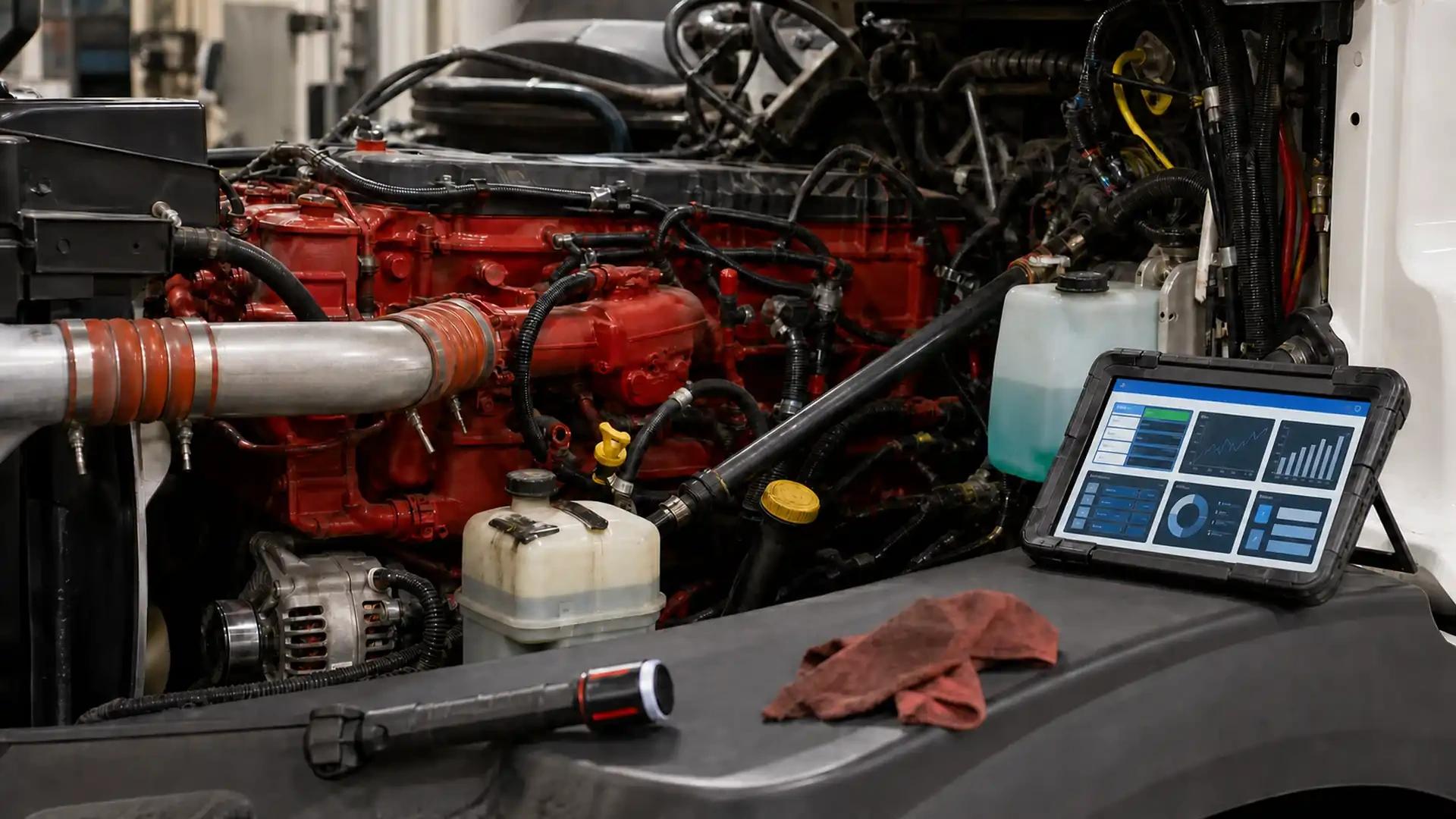
Cummins ISX and X15 engines work hard in commercial trucks. When they are running correctly, drivers may not think about them much. But small changes around oil, coolant, power, warning lights, or engine behavior can become expensive downtime if they are ignored.
Preventive maintenance is not only a shop calendar item. For drivers, owner-operators, and fleets, it also means noticing early warning signs and documenting them before the truck is already stopped on the road.
SAAT Repairs Corp provides mobile truck repair, road service, and diagnostics for commercial trucks in Tampa, Lakeland, and nearby areas. This guide explains what to watch for on Cummins ISX, ISX15, and X15 engines and what information to prepare before requesting support.
Why preventive maintenance matters on Cummins ISX and X15 engines
Preventive maintenance helps reduce avoidable downtime by catching changes while the truck can still be inspected under controlled conditions. A small leak, recurring code, temperature change, or new engine sound may not explain the full problem by itself, but it can tell the driver that something deserves attention.
For Cummins-powered commercial trucks, maintenance planning should pay attention to:
Oil leaks or oil-level changes.
Coolant loss or overheating symptoms.
Warning lights or fault codes.
Fuel, air, or boost-related performance changes.
Electrical symptoms that affect starting or charging.
Previous repairs that may be connected to the current complaint.
The goal is not to replace parts based on one symptom. The goal is to inspect early and decide the next step with better information.
Warning signs drivers should not ignore
Some warning signs are obvious. Others are easy to dismiss during a busy route. Drivers should report changes early, especially when the same symptom repeats.
New oil around the engine
Fresh oil around the front of the engine, valve cover area, lines, fittings, lower engine surfaces, or accessory mounting points should be documented. Oil can move with airflow and road vibration, so the visible wet spot may not be the true source.
Useful details include:
Where the oil appears.
Whether it is fresh, dripping, spraying, or only staining.
Whether the oil level is dropping.
Whether the leak returns after cleaning.
Whether the leak appears after idling, driving, or parking.
If there is active oil loss, burning smell, smoke, or warning lights, the truck should be treated with extra caution.
Coolant loss or temperature changes
Coolant loss, rising temperature, or repeated top-offs should not be treated as normal. Temperature problems can create route interruptions quickly, especially under load, in traffic, or during hot weather.
Drivers should report:
Coolant level changes.
Visible leaks.
Temperature gauge movement.
Warning lights or messages.
Steam, smell, or residue.
Whether the issue appears while loaded, climbing, idling, or after shutdown.
Temperature and coolant symptoms need careful attention because continuing the route can increase risk if the truck is already overheating.
Power loss, derate, or poor throttle response
Loss of power can come from many systems: fuel, air, turbo, sensors, aftertreatment, electrical issues, or engine protection strategies. A derate message or poor throttle response should be documented with operating conditions.
Useful questions include:
Did the issue appear suddenly or gradually?
Was the truck loaded?
Did a warning light appear first?
Did the truck enter reduced power?
Did the symptom happen after fueling, maintenance, or a previous repair?
These details can help the diagnostic process start in the right direction.
New vibration, noise, or smell
Drivers often notice changes before a dashboard warning appears. A new vibration, rattle, squeal, knock, exhaust smell, burning smell, or fuel odor should be reported.
Not every sound means a major failure, but repeated or worsening changes are worth checking before the truck is forced into downtime.
Recurring warning lights or fault codes
Clearing a warning light does not solve the root problem if the condition returns. Recurring codes should be documented with dates, location, operating conditions, and recent repairs.
For fleets, repeat codes can reveal a pattern across the same unit. That pattern can help prevent repeated guessing.
What fleets should document before requesting service
Good maintenance documentation helps drivers, dispatch, maintenance teams, and service providers work from the same facts.
Before requesting mobile diagnostics or repair support, collect:
Unit number.
Driver name and contact.
Exact location.
Engine platform if known.
Main symptom.
Warning lights or fault codes.
Oil, coolant, temperature, or power behavior.
Whether the truck can move safely.
Recent repairs.
Whether the issue has happened before.
Photos or videos if they can be captured safely.
This information helps reduce back-and-forth and makes the first service conversation more useful.
How mobile diagnostics can support maintenance decisions
Mobile diagnostics can help when the truck is at a yard, warehouse, delivery location, truck stop, parking area, or safe roadside position. A mobile visit may help inspect visible symptoms, review codes, check operating conditions, and determine whether the issue can be addressed on-site or needs a different repair plan.
Mobile support is especially useful when a driver or fleet needs to decide whether the truck can continue, should wait for service, or needs a deeper repair plan.
When the truck should not continue the route
The truck may need to stop safely and request support if:
Oil is actively leaking or spraying.
Coolant is low or temperature is rising.
A warning light or derate is active.
The engine has a new severe noise or vibration.
Power loss affects safe operation.
Smoke, strong smell, or fluid loss is present.
The driver cannot confirm that the truck is safe to operate.
When the condition affects control, temperature, oil level, or engine protection, caution should come before completing the route.
Contact SAAT Repairs Corp
If your Cummins ISX, ISX15, or X15-powered commercial truck shows warning signs before downtime, contact SAAT Repairs Corp for mobile truck repair and diagnostics in Tampa, Lakeland, and nearby areas.
Have the truck location, symptoms, warning lights, recent repairs, and photos ready if possible.
If your Cummins-powered truck is showing leaks, temperature changes, warning lights, derate symptoms, or power loss, contact SAAT Repairs Corp for mobile diagnostics and truck repair support in Tampa, Lakeland, and nearby areas.