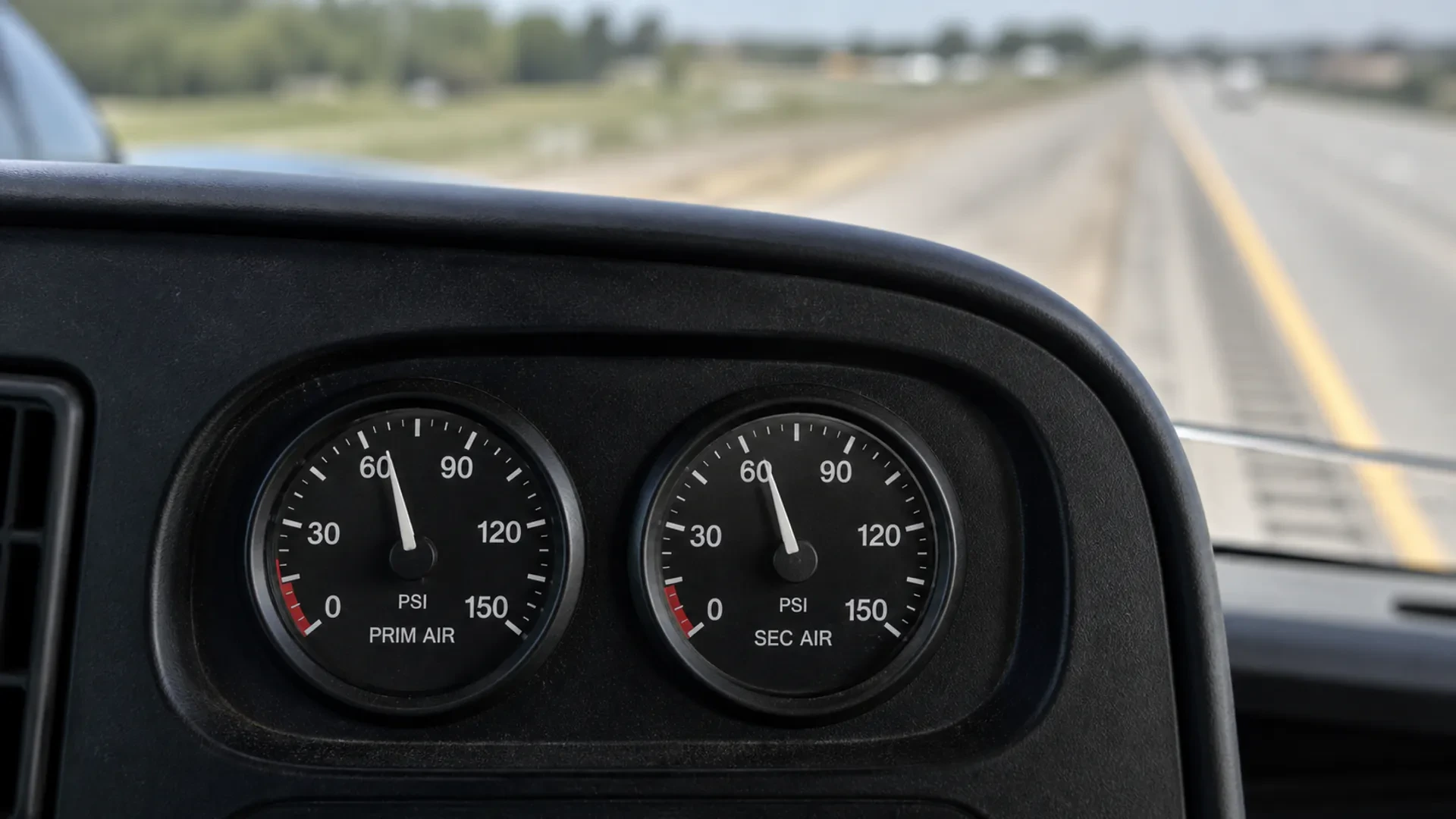
When a commercial truck begins taking longer than normal to build air pressure, the change deserves attention before it becomes a route delay or a braking concern. The driver may notice a longer wait after startup, a warning that remains active, repeated compressor cycling, or pressure that improves only when engine speed or operating conditions change.
Slow buildup is a symptom, not a diagnosis. The cause may involve air supply, a leak, a valve, a line, a dryer-related condition, compressor operation, monitoring information, or more than one part of the tractor-trailer air system.
The safest starting point is to compare the current behavior with the established normal pattern of the same unit and preserve the details before anyone clears warnings or begins replacing components.
SAAT Repairs Corp provides mobile truck repair and air-system diagnostics for commercial trucks in Tampa, Lakeland, and nearby Florida areas. Service goes to the truck's location when access and conditions are safe.
What slow air-pressure buildup means
An air system needs an adequate supply of compressed air and must manage that air throughout the truck and, when applicable, the trailer. If pressure builds more slowly than the driver normally observes, the system may be losing air, producing air inefficiently, or controlling airflow differently than expected.
The pattern matters. A unit that changed suddenly after a repair presents a different starting point from one that has become gradually slower over several weeks. A tractor that behaves normally by itself but changes when connected to a particular trailer also provides useful diagnostic direction.
Avoid using a single observation as a final conclusion. Record the change and evaluate it with the truck's service information, fleet procedures, warning system, and current operating condition.
Why slow buildup does not identify one failed component
Drivers often associate slow air buildup with the compressor, but the complete system can influence the complaint. Possible areas include:
Air leaks in lines, fittings, tanks, chambers, valves, or connected equipment.
Air compressor operation or the drive system that supports it.
Governor or unloading behavior.
Air dryer, purge, or moisture-related conditions.
Tank drains, check valves, protection valves, or restrictions.
Tractor-to-trailer connections.
Pressure sensors, gauges, wiring, or warning circuits.
A recent repair, replacement, or routing change.
This list does not mean every area is defective. It explains why replacing the most familiar component before confirming the pattern can add downtime without correcting the cause.
What the driver or fleet should document
A useful service request connects the symptom with time, operating conditions, warnings, and repair history.
When the change started
Record the date or trip when the unit first appeared slower than normal. Note whether the change was sudden, gradual, or intermittent.
Include whether the condition followed:
Air-system service.
Brake or wheel-end work.
Compressor, dryer, valve, line, or sensor replacement.
Trailer connection or a trailer change.
Cold weather, heavy rain, contamination, or extended parking.
A warning, inspection finding, or roadside event.
The sequence does not prove that previous work caused the condition, but it helps organize the diagnostic timeline.
The operating pattern
Describe when slow buildup appears:
At the first startup of the day.
After a short stop.
Only after the truck has reached operating temperature.
During extended idle.
After repeated brake applications.
With one trailer but not another.
Continuously or only on certain trips.
If the fleet has a safe, approved way to record the time or operating sequence, include it. Do not perform an improvised test on the roadside or operate an unsafe unit only to reproduce the symptom.
Gauge, warning, and brake information
Document what the driver can observe without creating additional risk:
Gauge behavior and whether both indicated circuits behave similarly.
Low-air warnings, dashboard messages, or fault codes.
Whether a warning clears and then returns.
Unusual compressor cycling or purge behavior.
Any change in brake response or parking-brake behavior.
Audible leaks, without crawling under the vehicle or approaching moving parts.
Use the truck manufacturer's information and fleet procedure to interpret readings. This article does not establish a universal pass/fail threshold for every vehicle configuration.
Tractor and trailer conditions
For a combination vehicle, note whether the behavior changes when a different trailer is connected or when the tractor is evaluated according to the fleet's approved process.
Record:
Tractor and trailer unit numbers.
Whether the trailer connection appears secure.
Visible damage to accessible air lines or couplers.
Whether the complaint began after coupling, uncoupling, or trailer service.
Any trailer-specific warning or brake concern.
Do not disconnect, cap, bypass, or modify air lines to continue operating the truck.
Recent maintenance and repairs
Prepare the recent history for the compressor, air dryer, tanks, valves, hoses, fittings, brakes, wheel ends, trailer connections, electrical system, and dashboard monitoring. Include repeat repairs and any part that was recently replaced.
The repair history can help separate a new problem from a recurring one and identify what has already been inspected.
Areas a diagnostic review may consider
The exact route depends on the vehicle, system design, fault information, symptoms, and approved service procedure.
Air supply and compressor operation
A technician may evaluate whether the compressor and related controls are supplying air as expected under the conditions in which the complaint occurs. The review may also consider engine operation, drive components, temperature, contamination, and whether the symptom changes under load or after warmup.
Governor, dryer, tanks, valves, and lines
Air-management components influence how the system builds, stores, dries, releases, and distributes air. A restriction, leak, damaged line, valve condition, or abnormal purge pattern can change the time needed to recover pressure.
Visual inspection can identify obvious damage, but hidden or intermittent conditions may require the correct tools and service information.
Leaks and pressure retention
A system that produces air normally may still build slowly if air is escaping faster than expected. The location, size, and operating condition of a leak can affect whether it is audible at idle, appears only during an application, or changes with the tractor-trailer connection.
Leak evaluation should follow approved safety procedures. Drivers should not crawl beneath an unsupported vehicle or place themselves near moving, pressurized, or hot components.
Electrical warnings and monitoring information
Gauge readings and warning messages rely on sensors, wiring, voltage, grounds, and communication. If displayed information conflicts with the truck's behavior, the diagnostic process may need to compare mechanical conditions with the monitoring circuit before authorizing parts.
When the truck should remain stopped
Keep the truck in a safe location and request qualified assistance when:
The air system does not reach or maintain the condition required by the manufacturer or fleet procedure.
A low-air warning remains active or returns.
Brake response, parking-brake operation, or trailer-brake behavior changes.
Pressure falls unexpectedly or the unit cannot recover normally.
A significant leak is audible or visible.
There is damaged tubing, a loose connection, smoke, overheating, or another unsafe condition.
The driver cannot confirm that the vehicle is in safe operating condition.
Do not use a blog article to decide that a commercial vehicle is safe to operate. Follow the vehicle manufacturer's information, fleet safety process, and applicable requirements.
What not to do at the roadside
Avoid actions that can hide evidence or increase risk:
Do not continue driving only to see whether the warning disappears.
Do not bypass a warning device, valve, or protection function.
Do not disconnect air lines to isolate the complaint without an approved procedure.
Do not tighten or remove pressurized components.
Do not clear codes before recording them.
Do not authorize a compressor or valve replacement from the symptom alone.
The driver should focus on safe positioning and accurate communication. Air-brake inspection and repair should be handled by qualified personnel using the correct process.
Preparing for mobile air-system diagnostics
Have the following ready when contacting SAAT:
Exact truck location and safe-access information.
Tractor, trailer, engine, year, and unit details.
Description of how long the unit normally takes compared with the current behavior.
Gauge observations, warnings, and complete fault codes.
Whether the condition changes with temperature, engine speed, brake use, or trailer connection.
Any audible leak and where it appears to come from, if this can be observed safely.
Recent air-system, brake, electrical, or trailer work.
Current operating condition and whether the truck is safely parked.
The initial diagnostic review determines which checks are appropriate and whether the next step can be completed at the location or needs additional repair planning.
Contact SAAT Repairs Corp
If your commercial truck builds air pressure more slowly than normal in Tampa, Lakeland, or a nearby area, contact SAAT Repairs Corp for mobile diagnostics and truck repair.
Call +1 414 233 9746 or email [email protected]. Share the location, warning information, operating pattern, trailer details, and recent repair history.
Air pressure taking longer than normal to build? Keep the truck safely positioned and contact SAAT Repairs Corp with the complete warning information, operating pattern, location, and recent air-system work.