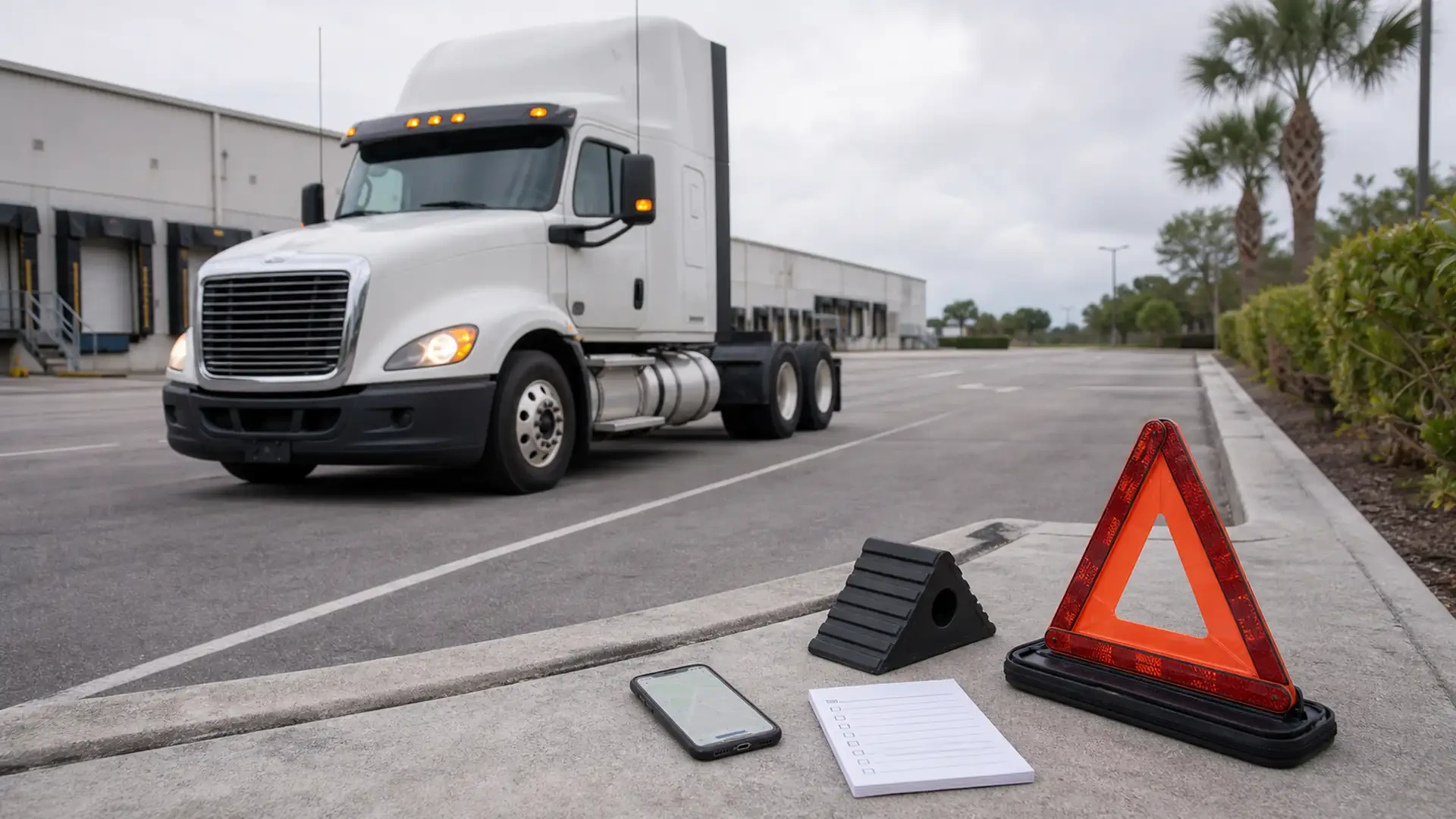
A commercial truck breakdown can create pressure fast. The driver has to think about safety, the load, traffic, the delivery schedule, and the next repair decision, often at the same time.
If your truck breaks down near Tampa, Lakeland, or a nearby Florida area, the first step is not to guess at the repair. The first step is to get the situation under control, gather useful information, and request the right kind of support.
This guide explains what to do before calling for road service or mobile truck repair.
Step 1: Get the truck stopped safely
Safety comes first. If the truck is still moving but showing serious warning signs, avoid pushing it farther than necessary. Find the safest available place to stop, following road rules and site conditions.
Once stopped, think about the environment around the truck:
Is the truck on the shoulder, in a lane, in a yard, at a dock, or in a parking area?
Is there room for a service vehicle to access the truck?
Is traffic creating a safety concern?
Is the truck carrying a load that affects the urgency of the situation?
Can the driver safely exit or inspect the vehicle?
These details matter when explaining the situation to a road service provider.
Step 2: Identify what changed before the breakdown
Many breakdowns are not completely sudden. The truck may give warning signs before it stops or becomes unsafe to operate.
Think through what happened before the issue:
Did the truck lose power gradually or suddenly?
Did a warning light appear?
Did air pressure drop?
Did the brakes feel different?
Did the engine temperature rise?
Did the truck make a new noise?
Did electrical components stop working?
Did the truck start but refuse to build power?
These details help narrow the problem. A truck that will not start is different from a truck that starts but cannot build air pressure. A dashboard warning light is different from a visible leak. Clear symptom reporting helps reduce confusion.
Step 3: Check warning lights and basic symptoms
Before calling, look for the symptoms that can be explained safely without taking unnecessary risks.
Write down:
Dashboard warning lights.
Gauge readings.
Air pressure behavior.
Visible leaks.
Unusual smells.
Smoke.
Battery or electrical behavior.
Whether the engine cranks.
Whether the truck can move at all.
Do not try to keep operating the truck if the issue may affect braking, steering, air pressure, engine safety, or control of the vehicle.
Air pressure and brake concerns
Air system and brake concerns should be treated carefully. If pressure is not building correctly, drops faster than usual, or is connected with alarms or leaks, the truck may not be safe to continue driving.
Electrical and starting issues
Electrical problems can affect starting, lighting, sensors, dashboard behavior, and diagnostic communication. If the truck will not start or has intermittent power, describe exactly what happens when the key is turned or when the ignition sequence begins.
Power loss or engine derate
Power loss can come from multiple systems, including sensors, fuel delivery, emissions components, diagnostics, or mechanical problems. If the truck enters a reduced-power condition, note whether warning lights appeared before the power changed.
Step 4: Prepare details before calling for help
The better the information, the easier it is to understand the next step.
Before calling for road service, prepare:
Exact location.
Direction of travel, if roadside.
Truck make and model.
Engine type, if known.
Unit number, if it is a fleet truck.
Main symptom.
Warning lights.
Whether the truck starts.
Whether air pressure builds.
Whether the truck can move safely.
Contact person and phone number.
If the truck is at a warehouse, yard, truck stop, or delivery site, include entry instructions if needed.
Step 5: Decide whether road service or towing may be needed
Not every breakdown requires the same response. Some trucks can be inspected and repaired where they are. Others may need towing, parts, shop-level work, or a safer location before repair can continue.
Road service can help evaluate the situation and determine whether mobile support is practical. The goal is to avoid unnecessary guessing and make a safer repair decision based on the truck’s symptoms and location.
How SAAT Repairs Corp can help
SAAT Repairs Corp provides mobile truck repair and roadside assistance for commercial trucks in Tampa, Lakeland, and nearby areas. The service goes to the truck’s location and supports drivers, owner-operators, fleets, and transportation companies.
Contact SAAT when a truck breaks down, shows warning signs, loses power, has air or brake concerns, or needs diagnostics before returning to service.