When a commercial truck has a problem, the first question is simple: can the truck keep moving safely, or does it need help where it is?
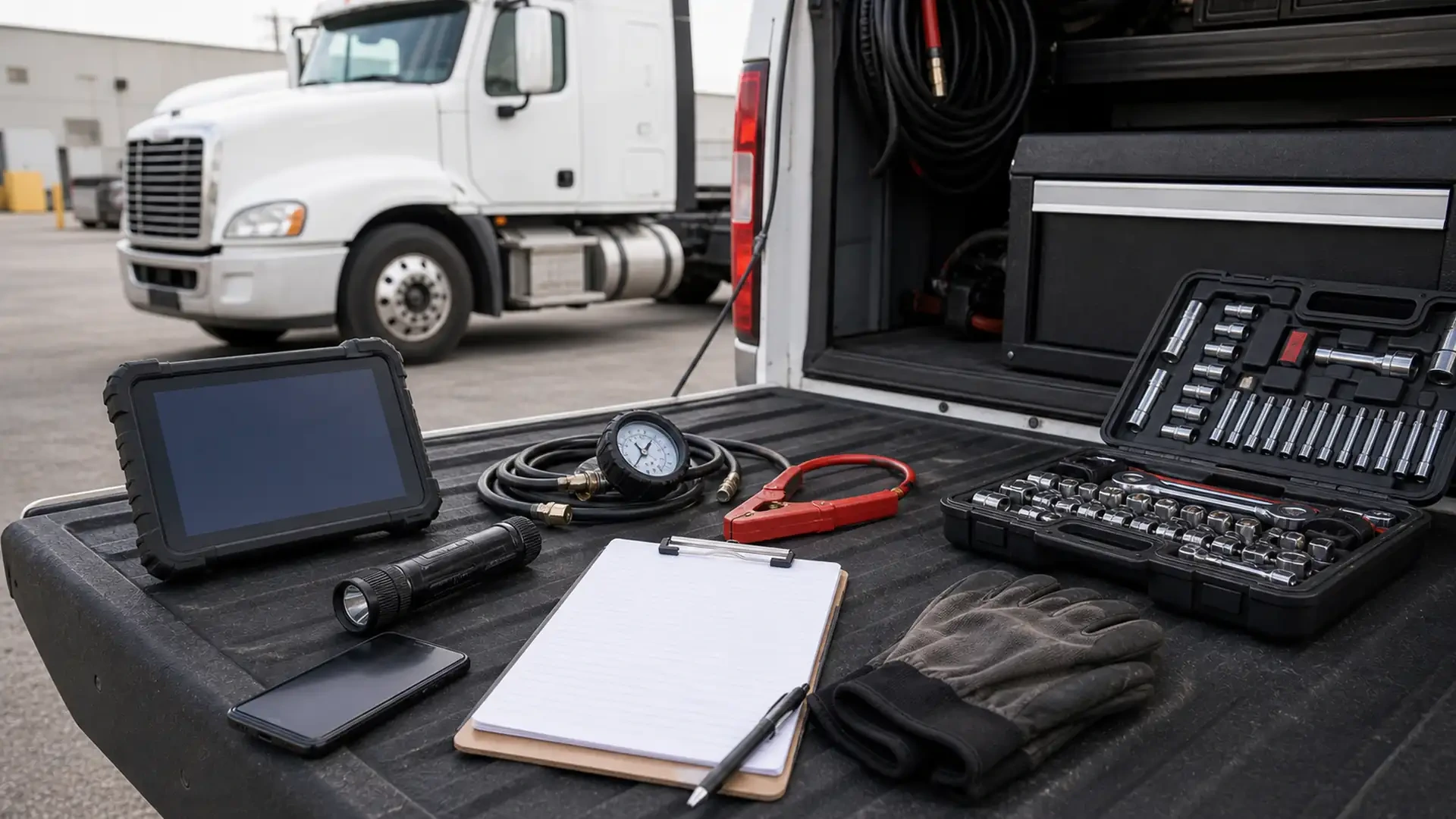
That is where mobile truck repair can matter. Instead of taking the truck to a traditional shop right away, mobile service brings support to the truck's location when conditions allow.
SAAT Repairs Corp provides mobile truck repair and road service in Tampa, Lakeland, and nearby areas in Florida. This guide explains what mobile truck repair means, when it can help, and what information drivers should prepare before calling.
What mobile truck repair means
Mobile truck repair means the service goes to the truck. The location may be:
Roadside.
A fleet yard.
A warehouse.
A delivery site.
A parking area.
A customer location.
Another accessible place where the truck is stopped.
For commercial trucks, this can be important because downtime affects routes, deliveries, drivers, and operations. Moving the truck may not always be the fastest or safest first step.
Mobile repair starts with understanding the symptoms. Depending on the issue, location, safety conditions, access, and parts needs, the next step may include diagnostics, inspection, repair support, or another service decision.
When mobile truck repair can help
Mobile truck repair can support many situations, but the exact service depends on the truck's condition.
The truck will not start
A no-start issue can come from batteries, starter components, wiring, fuel delivery, sensors, or another system. The symptom alone does not confirm the cause.
When calling, explain whether the truck cranks, whether lights turn on, whether there are dashboard warnings, and whether the problem appeared suddenly.
The truck loses power
Power loss can be connected to fuel, air, turbo, emissions, sensors, DPF/EGR, injectors, electrical systems, or other components.
If the truck loses power on the road, do not force it if it does not feel safe. Stop in a safe location and request help.
Warning lights or fault codes appear
Fault codes and warning lights are useful, but they are only part of the story. The truck's behavior matters too.
Share the warning light, code if available, and any symptoms such as smoke, vibration, overheating, weak acceleration, or unusual sounds.
Air pressure or brake symptoms show up
Air pressure problems and brake changes should be treated seriously.
Warning signs include:
Slow air pressure buildup.
Pressure dropping too quickly.
Audible air leaks.
Low-air alarms.
Brakes feeling different.
Brake noise, vibration, or pulling.
If the truck does not feel safe, stop safely.
The truck needs support at a yard, warehouse, or parking area
Mobile truck repair is not only for roadside breakdowns. It can also help when a truck has a problem at a yard, warehouse, delivery site, or parking area.
This can be useful for fleets and owner-operators who want a problem reviewed before the truck starts a route or before downtime grows.
Mobile truck repair vs towing
Mobile truck repair and towing are not the same thing.
Mobile truck repair brings service support to the truck's location. Towing moves the truck somewhere else.
In some situations, mobile support may help identify the issue or address the problem on-site. In other situations, the truck may need a different next step. The decision depends on the issue, safety, access, and repair needs.
Do not assume every stopped truck needs the same response.
What to prepare before calling
Before contacting mobile truck repair, prepare:
Exact location.
Truck type.
Trailer information if relevant.
Main symptom.
Warning lights or codes.
Whether the truck can move safely.
Whether there are leaks, smoke, smells, vibration, or unusual sounds.
Whether the issue began suddenly or gradually.
Whether the truck is loaded.
Access details, such as gate codes, yard rules, or parking instructions.
The clearer the information, the easier it is to understand the situation.
Why exact location details matter
Mobile service depends on location. If the truck is in Tampa, Lakeland, or nearby areas, useful location details may include:
Highway and exit.
Mile marker.
Nearby business or landmark.
Warehouse name.
Parking lot or gate information.
Direction of travel.
Whether the truck is roadside or off the road.
This helps reduce confusion during the service conversation.
Conclusion
Mobile truck repair helps commercial truck drivers, owner-operators, and fleet teams request support where the truck is located. It can be useful for roadside problems, yard issues, warehouse stops, parking areas, and other accessible locations.
When calling, prepare the location, symptoms, warning lights, and safety details. That information helps the technician understand the situation more clearly.
SAAT Repairs Corp provides mobile truck repair and road service in Tampa, Lakeland, and nearby areas in Florida.