In commercial trucks, the air system is directly connected to safe operation. When air pressure does not build correctly, drops too quickly, or behaves differently than usual, the truck may not be safe to keep driving.
Air system symptoms should not be treated as minor inconveniences. A small leak, slow pressure buildup, or warning alarm can point to a problem that needs attention before the route continues.
SAAT Repairs Corp provides mobile truck repair and roadside assistance in Tampa, Lakeland, and nearby areas in Florida. This article explains common truck air system warning signs, what drivers can observe safely, and when to request mobile support.
Why the air system matters
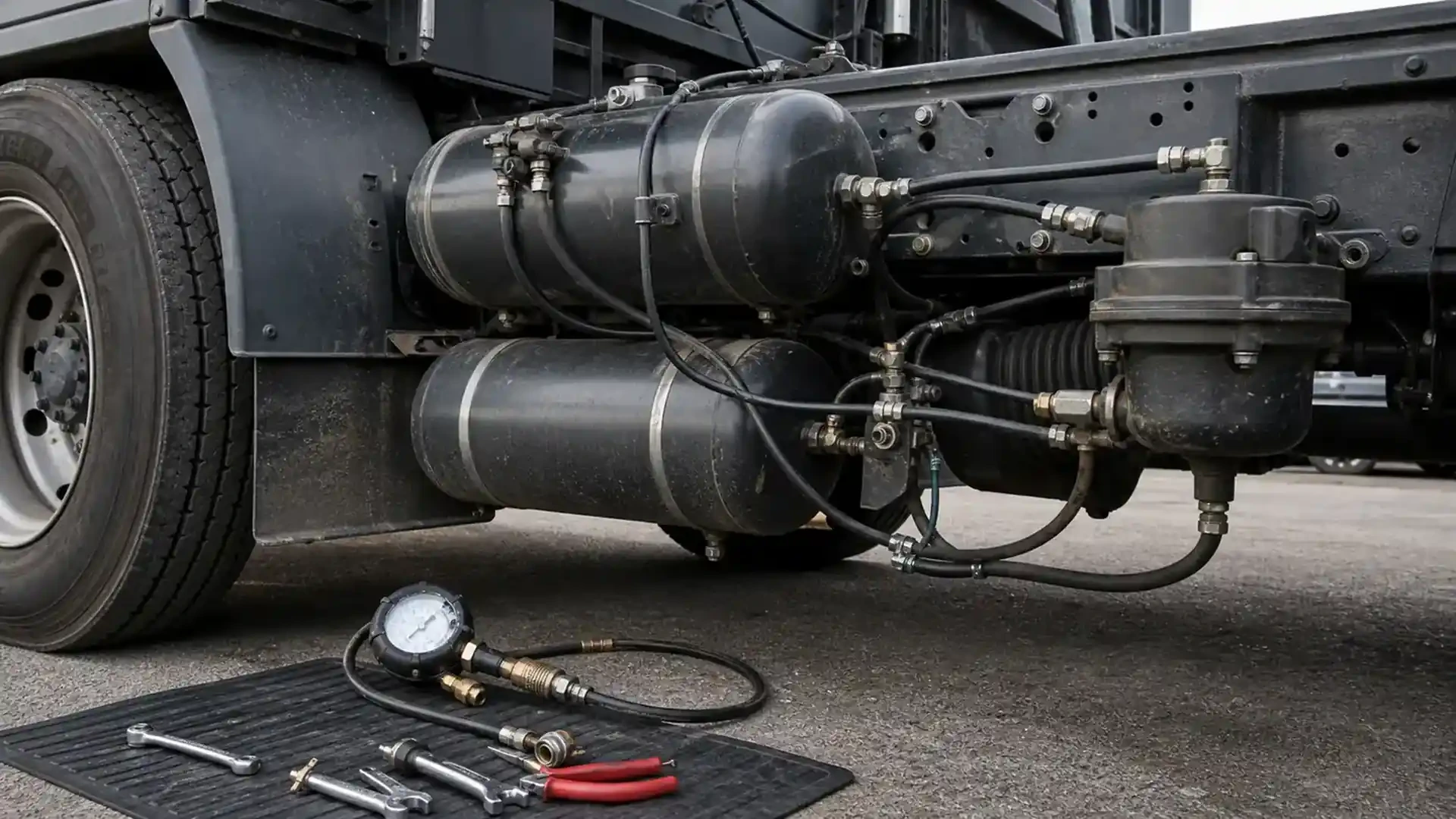
Commercial trucks use compressed air for important functions, including braking-related systems. If air pressure is not stable, the truck's operation can be affected.
Air system problems can also create downtime because the truck may not be able to continue safely until the issue is reviewed.
That is why drivers and fleet teams should pay attention to changes in air pressure behavior.
Common warning signs
Air system issues can appear in different ways. Some are obvious, while others begin as small changes.
Slow air pressure buildup
If the truck takes longer than usual to build air pressure, there may be a leak, compressor issue, valve problem, or another system concern.
Slow buildup can delay operation and may point to a problem that gets worse under route conditions.
Air pressure drops too fast
If air pressure drops quickly after the truck is stopped or while systems are being used, the truck should be checked. A fast pressure drop can indicate a leak or another issue in the air system.
Do not assume pressure loss is normal if the behavior has changed.
Audible air leaks
A hissing sound can be a sign of an air leak. The location and severity matter, but any new or strong air leak should be reviewed.
Drivers may notice leaks near hoses, fittings, tanks, brake-related areas, or other components. Do not place yourself in an unsafe position while trying to inspect the truck.
Warning lights or alarms
Air pressure warning indicators or alarms should be treated seriously. If the truck is warning you about air pressure, the system needs attention.
The warning may appear with other symptoms, such as slow buildup, pressure drop, or brake behavior changes.
Brakes feel different
If braking feels different, delayed, uneven, noisy, or less responsive, stop safely and request help. Brake-related symptoms should not be ignored because they affect safety directly.
What can cause air system symptoms?
Air system symptoms can have several possible causes. Examples include:
Leaking hoses or fittings.
Tank or valve issues.
Compressor-related problems.
Moisture or contamination concerns.
Brake chamber or line problems.
Sensor or warning-system issues.
General wear in air-system components.
The symptom alone does not always identify the exact cause. Diagnostics and inspection help confirm what is happening.
What drivers should check safely
Drivers can observe useful information without taking unnecessary risks.
Check safely for:
Whether air pressure builds normally.
Whether pressure drops quickly after stopping.
Whether a warning light or alarm is active.
Whether there is an audible air leak.
Whether braking feels different.
Whether the issue began after parking, loading, driving, or braking.
Do not crawl into unsafe areas or attempt repairs without the right conditions and knowledge.
When to stop and request help
Request help if:
Air pressure does not build correctly.
Air pressure drops quickly.
A warning alarm is active.
Brakes feel different.
You hear a strong air leak.
The truck does not feel safe to drive.
If safety is uncertain, stop in a safe location and request mobile assistance.
What information to prepare before calling
Before contacting mobile truck repair, prepare:
Exact location.
Truck type.
Main symptom.
Whether air pressure builds or drops.
Whether a warning light or alarm is active.
Whether there is an audible leak.
Whether the truck can move safely.
Any recent changes, such as after loading, parking, or braking.
Clear information helps the technician understand the situation before arriving.
Conclusion
Truck air system problems can affect safety, route continuity, and downtime. Slow air pressure buildup, fast pressure drops, audible leaks, warning alarms, and brake changes should not be ignored.
If the truck does not feel safe or air pressure is not stable, stop safely and request help.
SAAT Repairs Corp provides mobile truck repair and roadside assistance in Tampa, Lakeland, and nearby areas in Florida.